How much should a hot air balloon ride cost?
A shared balloon flight runs $150 in Cappadocia and $599 over the Serengeti. The 2026 global price ladder, and why safari flights sit at the top of it.
 By Juma Kimaro, Serengeti balloon safari specialist since 2015
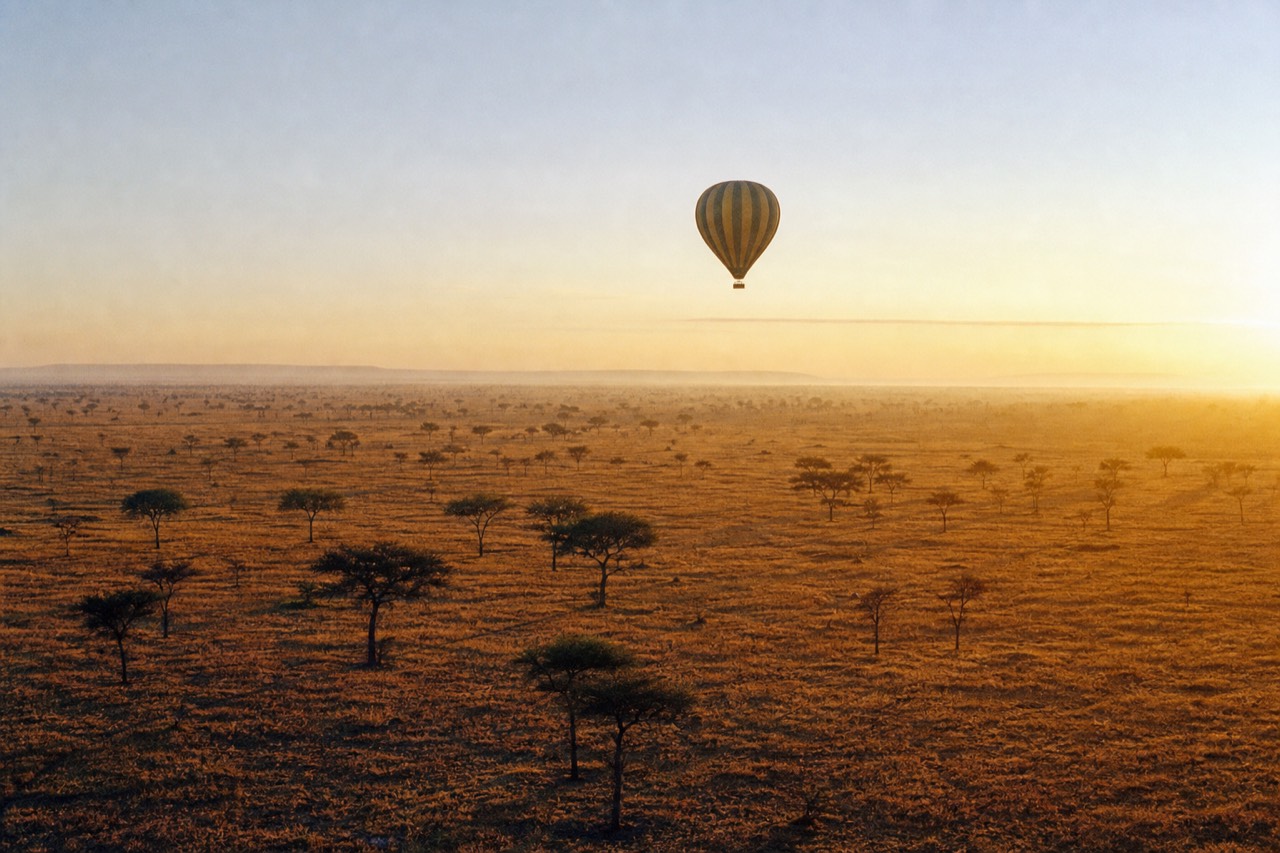
The same hour in a wicker basket costs $189 in New Mexico and $643 over the Serengeti. The physics do not change. What changes is how far the propane travelled, how many people share the fixed costs, and whether a park authority takes a cut of every seat.
How much should a hot air balloon ride cost?
A shared sunrise flight of about an hour should cost between $150 and $600 per person in 2026, depending entirely on where you fly. Cappadocia sits at the bottom around $150 to $280. Typical American flights run $250 to $400. Safari-country flights top the ladder: $450 to $585 in the Masai Mara and $599 in the Serengeti.
Anything far below that band is worth a second look at what is being sold. Anything far above it is usually a private charter, a different product entirely, running north of $2,000 in East Africa.
| Where you fly | Typical 2026 price per person | Time airborne | What the price usually carries |
|---|---|---|---|
| Cappadocia, Turkey | $150-$280 standard, $250-$350+ deluxe | 60-75 min | Hotel transfer, light breakfast, certificate |
| Albuquerque, USA | $189-$225 off-festival, $400-$450 during Balloon Fiesta | 45+ min | A toast on landing |
| United States, typical local flight | $250-$400 | About 60 min | A toast, sometimes a light meal |
| Dubai, UAE | $300-$650 | 30-90 min | Transfer, breakfast on the higher tiers |
| Masai Mara, Kenya | $450-$585 | About 60 min | Transfer, bush breakfast |
| Serengeti, Tanzania | $599, or $643 with champagne breakfast | 50-70 min | Transfer, toast, full cooked bush breakfast, certificate, park ballooning levy |
The right-hand column matters more than the prices. A $180 Cappadocia flight and a $599 Serengeti flight are not the same purchase at different prices.
Why do safari flights cost so much more?
Three things: remoteness, volume and levies. Fuel, catering and crew reach Serengeti launch sites over hours of track rather than road. Cappadocia flies hundreds of balloons a morning and spreads fixed costs across them; the Serengeti flies a handful. And Tanzania's park authority charges a per-passenger ballooning levy that no American or Turkish operator pays.
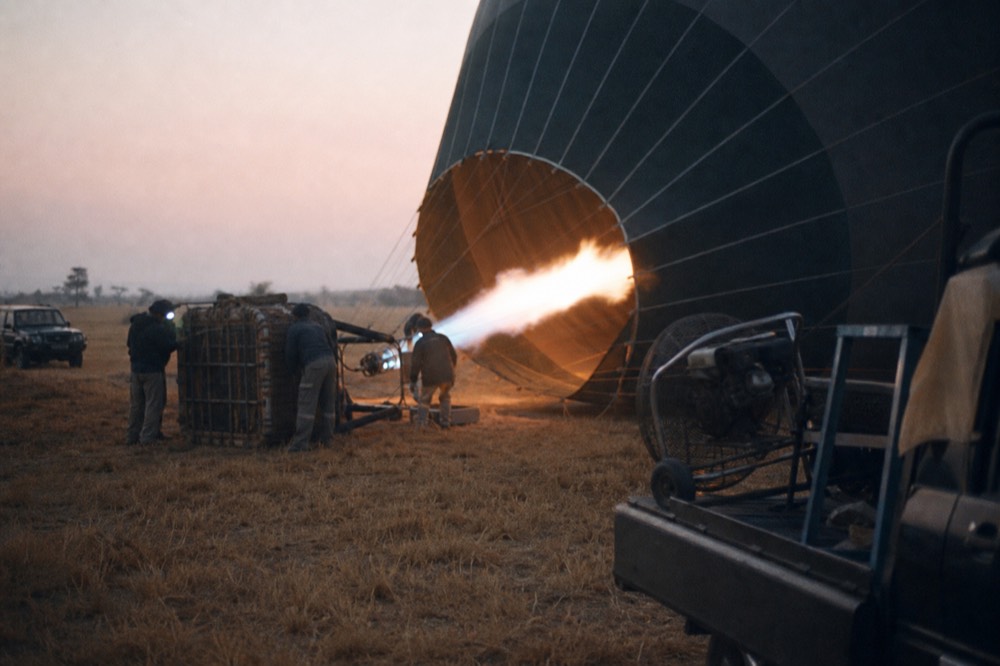
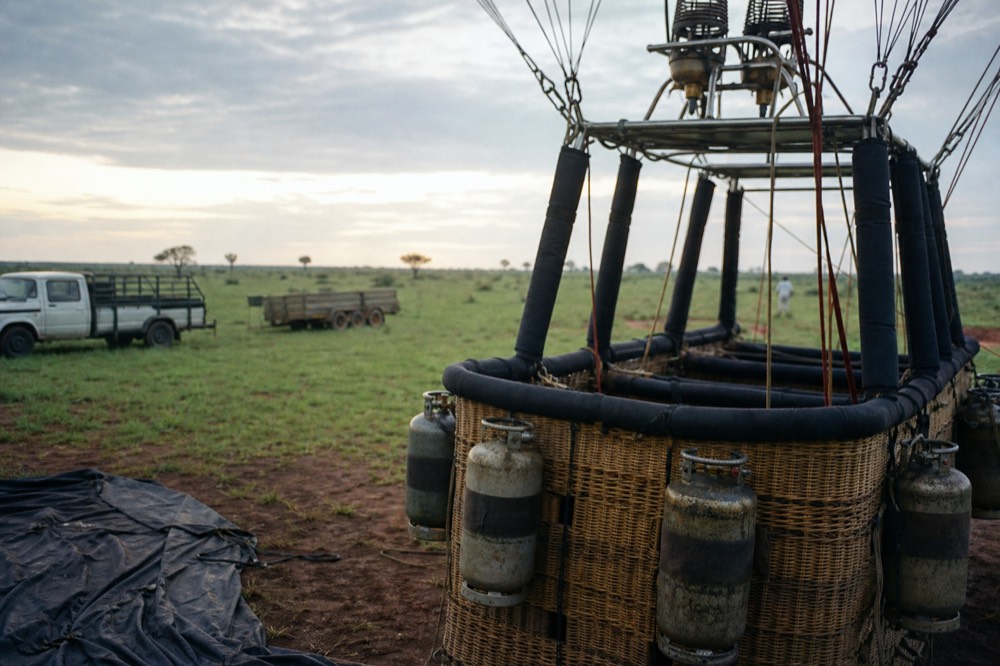
The hardware bill is the same everywhere. A new commercial envelope, basket and burner system runs roughly $45,000 to $175,000, and a burner drinks around 30 gallons of propane an hour. What differs is getting that propane, and the truck carrying it, to a patch of grass four hours from the nearest fuel station.
Regulation adds to it. Tanzanian balloon operations run under Air Service Licences from the Tanzania Civil Aviation Authority, flown by commercial pilots on a dawn-only schedule because that is when the air is calmest. Windy mornings get scrubbed, costing the operator a full basket of revenue.
Then there is the levy. Ordinary Serengeti park entry runs roughly $70 plus 18% VAT per non-resident adult per day under the latest published tariff, separate from the flight. On top of that, the park authority charges a per-passenger fee on balloon operations, which operators pay and build into the headline rate rather than itemizing.
Which country is best for a hot air balloon ride?
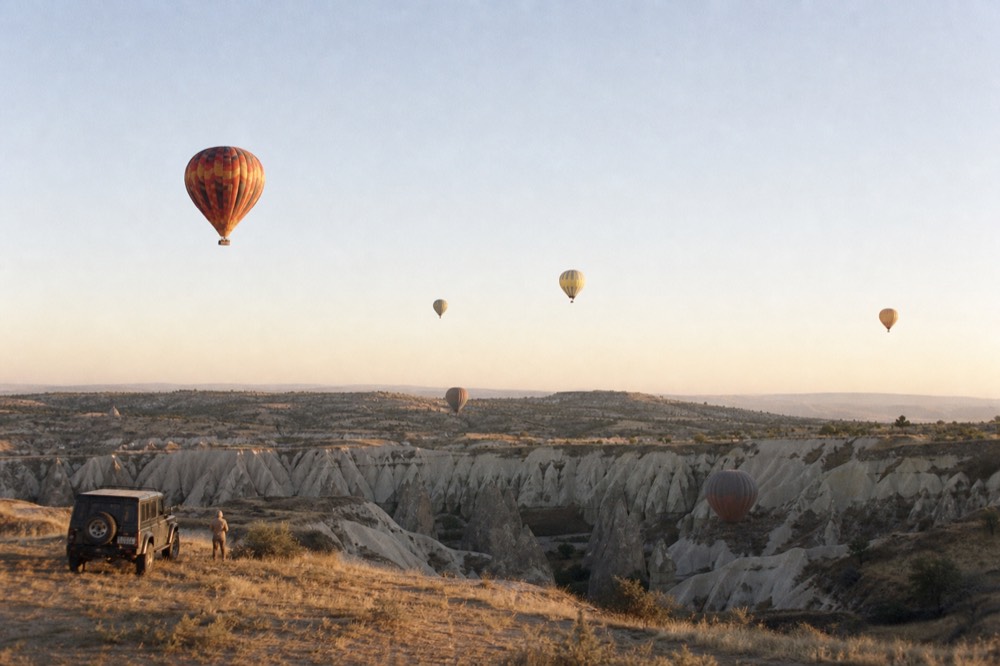
Turkey wins on value and reliability, flying more balloons over Cappadocia's rock valleys than anywhere on earth at $150 to $280. Tanzania wins on what you see beneath you: 14,763 km² of Serengeti plains and, in season, a migration of well over a million animals. The United States wins on convenience if you simply want an hour aloft near home.
The markets sell different things. Cappadocia sells spectacle: dozens of envelopes rising together over eroded rock, cheap enough that people book it twice, and flown so frequently that a scrubbed morning usually finds another slot.
East Africa sells scale. The Serengeti was inscribed as a UNESCO World Heritage site in 1981 partly for the annual movement of roughly 1.5 to 2 million wildebeest, and from 200 metres up you see the shape of it in a way no vehicle shows you. Kenya's Masai Mara flies a comparable trip for less, but charges $200 per adult per day to enter the reserve from July to December 2026 against roughly $83 in the Serengeti, which reverses the saving. The full comparison between the two parks works through that trade.
Dubai sells a desert sunrise close to a major airport, at $300 to $650.
What should be included at each price?
Under $300, expect the flight and a toast. Between $300 and $500, expect a hotel or camp transfer and some form of breakfast. Above $500, particularly in safari countries, expect a full cooked meal served where you land, a certificate, and any local aviation or park levy already folded into the rate.
The Serengeti flights sit at the top of that scale and carry the most. All four bookable listings include the camp transfer, 50 to 70 minutes airborne, a sparkling-wine toast, a cooked bush breakfast in the grass and a certificate. All four cancel free up to 24 hours out, and a weather scrub means a full refund or a rebooking.
What none of them include is park entry, charged by the park authority through your safari rather than by the balloon company. That distinction catches people out constantly, and the itemized cost breakdown shows which line sits where.
Pricing in the park is also uniform, which is unusual: three flights at $599 and one at $643 for a champagne breakfast and a wider pickup network, with operator-direct rates matching the listings exactly. Compare on dates and the live price for the highest-rated flight, or check availability on the most-reviewed.
Whether the top of the ladder is worth paying is a separate argument, and the honest case for and against covers it. To compare what is bookable, the four flights are laid out side by side with their pickup areas, ratings and terms.
Frequently asked questions
How much does a 1 hour hot air balloon ride cost?
Between $150 and $600 per person for a shared flight in 2026, depending on the country. Cappadocia runs $150 to $280, typical American flights $250 to $400, Dubai $300 to $650, the Masai Mara $450 to $585 and the Serengeti $599. Safari flights cost most because of remote logistics, low passenger volumes and park levies.
What is the average cost of a hot air balloon ride?
No neutral industry body publishes a verified global average. Across operator pricing the most consistently referenced band for a shared American flight is $250 to $400 for about an hour. Worldwide the realistic range for a scheduled shared flight is $150 to $600, with private charters sitting far above that at $2,000 or more in East Africa.
Why is a Serengeti balloon ride $599?
Because the rate carries more than the flight. It includes the transfer from your camp, 50 to 70 minutes airborne, a sparkling-wine toast, a full cooked bush breakfast, a certificate and the park authority's per-passenger ballooning levy. Add remote fuel and catering logistics and far lower passenger volumes than Turkey or the United States, and the price follows.
Are park fees included in a balloon safari price?
The ballooning levy is, built into the headline rate. Ordinary park entry is not. A non-East-African adult pays roughly $70 plus 18% VAT per day in the Serengeti under the latest published tariff, about $83 all in, collected through your safari operator rather than the balloon company, and charged whether you fly that morning or not.
Which country has the cheapest hot air balloon rides?
Turkey. Standard shared flights over Cappadocia run $150 to $280 for 60 to 75 minutes, the lowest sustained pricing of any major ballooning destination, driven by very high daily flight volumes and short transfers from town. Albuquerque is the cheapest American option outside festival week at roughly $189 to $225.