Is a Hot Air Balloon Ride in the Serengeti Worth It?
Nobody regrets the sunrise. A few people regret paying $599 to see fewer animals than they saw from the truck the previous afternoon.
 By Juma Kimaro, Serengeti balloon safari specialist since 2015
Short answer
For most travelers, yes. The four bookable Serengeti flights hold ratings of 4.9 across 3,504 reviews and 5.0 across 2,651, which is an unusually strong record at that volume. The honest caveat: the basket buys you the landscape and the light, not a guaranteed animal count. Park entry fees are separate and paid with your safari.
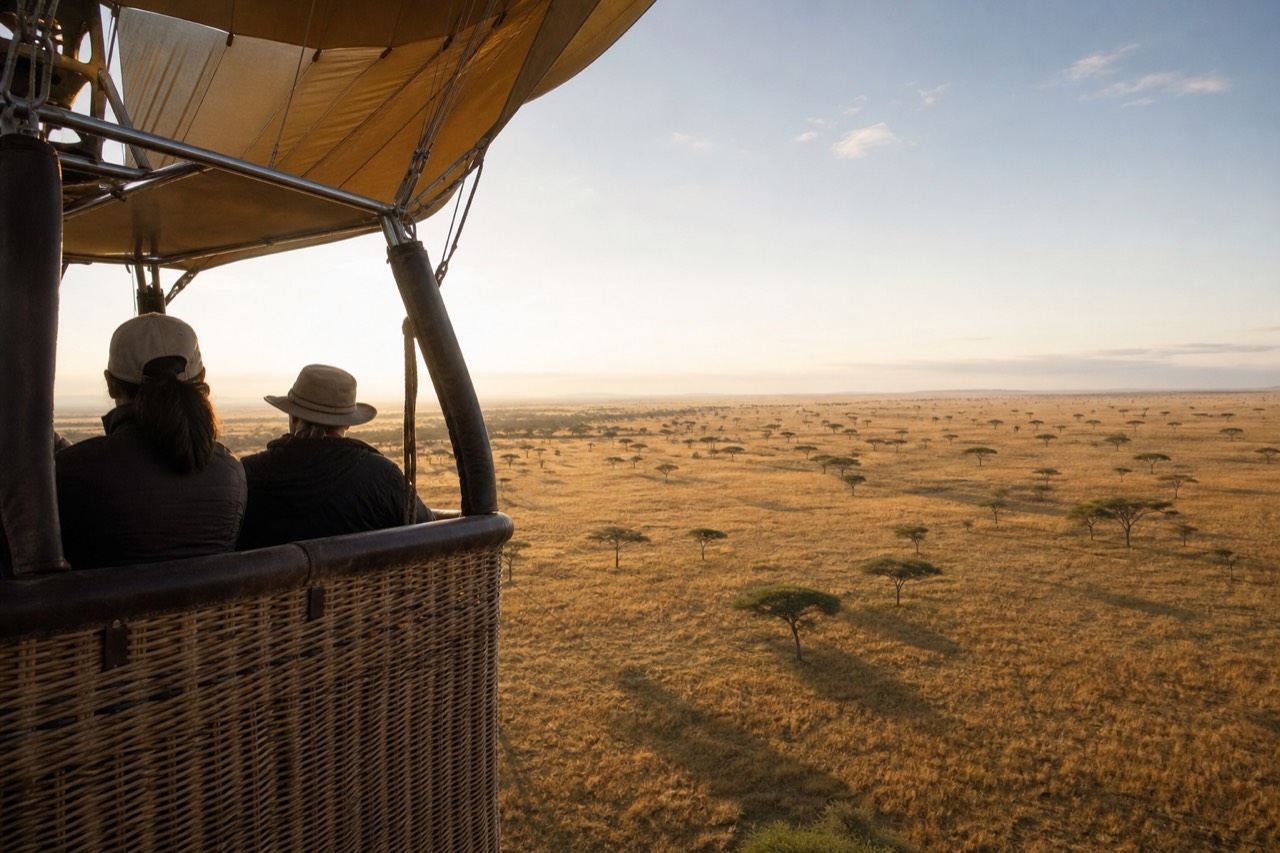
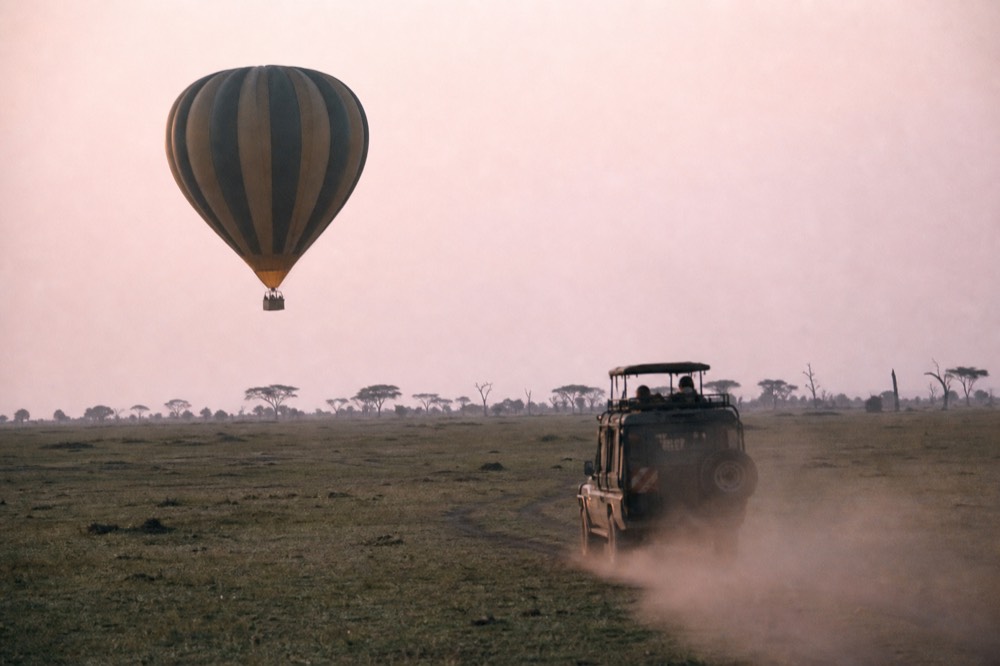
The burners go quiet about ten minutes after liftoff and the whole thing changes. Until then it is noise and heat and the crackle of nylon filling. Then the pilot lets the balloon settle into the air it is riding, and you hear the plains: a zebra barking somewhere behind you, doves starting up in a fever tree, the wind moving grass in a sound like water. That silence is what people are actually buying at dawn over the Serengeti, and it is the part no review manages to describe properly.
Whether it is worth $599 is a different question, and it deserves a real answer rather than a brochure one.
Is a balloon flight over the Serengeti worth $599?
For most first-time visitors, yes. The flight delivers a landscape view nothing on the ground matches, backed by ratings of 4.9 across 3,504 reviews and 5.0 across 2,651 on the two highest-volume listings. It is poor value if you booked it expecting a guaranteed wildlife spectacle, because the animals are the park's decision, not the pilot's.
That distinction runs through this entire page. A balloon morning has two halves. One half is contractual: the pickup, the launch, 50 to 70 minutes airborne, the sparkling-wine toast, the cooked breakfast in the grass, the certificate. Every operator delivers that half, and the review record shows they deliver it reliably. The other half is weather, herd position and luck, and no ticket price buys it.
Travelers who understand the split before they board almost never come home disappointed. Travelers who booked it as a wildlife-viewing upgrade sometimes do.
What does the review record actually say?
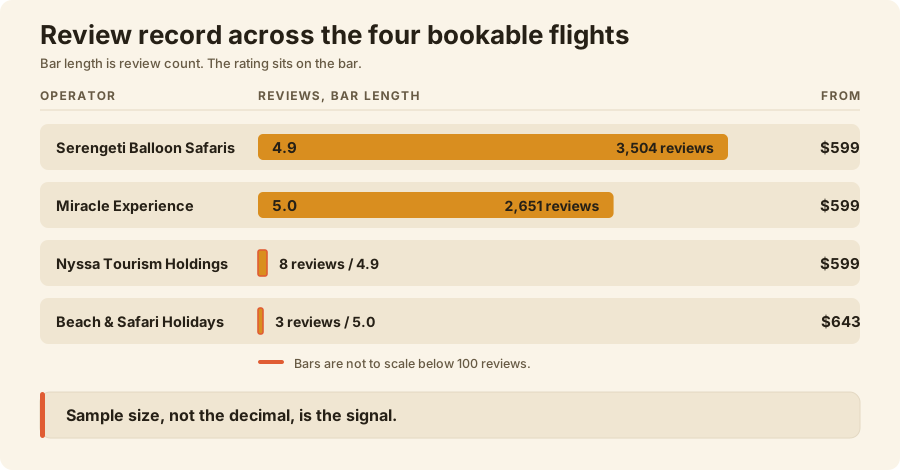
Four flights are bookable over the Serengeti. The two mature listings carry 4.9 from 3,504 reviewers and a straight 5.0 from 2,651, which is rare at that scale. Two newer listings sit at 4.9 and 5.0 but on eight and three reviews respectively, so their scores carry far less weight.
Volume matters more than the decimal. A 5.0 from three people tells you almost nothing about consistency; a 5.0 held across 2,651 reviews tells you the operation does not have bad mornings very often. Read the numbers that way and the ranking flips from what the star display suggests.
| Flight | Operator | Rating | Reviews | From | What the score is worth |
|---|---|---|---|---|---|
| Serengeti Balloon Safari with Bush Breakfast | Serengeti Balloon Safaris | 4.9 | 3,504 | $599 | Highest sample in the park, so the most reliable signal |
| Miracle Experience Balloon Safari & Bush Breakfast | Miracle Experience | 5.0 | 2,651 | $599 | Perfect score at real volume, unusual and hard to fake |
| Balloon Ride with Luxury Bush Breakfast | Nyssa Tourism Holdings | 4.9 | 8 | $599 | Early sample only, treat as unproven |
| Balloon Flight with Champagne Breakfast | Beach & Safari Holidays | 5.0 | 3 | $643 | Three reviews, statistically meaningless so far |
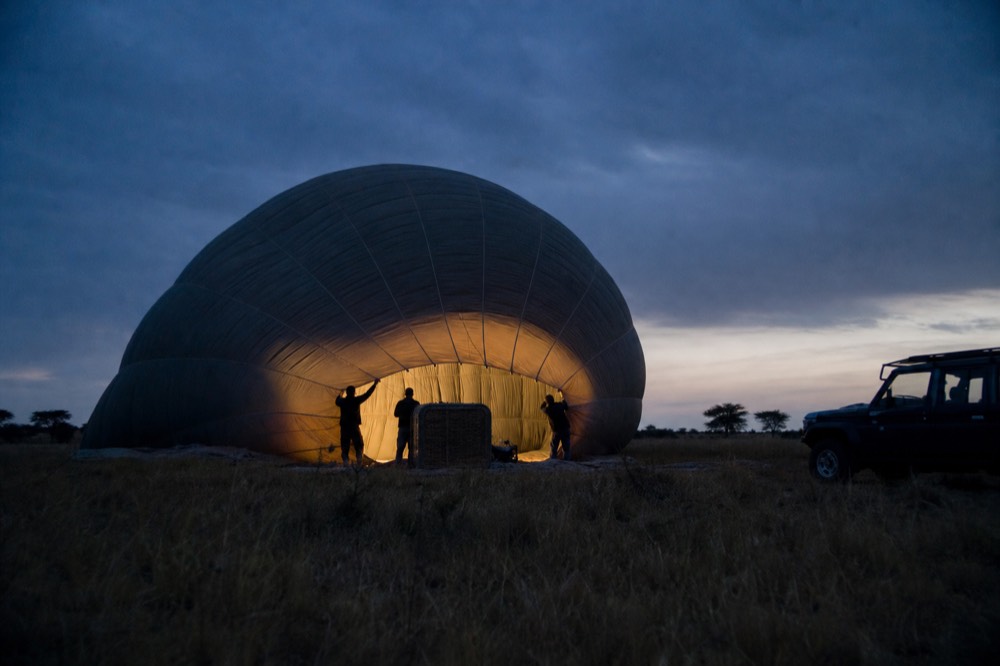
The themes inside those reviews are consistent enough to summarize. Reviewers repeatedly single out the pilot by name, describe the briefing and the landing as calm and well drilled, and treat the bush breakfast as a genuine part of the experience rather than a token. Organization gets praised more often than scenery does, which is telling: people expected the Serengeti to look good and were surprised by how tightly the logistics ran at five in the morning.
The complaint that recurs is animal count. In March 2026 a reviewer on the flagship flight rated the morning highly, called the pilot superb, and still wrote that his only disappointment was how few animals he saw, while acknowledging that no pilot controls where the herds happen to be. That is the fair version of the criticism, and it comes from someone who enjoyed the flight.
The straight 5.0 belongs to Miracle Experience, held across 2,651 reviewers at the same $599, which is the strongest consistency signal in the park. You can check dates and the live price on that one directly.
What is the strongest argument against going?
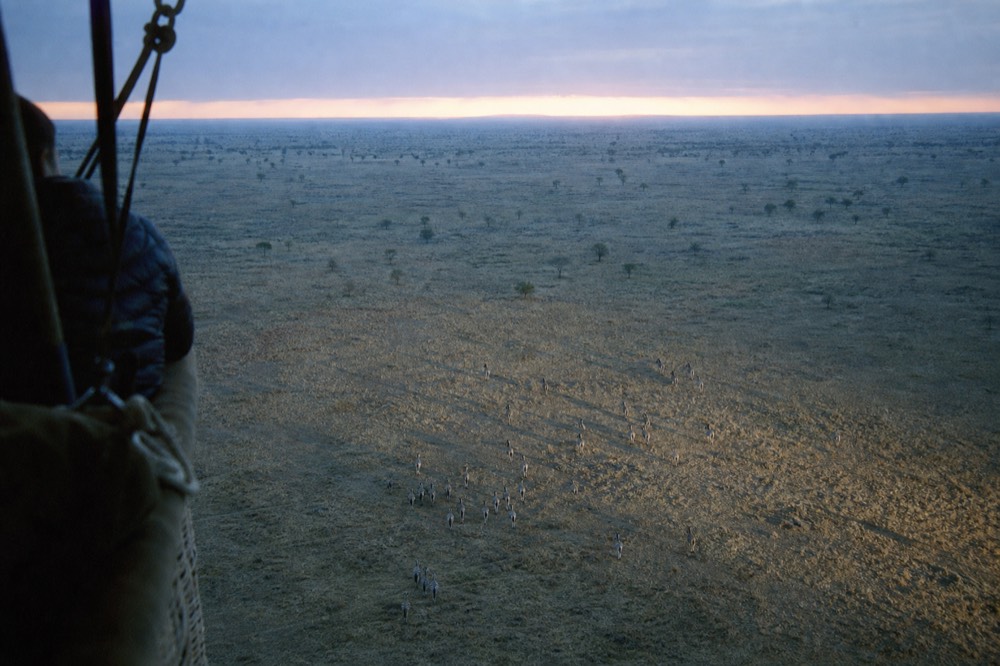
On a quiet morning in the central Serengeti, a good game drive shows you more animals, closer, than a balloon does. The basket gives distance and scale. It does not give a 30-metre view of a leopard in a sausage tree. If your trip has one spare morning and wildlife is the only metric, the truck often wins.
This is the counterargument worth taking seriously, and most balloon content refuses to state it plainly. Altitude trades intimacy for breadth. From 200 metres a herd of buffalo reads as a dark smudge with texture, beautiful in a topographic way, useless if you wanted to watch one blink. Your guide, meanwhile, can park at fifteen metres for forty minutes.
Three conditions make the ground option genuinely better:
The herds are elsewhere. Between the migration's seasonal positions, central Serengeti can be quiet, and a balloon flying over quiet ground shows you quiet ground very beautifully. Timing this properly is what the month-by-month flying calendar is for.
You are on a short trip. If you have two full days in the park, a five-hour balloon morning consumes a quarter of your wildlife time, and the pickup at 4:30 or 5:00 costs you the rest of that day's energy.
You are chasing a specific animal. Rhino, leopard and cheetah sightings are ground-vehicle work, driven by radio traffic between guides. Balloons do not join that network.
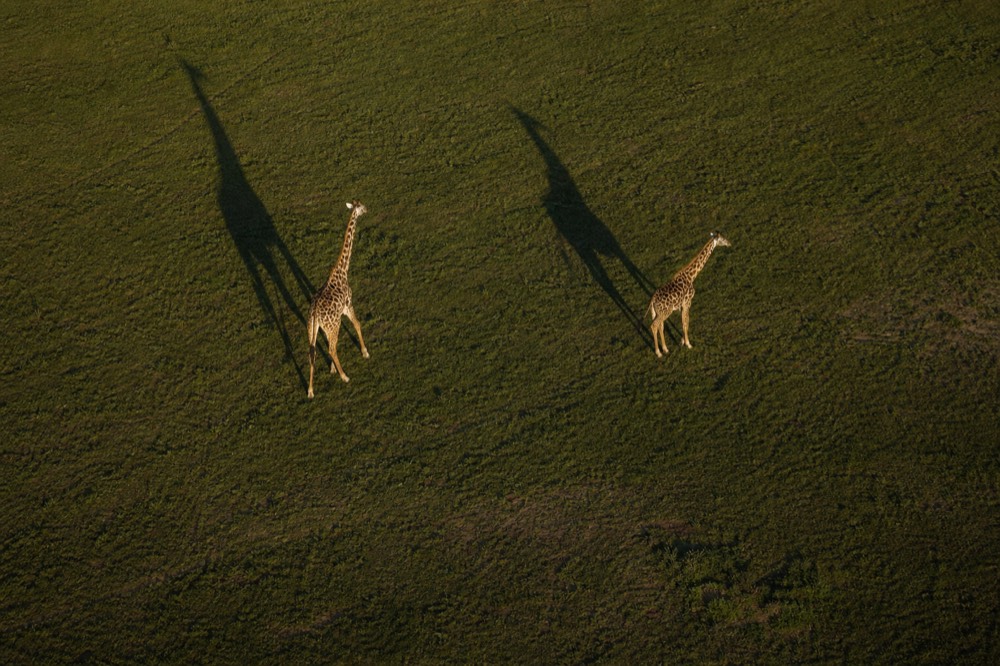
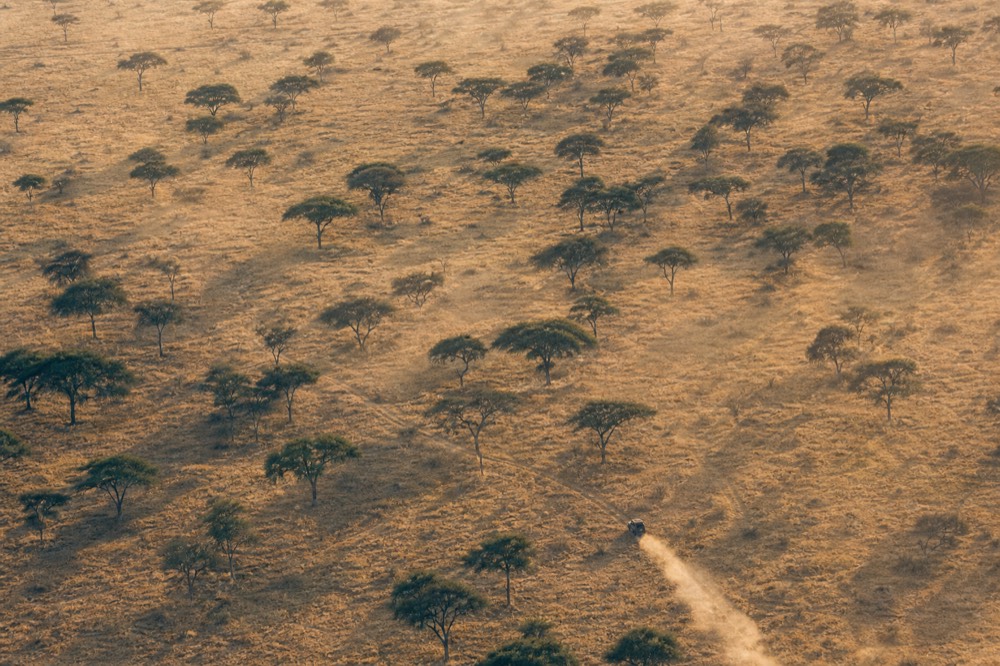
Set against all that: nothing on the ground shows you why the Serengeti is shaped the way it is. The kopjes read as islands. The river lines turn into green veins across a tan plain. On a strong morning you watch a column of wildebeest stretch past the horizon in both directions, which is a sight that only makes sense from height and is the reason the park's UNESCO World Heritage listing singles out the migration by name.
The two mornings are genuinely different products, and comparing them line by line is more useful than arguing about which is better.
| What you want | Dawn balloon flight | Dawn game drive |
|---|---|---|
| Distance from the animals | 100-300 metres, mostly overhead | 10-30 metres, side on |
| Field of view | Tens of kilometres in every direction | Whatever the track reaches |
| Predator sightings | Incidental, no radio network | The guides' whole job that morning |
| Migration scale visible | Yes, the only way to see it whole | Only the nearest few hundred animals |
| Photography | Landscape, pattern, light | Portrait, behaviour, eye contact |
| Cost that morning | $599 per person | Usually already in your safari rate |
| Time consumed | About five hours door to door | Three to four hours |
| Weather risk | Wind scrubs the flight entirely | Runs in almost any conditions |
What does the flight guarantee, and what does the park decide?
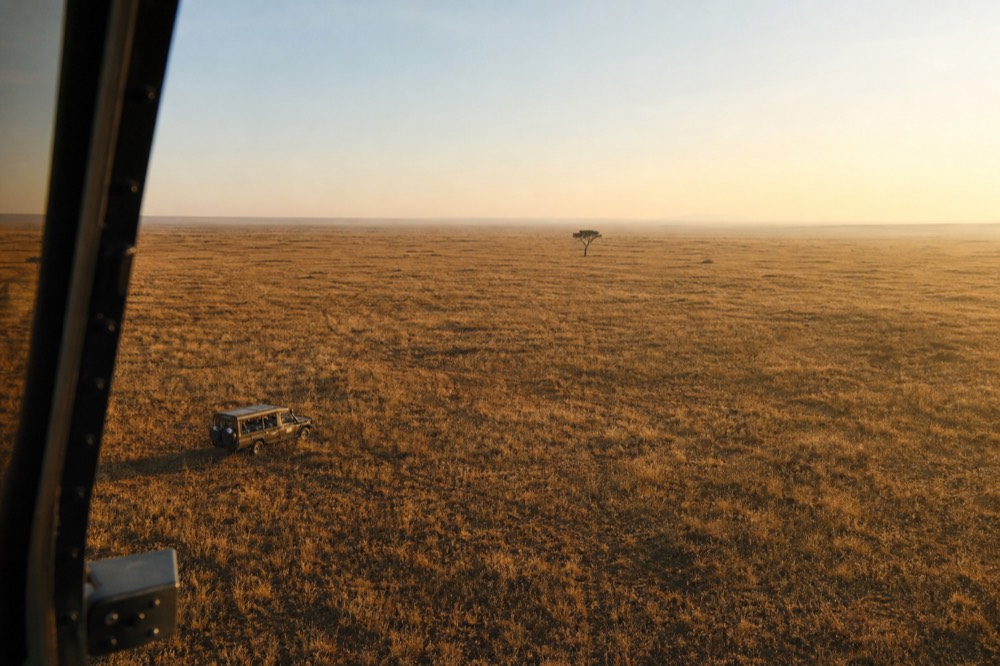
Everything logistical is contractual: pickup, dawn launch, 50 to 70 minutes airborne, the toast, the cooked breakfast, the certificate, free cancellation up to 24 hours out. Everything biological is not. Herd position, predator activity and how close a giraffe happens to be standing are outside the operator's control and outside the price.
Writing the split down before you book is the single best thing you can do to protect the experience.
| Element | Guaranteed by the operator | Decided by the park or weather |
|---|---|---|
| Dawn launch window | Yes, flights are dawn-only | Wind can scrub the morning entirely |
| Time airborne | 50-70 minutes on all four listings | Pilot may shorten for landing conditions |
| Bush breakfast and toast | Yes, on every listing | No |
| Flight certificate | Yes | No |
| Wildlife visible from the basket | No | Yes, entirely |
| Migration herds under the balloon | No | Season and rainfall, variable by 4-8 weeks |
| Refund if the operator cancels | Yes, rebooking or full refund | Weather triggers the call |
The weather clause matters more than people expect. Pilots scrub windy mornings rather than fly them, and when the operator cancels, you are rebooked or refunded in full. That policy is a large part of why the safety picture looks the way it does, which the safety record and how pilots make the call covers in detail.
Who should skip this flight?
Skip it if you are pregnant, since neither major operator permits it. Skip it if standing for an hour is hard, if you have a serious heart, back or bone condition, or if the child in your group is under the operator's minimum, which is six with one operator and seven with the other. Skip it if $599 would come out of your park days.
The eligibility rules are firmer than most adventure activities because a balloon landing is not always gentle. Baskets can drag or tip in the grass, and passengers are asked to brace. That single fact explains almost every restriction on the list.
| Situation | Can you fly? | Where the rule comes from |
|---|---|---|
| Pregnant, any stage | No | Both operators exclude it outright |
| Child aged 6 | With Serengeti Balloon Safaris only | Operator age minimums differ, 6 versus 7 |
| Child aged 7+ | Yes, at full adult price | No child discount on any listing |
| Passenger over 120 kg / 265 lb | Yes, with a surcharge | Operators plan on an 80 kg average |
| Serious heart, back or bone condition | Generally no | Landing brace position and drag risk |
| Limited mobility, cannot climb into a basket | No | Boarding requires stepping over a high wall |
| Nervous about heights | Usually fine | Baskets feel more stable than a viewing platform |
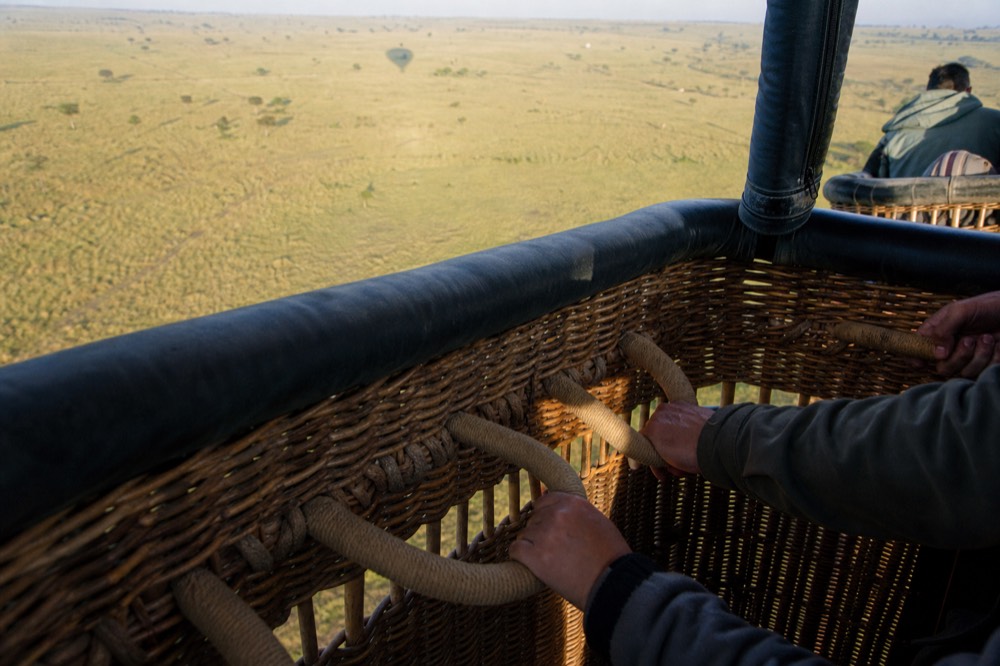
That last row surprises people. Fear of heights is triggered mostly by a visible connection to the ground, which a balloon does not have. Travelers who cannot stand a glass elevator often report the basket felt fine. Vertigo sufferers are a different case and should ask their doctor.
The operators publish these rules themselves; the Serengeti Balloon Safaris FAQ lists the age, weight and health restrictions in full, and the Miracle Experience FAQ sets a different age line. Check the listing that carries your booking rather than assuming one number applies everywhere. Families should read the age and weight rules for children before promising anyone a seat.
How does $599 sit against the rest of a safari day?
A Serengeti balloon flight runs $599 per person, $643 for the champagne version. Against a mid-range safari day of roughly $350 to $700 per person all in, the flight costs about one extra day of touring. Park entry of roughly $70 plus 18% VAT per adult per day, under the latest published tariff, is separate and paid with your safari.
Framed as a percentage of the trip rather than as a standalone number, the flight reads differently. Most people reaching the central Serengeti have already committed several thousand dollars to flights, lodges, vehicles and fees, and a seven-day Tanzania safari budget runs from about $1,250 at the shared-camping end to $8,000 at the top. The balloon is a rounding error on that total and the single most photographed hour of it.
| Line item | Typical 2026 figure | Notes |
|---|---|---|
| Standard balloon flight | $599 per person | Same rate direct or on the listing |
| Champagne-breakfast variant | $643 per person | About $44 over the standard rate |
| Serengeti park entry, non-resident adult | Around $70 plus 18% VAT per day | Latest published tariff, paid with the safari |
| Mid-range Tanzania safari, per person per day | $350-$700 | Vehicle, guide, lodge, meals |
| Budget Tanzania safari, per person per day | $150-$400 | Camping and shared vehicles |
| Masai Mara balloon equivalent | $450-$585 | Kenya, cheaper flight, far higher park fees in peak season |
The Kenya line is the interesting one. The Mara flight is cheaper, but from July to December 2026 non-resident adults pay $200 per day to enter the reserve, against roughly $70 plus VAT in the Serengeti. Compare the mornings properly and the cheaper ticket stops being the cheaper day, which is the argument the Serengeti versus Kenya comparison works through with the full arithmetic. The complete cost picture, including what the ticket does and does not carry, sits in the full price breakdown. Widen the frame past East Africa and how balloon fares compare country by country puts the Serengeti at the top of the global ladder, well above Cappadocia near $150 and typical American flights at $250 to $400.
There is a closer comparison worth making, and almost nobody makes it. Most Serengeti itineraries also include Ngorongoro, where the crater floor costs roughly $70.80 per adult per day plus a mandatory vehicle fee of around $295 for the descent, on a six-hour limit. Split between two people that vehicle charge alone approaches $150 a head for part of one day. Nobody calls it an extravagance because it arrives buried in a safari quote rather than as a line you actively choose. The balloon costs more, but you see the number, which is most of why it feels expensive and none of why it is.
Judged on what it delivers per dollar against the rest of the itinerary, the flight is roughly the price of one extra touring day and produces the single hour people describe first when they get home. That is a defensible trade for most travelers and a bad one for anyone whose park time is already too short.
What makes the morning worth it for you specifically?
The flight rewards travelers who want landscape, photography and a story more than a species count. It rewards people staying two nights or more in the park. It punishes tight schedules, tight budgets and anyone who booked it as a substitute for game drives rather than an addition to them.
Run yourself through the matrix rather than the marketing.
| If this describes you | Verdict | Why |
|---|---|---|
| First safari, 3+ nights in the park | Book it | The perspective is the point, and you have game-drive time to spare |
| Photographer chasing landscape and light | Book it | Dawn light plus altitude is not repeatable from a vehicle |
| Celebrating something specific | Book the champagne version | $44 more for a dressed-up breakfast is the cheap part of the day |
| Two nights total, wildlife-first | Think hard | The morning costs a quarter of your park time |
| Travelling with a five-year-old | Not yet | Under the age minimums on both major operators |
| Strict budget, park days are the priority | Skip it | $599 buys another day and a half of mid-range safari |
| Been on a Mara balloon already | Optional | Same format, different terrain and a much larger park beneath you |
One more thing that rarely appears in the argument. The Serengeti drew roughly 491,000 visitors in 2025, more than double the Masai Mara's figure, and yet balloon capacity per morning is finite and dawn-only. Whatever the crowding on the road network, the sky over the plains at 6am is close to empty. That is a form of value that does not show up on a price comparison.
If you are still weighing it, read what the morning actually runs like, hour by hour and see whether the 4:30am pickup sounds like something you want. Then compare the four hot air balloon Serengeti flights side by side and pick the one whose pickup network reaches your camp.
What do you do if the flight gets cancelled?
Weather scrubs happen and the response is standard across all four listings. If the operator cancels for wind or storms, you are rebooked onto another morning or refunded in full. Separately, every listing cancels free up to 24 hours before the start time, so a change of plan the day before costs nothing.
Pilots make the call before dawn based on surface wind and what the air is doing at launch height. It is not a negotiation and it is not a judgement about how far you travelled. A scrubbed morning is the system working.
Practically, this means one thing for your itinerary: book the flight for your first available morning in the park rather than your last. A scrub on day one can be rebooked to day two. A scrub on the morning you fly out cannot be rebooked at all, and while your money comes back, the experience does not.
The rebooking window is also why the flight pairs badly with a two-night stay. Three nights gives the weather a second chance. Two does not. Given that every listing cancels free up to 24 hours out, booking early costs nothing, so it is worth going to see dates and the live price as soon as your camp is confirmed.
Frequently asked questions
Is a balloon safari worth it?
For most travelers on a multi-night safari, yes. The two highest-volume Serengeti flights hold 4.9 from 3,504 reviews and 5.0 from 2,651, a strong record at that scale. The flight costs $599 and buys landscape, dawn light and a cooked bush breakfast. It does not buy a guaranteed animal count, which is the park's decision.
Is a hot air balloon safari worth it?
It is worth it if you treat it as a landscape experience rather than a wildlife upgrade. From 200 metres you see river lines, kopjes and the shape of the migration in a way no vehicle can show you. If your only goal is close animal sightings, a good game drive with a guide who works the radio network will usually beat it.
Is a hot air balloon in Serengeti worth it?
Yes for travelers with three or more nights in the park, and questionable for anyone with two nights or fewer. A flight consumes roughly five hours door to door starting with a 4:30 to 6:00am pickup. On a short trip that is a large share of your wildlife time. Park entry fees are separate from the $599 ticket.
Are hot air balloon rides worth it?
Compared with balloon rides elsewhere, the Serengeti version costs more and delivers more. You pay $599 against roughly $450 to $585 in the Masai Mara, and the flight includes lodge transfer, 50 to 70 minutes airborne, a sparkling-wine toast, a full cooked bush breakfast and a certificate. Very few balloon operations anywhere include a cooked meal.
Will I definitely see the migration from the balloon?
No. Herd position moves by four to eight weeks year to year, so no operator can promise it. Between January and March the herds are calving near Ndutu in the south, and from July to October they are in the north near the Mara River. Fly from a launch site matched to the season and your odds improve substantially.
Is the champagne breakfast flight worth the extra $44?
It buys a dressed-up champagne breakfast and a wider pickup network across Serengeti accommodation, at $643 against the standard $599. On a trip already costing thousands, $44 is minor. The catch is proof: that listing holds 5.0 but from only three reviews, against 3,504 on the flagship flight, so the track record is far thinner.