How Safe Are Hot Air Balloons Over the Serengeti?
The honest file: what the regulator requires, what the pilot decides on the morning, and what the searched record actually says.
 By Juma Kimaro, Serengeti balloon safari specialist since 2015
Short answer
Balloon operations over the Serengeti are licensed by the Tanzania Civil Aviation Authority and flown by commercially licensed pilots, at dawn, in the calmest air of the day. Windy mornings get scrubbed rather than flown, and an operator cancellation means a full refund or a rebooked flight. No commercial balloon incident anywhere in East Africa surfaced in the 2020 to 2026 record.
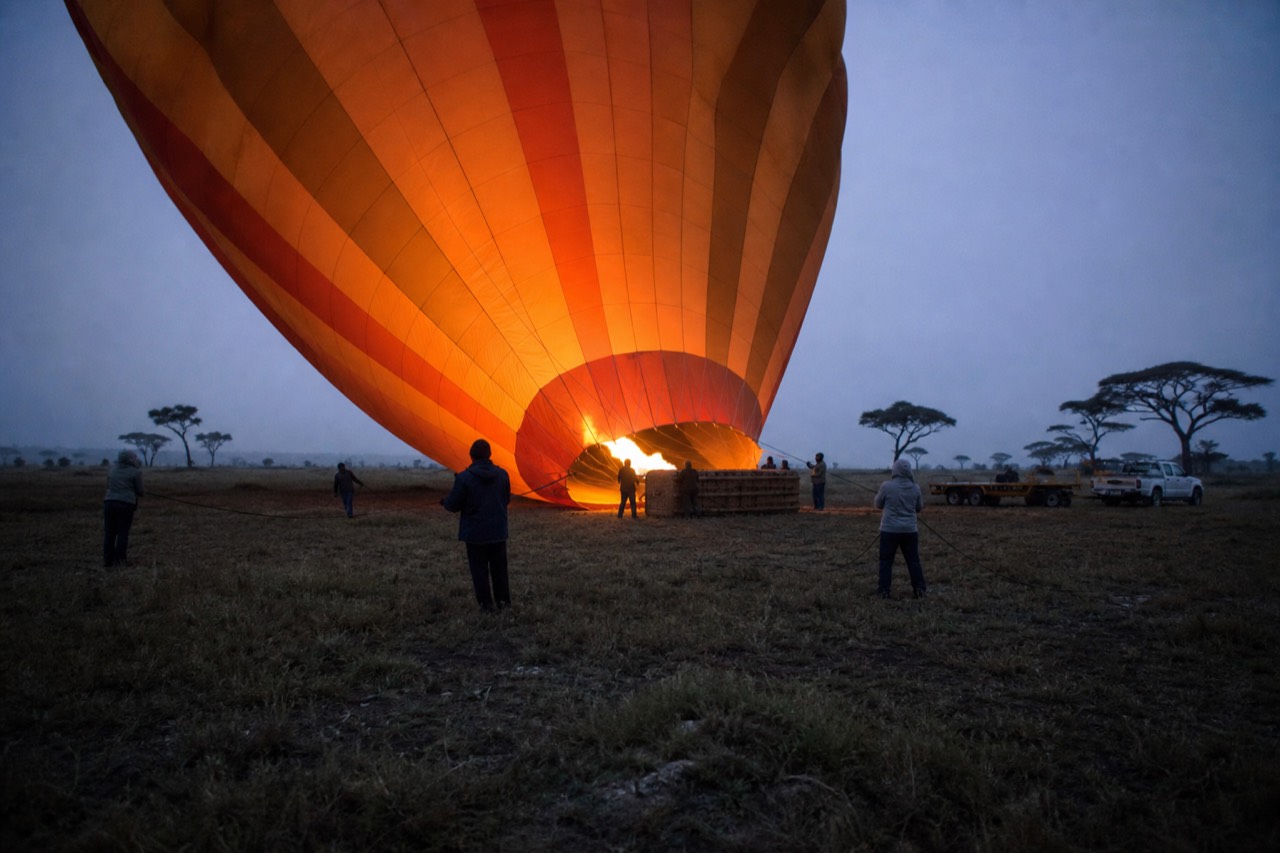
At 5:40am on a strip of mown grass near Seronera the ground is wet, the air is dead still, and the loudest thing in the field is a petrol fan pushing cold air into a hundred feet of nylon lying flat on the ground. Nobody is in the basket. The pilot is off to one side watching a thin ribbon of smoke drift, then not drift, then drift again, deciding whether this morning is flyable at all. That decision, made quietly before most passengers have finished their coffee, is the single largest safety feature of the whole experience.
How safe is a balloon flight over the Serengeti, really?
Serengeti balloon operations are licensed by the Tanzania Civil Aviation Authority, flown by commercially licensed pilots, and launched only in the settled air just after dawn. Windy mornings get cancelled rather than flown, with a full refund or a rebooked flight. No commercial balloon incident anywhere in East Africa surfaced in the 2020 to 2026 record.
That is the shape of the answer, and it is worth being precise about what each piece of it does and does not promise. Ballooning is not a zero-risk activity and nobody in the business claims otherwise. It is an aircraft with no engine, no steering, and one control axis: up and down. What makes it safe in practice is that the flying is done inside a narrow, well-understood envelope of conditions, by people whose licences depend on staying inside it, at the one time of day when the atmosphere over the plains is at its most cooperative.
The risk in ballooning is not the flight. Passengers braced for a scary bit usually report that the air felt oddly motionless, because a balloon travels with the wind and so there is no relative breeze at all. The risk sits at the two ends: the moment of launch, and the landing, both of which are governed by surface wind. Every operational rule you will run into on a Serengeti morning traces back to that, from the pre-dawn pickup to the pilot's authority to stand everyone down.
The second thing worth separating out is the difference between the flight and the trip. Getting to the Serengeti involves a long-haul journey, a road or air transfer, and several days of game driving, and a sober look at risk should include all of it. The safety picture for American travellers heading to Tanzania right now is a separate question from the one this page answers, and the two get tangled together far too often.
Who licenses Serengeti balloon operators, and who is actually flying the basket?
Commercial ballooning in Tanzania sits under the Tanzania Civil Aviation Authority, which certifies the operator, registers the aircraft and issues the pilot licences. The pilots on the long-established Serengeti operations hold TCAA commercial balloon licences plus at least one other national authority's equivalent, and the chief pilot of the largest operator serves as the TCAA-appointed examiner for balloon pilots in Tanzania.
That last detail is the one that tells you the most about how small and how self-policing this world is. Tanzania does not have a large ballooning population. The examiner who tests every balloon pilot in the country flies commercially himself, which means the standard applied to a new pilot is the standard being flown that same morning over the same plains. It is a tight loop, and it cuts both ways: there is no anonymity in it, and no room for an operator to quietly run to a lower standard than its neighbour.
A useful sanity check on how the authority treats ballooning came in December 2025, when a solo balloon flight was staged in Tarangire National Park as part of a world record attempt, making Tanzania the 123rd country in the sequence. The TCAA reviewed every safety, technical and regulatory element of it before signing off. That is not a routine tourist flight, but it shows an authority that engages with balloon specifics rather than waving them through as an aviation curiosity.
Worth knowing what does not exist: Tanzania has no standalone hot-air-balloon rulebook. Kenya published dedicated Civil Aviation (Hot Air Balloons Operations) Regulations in March 2026, covering operations, training and related requirements. Tanzania has not followed with an equivalent, so the Serengeti side runs on general commercial aviation oversight plus each operator's own standards. In practice the established Serengeti operators fly modern, purpose-built equipment and publish their own restrictions, and you can read the operating rules directly on the Serengeti Balloon Safaris FAQ page.
| Layer | Who holds it | What they control |
|---|---|---|
| Regulator | Tanzania Civil Aviation Authority (TCAA) | Operator certification, aircraft registration, pilot licensing |
| Examiner | Chief pilot of the largest Serengeti operator, TCAA-appointed | Testing and checking every balloon pilot licensed in Tanzania |
| Operator | The balloon company named on your booking | Equipment, maintenance, crew, weather policy, passenger rules |
| Pilot in command | The person in the basket with you | Final authority on go, no-go, altitude and landing site |
| Park authority | TANAPA | Where balloons may operate inside Serengeti National Park |
Why do Serengeti balloons only fly at dawn?
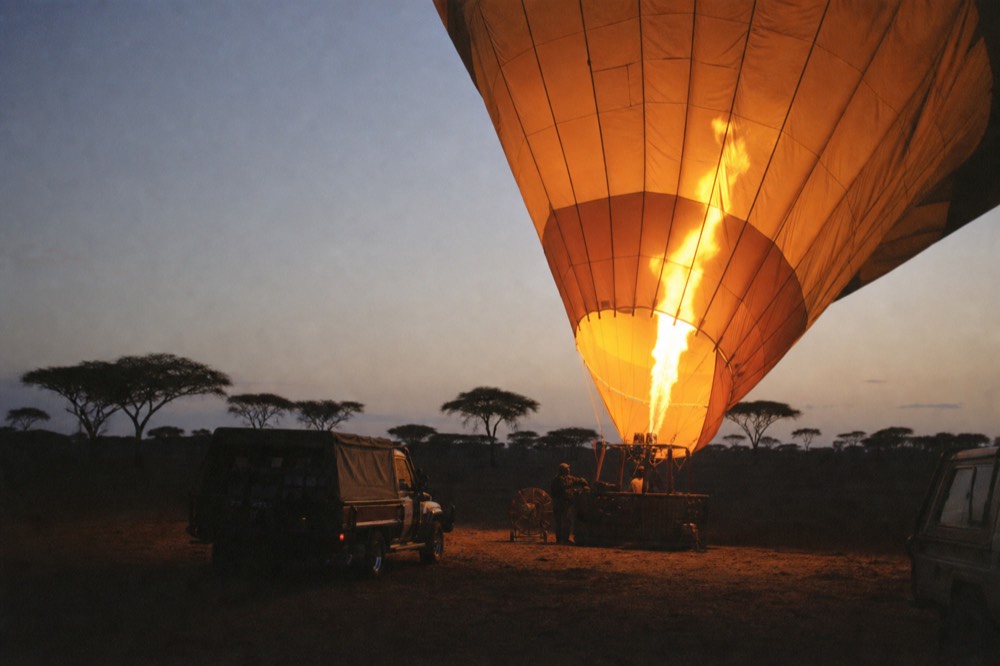
Every commercial balloon flight over the Serengeti launches at first light, and none fly later in the day. The reason is atmospheric: overnight cooling leaves the air over the plains stable and slow-moving, and the sun has not yet built the thermals and gusty surface wind that make launching and landing a large, unsteerable aircraft unpredictable.
You feel the consequence of this before you feel anything else, because it is why your alarm goes off at 4:15am. Pickup runs somewhere between 4:30 and 6:00am depending on how far your camp sits from the morning's launch site, and the whole convoy is built backwards from the moment the sun clears the horizon. There is no flexibility in it. A balloon that is still on the ground when the plains start warming has missed its window, and a responsible operation will not stretch the schedule to fit a late guest.
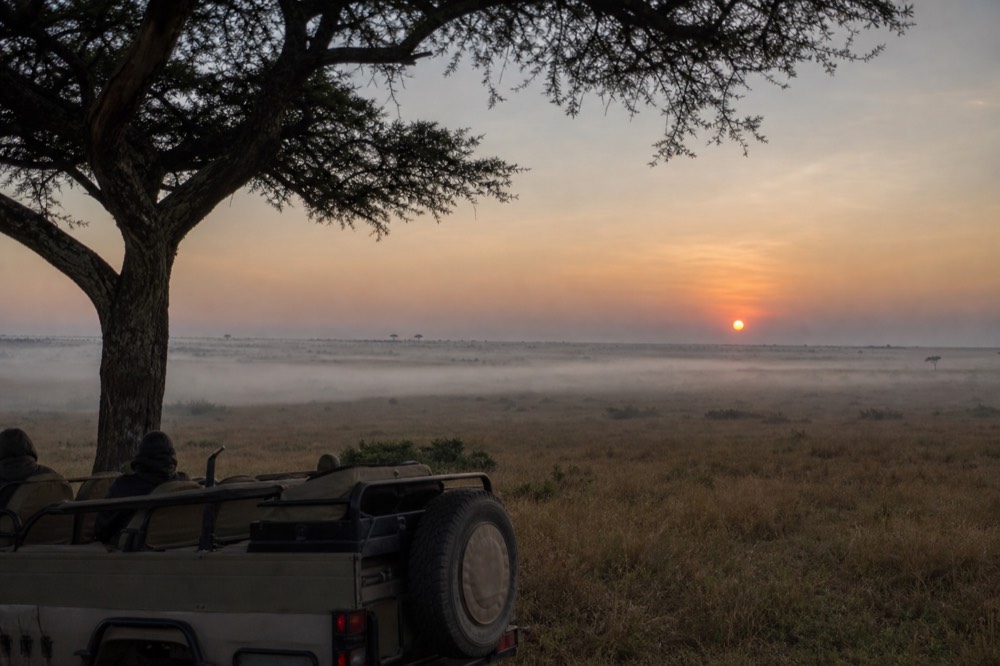
Dawn also happens to be the best hour of the day to be looking at the Serengeti, which is a happy alignment rather than a coincidence: low sun rakes across the grass, animals are still moving from the night, and the air is clear before dust and haze build. The flying reason and the viewing reason point the same way. If you want the full sequence with clock times attached, the hour-by-hour breakdown of the whole morning walks it from pickup to breakfast.
There is one honest caveat about the dawn rule. It compresses every flight in the park into the same ninety-minute band, which means a weather problem does not shift the flight to the afternoon. It cancels it. There is no second slot that day. Which sites are open in a given month is a separate constraint, mapped in the rundown of Seronera, Ndutu, Kogatende and the Western Corridor.
| Stage | Clock | Roughly how long |
|---|---|---|
| Camp or lodge pickup | 4:30 to 6:00am, by distance to the launch site | 20 to 90 minutes of driving |
| Arrival, briefing, inflation | Before sunrise | 30 to 45 minutes |
| Launch | As the sun clears the horizon | The lift itself takes seconds |
| Airborne | First light onwards | 50 to 70 minutes |
| Landing, toast, bush breakfast | Mid-morning | 60 to 90 minutes |
| Back at camp or on to the game drive | Late morning | About 4 to 5 hours door to door |
What happens when the wind is too strong?
The pilot scrubs the flight, and you get your money back or a place on another morning. Serengeti operators publish no numerical wind ceiling, so the limit is the pilot's judgement on the day rather than a printed figure. When the operator cancels for weather, the stated policy is a full refund or a rebooking, and every one of the four bookable flights also cancels free up to 24 hours before pickup.
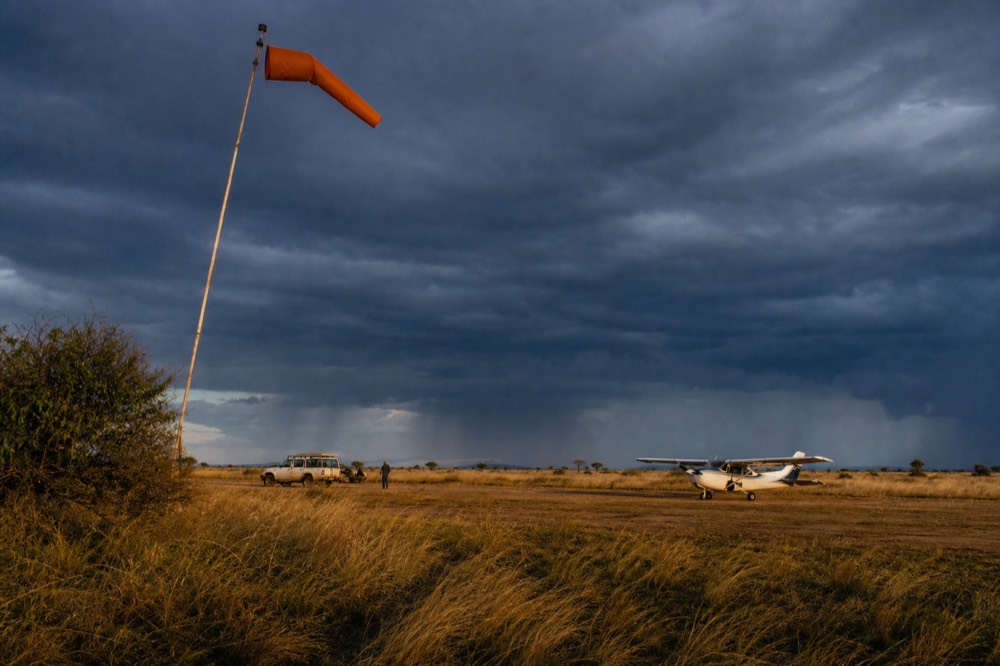
This is the part of the safety story that most first-time passengers underrate, because a scrub feels like a failure and it is actually the system working. A balloon pilot who cancels has already spent the fuel to drive a crew, a trailer and a chase vehicle out into the dark for nothing. The incentive to fly is real, and the discipline that overrides it is what a licence is for. In the Serengeti the decision is usually made at the launch site with the envelope already stretched out, because surface conditions in open country can look different from a lodge veranda twenty kilometres away.
What you should do with that as a traveller is build slack into the trip. A balloon flight booked for the last morning of a safari has one chance. The same flight booked with two spare mornings behind it has three. Operators will generally try to move a weather-cancelled passenger onto a following day if there is a basket space, and there often is not during peak migration weeks. Which months carry the calmest, driest flying weather is covered in the month-by-month flying calendar, and the short version is that June through October is the settled stretch.
The flagship operation, Serengeti Balloon Safaris, is the one most travellers end up on, largely because it has the deepest review record in the park at 4.9 across 3,504 reviews and the widest pickup radius, collecting from camps and lodges within roughly two hours of the launch sites on both the Serengeti and Ngorongoro sides. Its terms carry the full-refund-or-rebook line on operator weather cancellations, and the platform listing adds free cancellation up to 24 hours. You can check the live price and the cancellation window before you commit to a date.
| Situation | Who decides | What happens to your money |
|---|---|---|
| Wind or rain at the launch site | Pilot in command, on the morning | Full refund or a rebooked flight, per operator policy |
| Marginal conditions, flight shortened | Pilot in command, in the air | Flight counts as flown; no partial refund is published |
| You cancel 24 hours or more ahead | You | Free cancellation on all four bookable flights |
| You cancel inside 24 hours | You | No refund under the standard listing terms |
| You miss the pickup | You | Treated as a no-show; the convoy cannot wait |
What does the accident record actually show?
No incident involving a commercial hot air balloon operation anywhere in East Africa surfaced in news or aviation safety records for 2020 through 2026. The most recent documented Serengeti accident dates to 2010, a landing crash attributed to strong winds, with two passengers killed and eight injured among eleven people aboard. Absence of a more recent found record is not a guarantee of a clean one.
Both halves of that matter. The 2010 accident is sixteen years old and it is real, logged in an aviation safety incident database entry that names the operator and the cause. Printing it is the only honest option, and it also happens to be the clearest illustration of everything above: the failure mode in ballooning is wind at the ground, on landing, which is precisely what the dawn-only window and the scrub culture exist to manage.
What has changed since is not visible in a single number, but the pattern of the searched record is: sixteen years of commercial ballooning over the Serengeti, tens of thousands of passengers, and nothing found. Treat that as encouraging rather than conclusive. Small-country incident reporting is imperfect, and a record you cannot find is not the same as a record that does not exist.
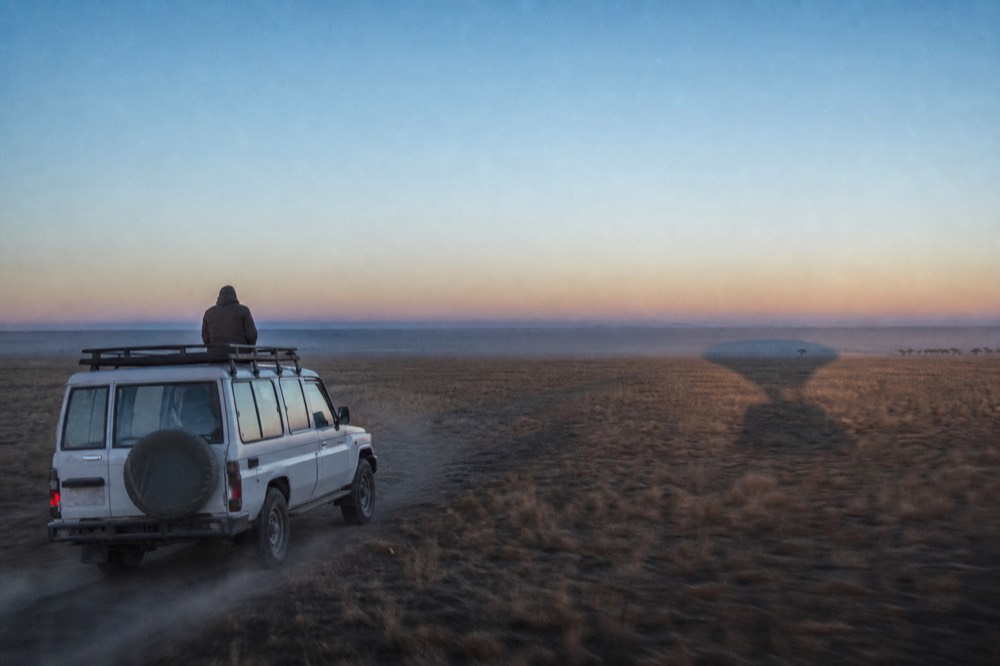
| Scope | Period searched | What the record shows |
|---|---|---|
| Serengeti National Park | 2020 to 2026 | No commercial balloon incident found |
| East Africa (Tanzania and Kenya) | 2020 to 2026 | No commercial balloon incident found in news or aviation safety sources |
| Serengeti National Park | Most recent documented | 2010 landing crash in strong wind: 2 fatalities, 8 injured, 11 aboard |
| Worldwide, regulated commercial operations | Recent published guidance | Serious incidents in the dozens per year against millions of passenger flights |
| Worldwide, all ballooning | 2008 to 2022, one compilation | Under 30 fatalities across the period |
What is the fatality rate for hot air balloons, and is it riskier than driving?
There is no single published fatality rate for commercial hot air ballooning, and anyone quoting one precisely is rounding something. The figures that do exist: serious incidents in regulated commercial ballooning run in the dozens per year worldwide against millions of passenger flights, an incident rate well under 0.001 percent, while older United States data periods put balloon accident rates at roughly twice those of other general aviation.
Those two statements sit awkwardly together until you notice what separates them. The bad numbers cluster around non-commercial and unlicensed flying, and around weather violations: pilots who launched when they should not have. The good numbers describe certified operators flying inside their limits. Serengeti tourist ballooning is squarely in the second category, and the whole apparatus described on this page exists to keep it there.
On the driving comparison, which people search constantly: no honest Tanzania-specific version of that statistic exists. What can be said is that the balloon morning includes a road transfer in the dark on unlit park tracks, plus a chase-vehicle drive to the landing point, and on the raw arithmetic of the day those drives are unlikely to be the safest part of it. That is not a reason to skip the flight. It is a reason to be sceptical of any comparison presented with false precision, in either direction. Whether the hour in the basket justifies the outlay is a different calculation entirely, worked through in the honest verdict on whether the flight is worth it.
What is the landing actually like?
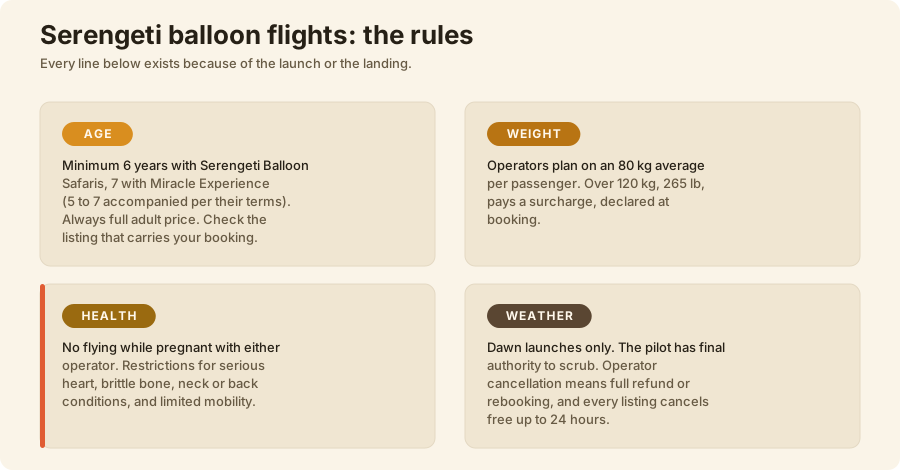
The landing is the sporty part. A balloon has no brakes, so the pilot brings it down onto open ground with forward speed still on and the basket skids, then usually tips and drags a short distance through the grass before stopping. Passengers are briefed to face the direction of travel, bend their knees, hold the rope handles inside their compartment and stay in until told otherwise.
Nobody should be surprised by this on the morning, and yet people routinely are, because the marketing photography shows the serene bit. A firm landing is normal, expected, and the reason the briefing happens. On still mornings the basket can settle almost upright with a bump you would call gentle. On a morning with any breeze at all, expect a slide and a tip, and expect to be lying against the side of the basket looking at the sky for a few seconds while it stops.
| Moment | What the pilot does | What you do |
|---|---|---|
| Five minutes out | Picks open ground clear of trees, rock and animals, drops toward it | Stow cameras and phones, listen for the brace call |
| Final approach | Burns short and low to control descent rate | Face the direction of travel, feet apart, knees bent |
| Touchdown | Vents hot air from the crown as the basket meets the grass | Hold the rope handles inside your compartment, keep hands inside the rim |
| The drag | Lets the envelope pull the basket flat and bleed off speed | Stay braced against the side, do not stand up |
| Stopped | Confirms the envelope is down and the crew has the basket | Wait for the call, then climb out over the wall |
Two practical consequences follow. First, loose objects are a hazard: a camera on a neck strap is fine, a camera held in one hand while the other hand holds nothing is not. Second, the landing is the reason for the health restrictions further down this page. A recent spinal injury, brittle bones, or a neck problem turns a routine drag landing into something else entirely.
Miracle Experience runs the same dawn window and the same landing physics, with tea and coffee before the burners light and a briefing before boarding, and it carries the highest-volume perfect score in the park at 5.0 across 2,651 reviews. Reviewers on that flight mention the landing more often than the flight itself, almost always as a story rather than a complaint.
Who should not go on a hot air balloon ride?
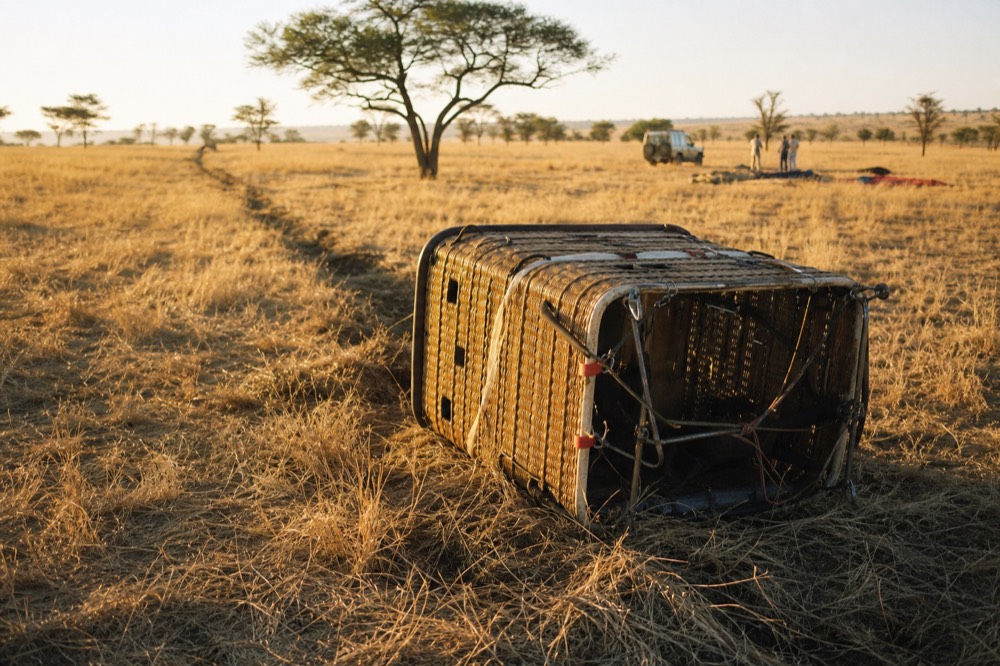
Anyone pregnant is excluded by both established Serengeti operators. So is anyone whose mobility would prevent them climbing into a chest-high basket unaided, and anyone with a serious heart condition, brittle bones, or a neck or back problem that a firm landing could aggravate. Children are subject to an age floor that differs by operator, and passengers above 120 kg pay a surcharge rather than being turned away.
The pregnancy rule is absolute rather than trimester-dependent, and it is stated in the terms of both operators. It is not about altitude. It is about the landing, and about being unable to brace effectively in a confined space. The full picture on ballooning while pregnant covers what the operators actually write and what the alternatives are for a partner who still wants to fly.
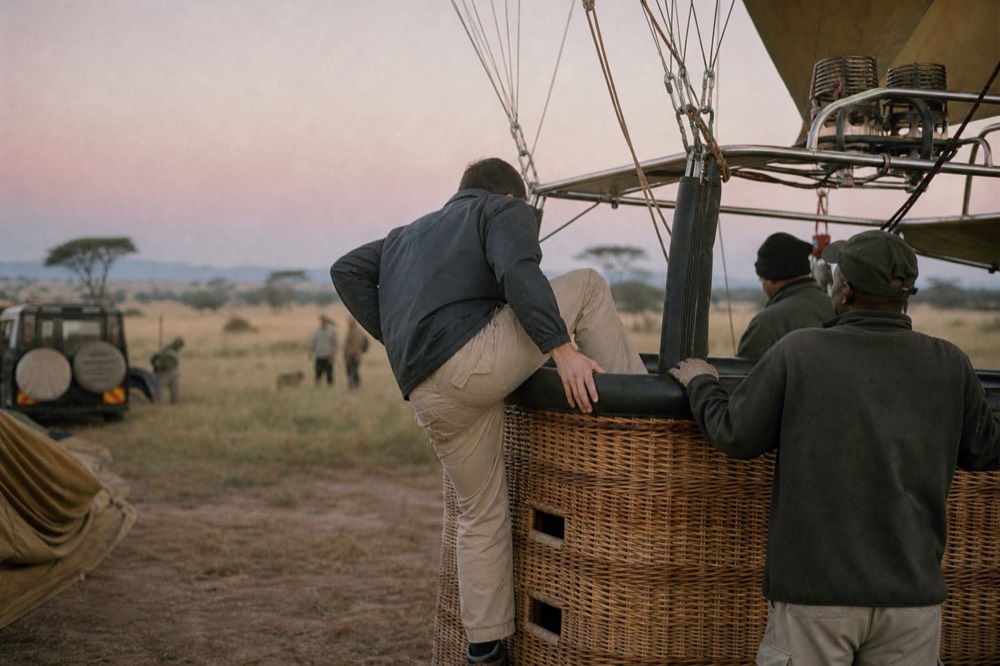
Mobility deserves more attention than it usually gets. There is no door in a balloon basket. You climb in over a wall roughly at chest height, using footholds cut into the side, and you climb out the same way, sometimes from a basket lying on its side in long grass. Guides and crew help, but they cannot lift an adult. If stepping onto a high safari-vehicle running board is already a struggle, this is worth an honest conversation with the operator before booking rather than at the launch field.
Age rules differ, which is the single most common source of confusion. Serengeti Balloon Safaris sets its minimum at 6 years. Miracle Experience states 7 and above, with 5 to 7 permitted accompanied by a responsible adult under their terms. Both charge full adult price regardless of age. Never plan a family morning off one number: check the listing that carries your booking, and read the full family rundown on age and weight rules for kids before you promise anything to a nine-year-old.
| Rule | Serengeti Balloon Safaris | Miracle Experience | Why it exists |
|---|---|---|---|
| Minimum age | 6 years | 7 years (5 to 7 accompanied per their terms) | Height to see over the basket rim, ability to brace on landing |
| Pregnancy | Not permitted | Not permitted, including possible pregnancy | Firm landings, no way to brace safely |
| Weight over 120 kg (265 lb) | Surcharge or second place | Supplement payable | Basket load limits and compartment space |
| Heart, brittle bone, neck or back conditions | Restricted | Check before booking | Impact loads on a drag landing |
| Limited mobility | Restricted | Check before booking | Chest-high basket entry and exit, no door |
Do they weigh you, and do you get strapped in?
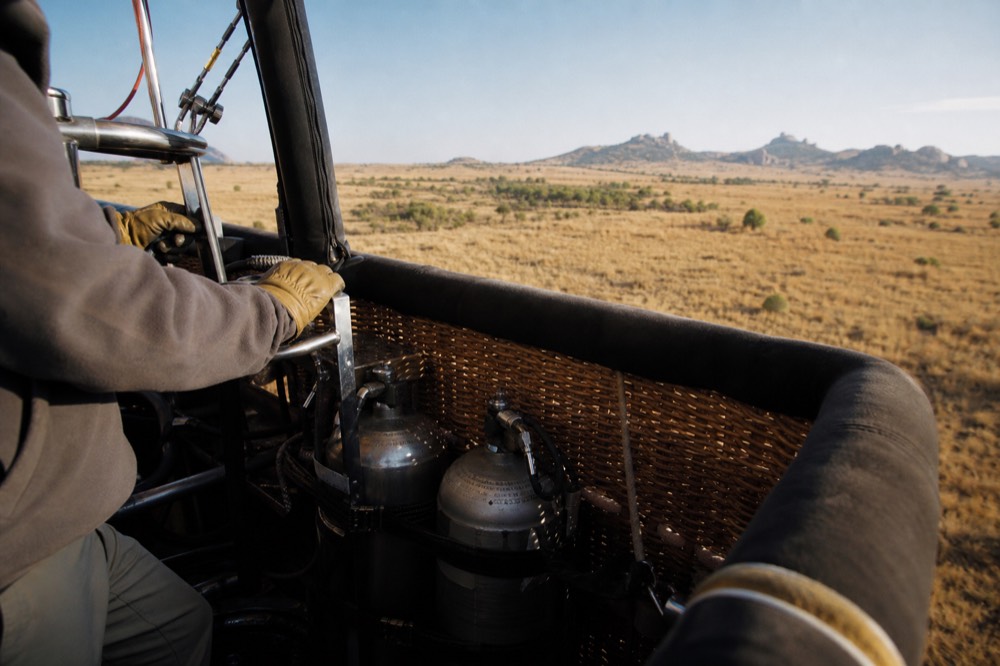
No scale appears at the basket, and no harness or seatbelt exists in a balloon. Operators plan on an 80 kg average per passenger and ask anyone over 120 kg to declare it at booking, where a surcharge applies. In the air you stand in a padded compartment shared with three or four others, holding rope handles, and the only restraint is the basket wall itself.
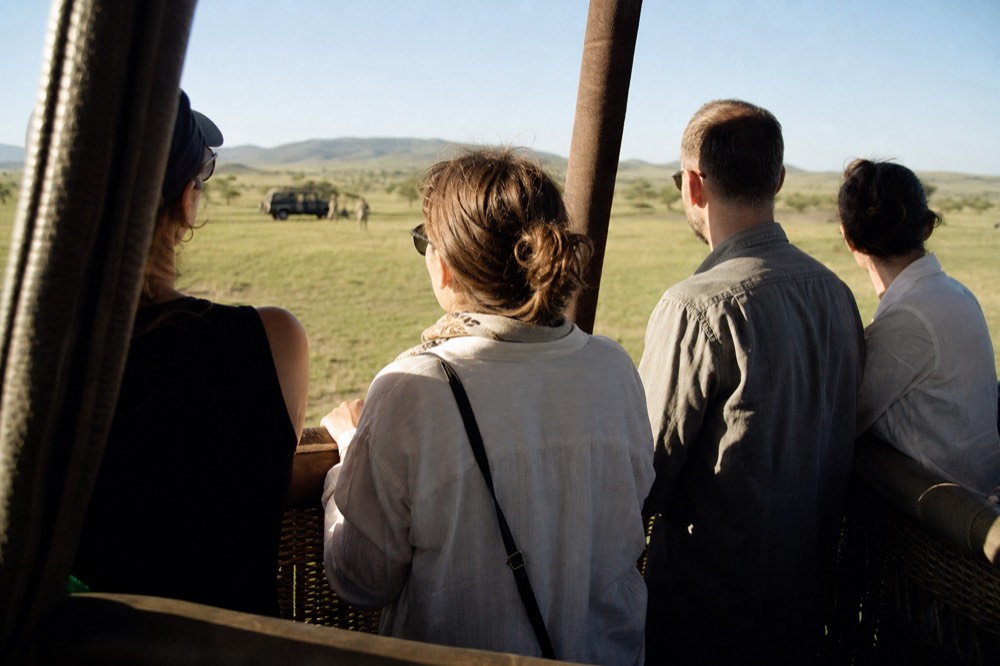
The absence of a strap surprises people, and it is deliberate rather than an oversight. In a firm landing the basket may tip and drag, and being tethered to a structure that is rolling is worse than being braced inside it. Balloon baskets are built as a set of compartments precisely so that each passenger has walls on all sides and cannot be thrown across the floor. Feet apart, knees soft, hands on the handles, and the compartment does the work.
The weight question works the same way: quietly, at booking, rather than publicly at the field. The number the operator needs is aggregate, because lift depends on total load against envelope volume and air temperature, and a basket loaded to the same total flies the same whether that total comes from eight passengers or twelve. The full answer on whether anyone weighs you covers what actually gets asked and when.
The Nyssa Tourism Holdings flight makes the briefing an explicit step in its listed itinerary, running coffee, then the safety briefing, then the flight, then a longer dressed-up bush breakfast, out of camps around Seronera. It is a newer listing with only eight reviews behind its 4.9, so the volume of proof is thin, but it flies the same central-Serengeti window as everything else. Prices on it start at $599, with Serengeti park entry fees paid separately as part of your safari rather than through the balloon booking, and you can see the morning's itinerary and available dates on the booking page.
How the four bookable flights compare on safety terms
All four flights share the fundamentals: shared basket, dawn launch only, 50 to 70 minutes airborne, free cancellation up to 24 hours. Where they differ is age floor, pickup radius and how much published detail exists behind their rules, which matters more than it sounds when you are travelling with a child or an elderly parent.
The two long-established operations publish their own passenger rules on their own websites, which is why the age and weight lines above can be stated with confidence. The two newer listings sell the same product without an equally detailed published rulebook, so anything specific to your party needs confirming through the booking page before you pay. That is not a criticism of either, just a difference in what is on the record.
The champagne-breakfast version costs about $44 more than the standard listings, at $643 against $599, with Serengeti park entry separate from both, and its main practical advantage is a wider pickup network covering more Serengeti accommodation. If your camp sits outside the usual transfer radius, that is the one to check dates and availability on first, whatever you think of the champagne. To weigh all of them side by side, the full flight lineup sets out what each morning includes.
| Flight | Operator | Age floor | Weight rule | Pickup |
|---|---|---|---|---|
| Serengeti Balloon Safari with Bush Breakfast | Serengeti Balloon Safaris | 6 years | Surcharge over 120 kg | Camps within ~2 h of the launch sites, Serengeti and Ngorongoro sides |
| Miracle Experience Balloon Safari & Bush Breakfast | Miracle Experience | 7 years (5 to 7 accompanied) | Supplement over 120 kg | Camps and lodges inside Serengeti National Park |
| Balloon Ride with Luxury Bush Breakfast | Nyssa Tourism Holdings | Check the listing | Check the listing | Seronera-area camps and lodges |
| Balloon Flight with Champagne Breakfast | Beach & Safari Holidays | Check the listing | Check the listing | Wider selection of Serengeti accommodation |
Common questions about balloon safety in the Serengeti
How safe are hot air balloon rides in the Serengeti?
They are run by TCAA-licensed operators with commercially licensed pilots, launching only at dawn in the calmest air of the day, and cancelled outright when the wind is wrong. No commercial balloon incident in East Africa surfaced in the 2020 to 2026 record. The most recent documented Serengeti accident was a windy landing in 2010.
What is the fatality rate of hot air balloons?
There is no single published figure. Regulated commercial ballooning worldwide records serious incidents in the dozens per year against millions of passenger flights, an incident rate well under 0.001 percent, while one compilation counts under 30 balloon fatalities globally across 2008 to 2022. Most incidents involve non-commercial or unlicensed flying, or weather violations.
Who should not go on a hot air balloon ride?
Anyone pregnant, anyone unable to climb unaided into a chest-high basket, and anyone with a serious heart condition, brittle bones, or a neck or back problem that a firm landing could aggravate. Children below the operator's age floor, 6 years with Serengeti Balloon Safaris and 7 with Miracle Experience, cannot fly at all.
Is hot air ballooning riskier than driving?
No honest Tanzania-specific comparison exists, and any precise version of that statistic is being rounded from something else. What can be said is that a balloon morning includes a pre-dawn road transfer on unlit park tracks, and on the raw arithmetic of the day those drives are unlikely to be the safest part of it.
Do Serengeti balloon flights get cancelled for weather?
Yes, and the decision sits with the pilot on the morning, often at the launch site with the envelope already laid out. Operators publish no numerical wind ceiling. When the operator cancels, the stated policy is a full refund or a rebooked flight, and all four bookable flights also cancel free up to 24 hours before pickup.
Is a Serengeti balloon safari safe for children?
Above the operator's age floor, yes, subject to the same landing brief as adults. Serengeti Balloon Safaris sets the minimum at 6 years, Miracle Experience at 7 with 5 to 7 accompanied under their terms. Both charge full adult price. Height matters as much as age: a child who cannot see over the rim will not enjoy it.