The Best Time for a Balloon Flight Over the Serengeti, Month by Month (2026-2027)
The month you fly decides your light, your herds, your launch site and how hard the dawn slot is to get.
 By Juma Kimaro, Serengeti balloon safari specialist since 2015
Short answer
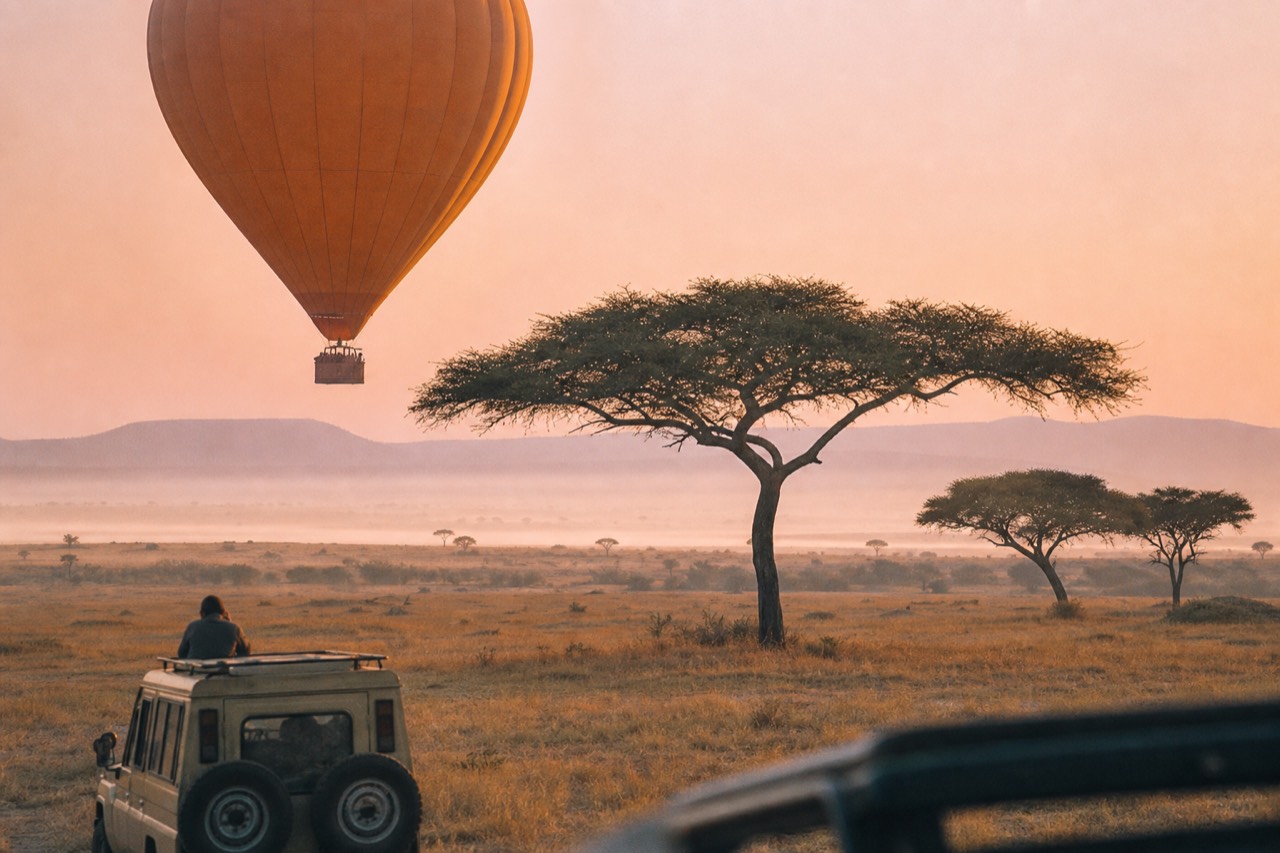
June to October is the strongest window: dry air, short bleached grass, and up to three launch sites open at once, with the northern site over Mara River crossing country from July. Late December to mid-March is the other serious case, when the Ndutu site flies above calving herds on the southern plains. Central Seronera flights run every morning of the year, so no month is a write-off.
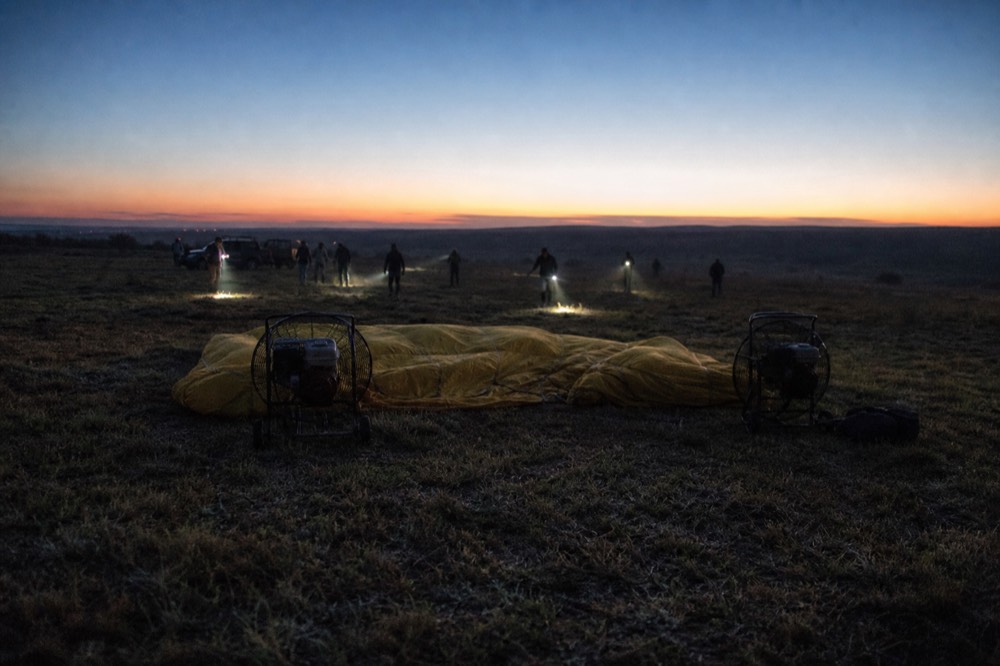
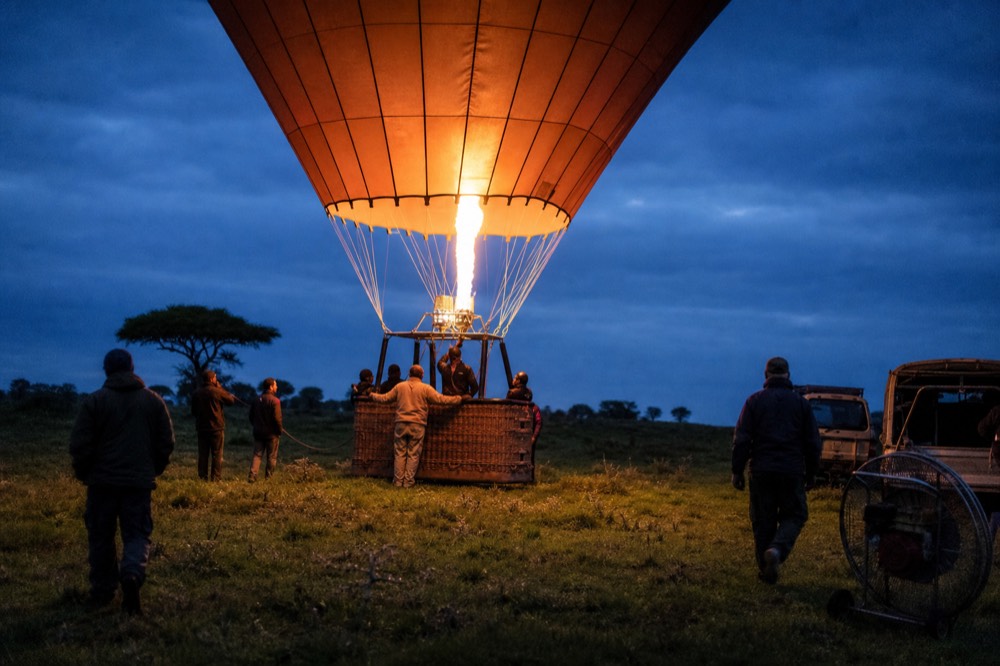
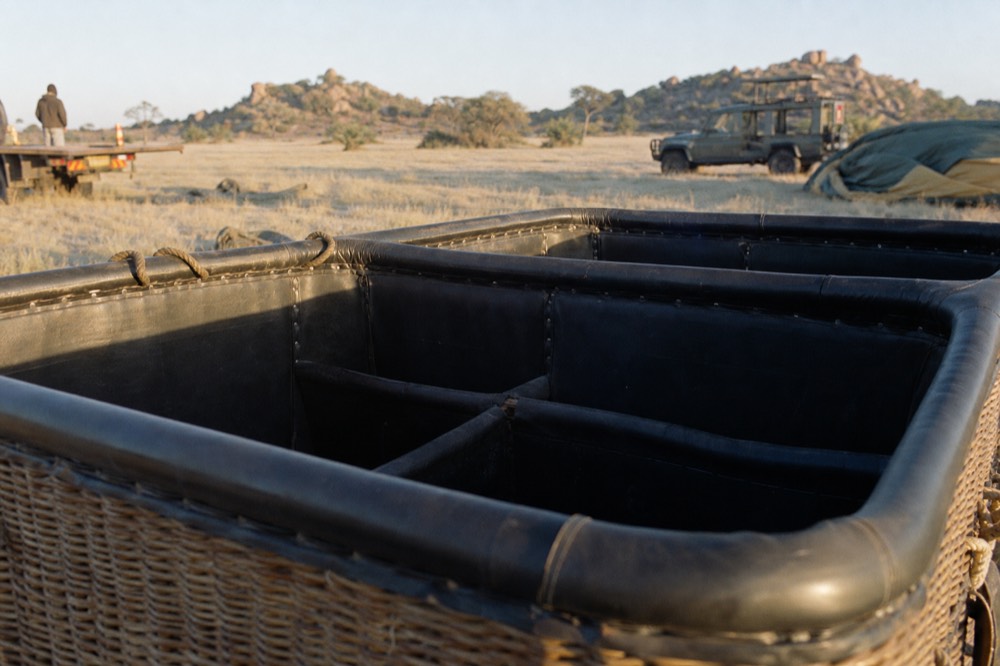
At ten past five the grass is still grey and the loudest thing on the field is a pair of petrol fans pushing cold air into a slack envelope. Then the burner goes on. The whole clearing turns orange for two seconds at a time, the fabric lifts off the ground, and somewhere out in the dark a hyena decides it has heard enough. Twenty minutes later the basket is off the grass and the plain below has gone from grey to gold in the time it takes to finish a cup of coffee.
That morning happens every day of the year in the central Serengeti. What changes month to month is everything around it: how far you can see, what is moving underneath you, which launch fields are even open, and how many other people want the same sunrise. All four bookable hot air balloon Serengeti flights launch at first light and only at first light, so the month you pick does far more work than the hour you pick.
Which month is actually the best for a balloon flight over the Serengeti?
August is the single strongest month: dry cool air, short grass, three launch sites operating, and the herds concentrated in northern Serengeti river country. February is the best alternative if you want calving herds under a green plain. April and May are the weakest months, though central flights still run every morning.
The reasoning behind that is less about the balloon than about what the balloon is flying over. In the dry stretch from June to October the grass is grazed and bleached down to ankle height, which means animals stop being lumps in a green mattress and start being visible from three hundred feet. Dust hangs in the low light and gives the whole plain that layered orange depth that makes the photographs work. Mornings are genuinely cold, which is a small price.
August adds one more thing. That is when the wildebeest are stacked along the northern Serengeti and the Mara River, which is the only stretch of the season where the herds and a launch site sit in the same postcode. The Kogatende site in the north runs July to October. The Western Corridor site at Kirawira and Grumeti runs June to October. Add the year-round Seronera field and August is the only part of the calendar with three separate operating areas at once.
The counter-case is real, though. February puts you over the short-grass plains around Ndutu during calving, with predators working the edges of the herds and a green landscape that photographs completely differently. Fewer people are in the park. Flights are easier to get. If your trip is fixed to the northern hemisphere winter, you are not settling for second best, you are getting a different and equally strong product.
The month-by-month scorecard
Every month in the Serengeti flies, but only some of them stack the deck. This table lines up weather pattern, typical herd position, which launch fields are operating and how contested a dawn slot tends to be, so you can read your own travel dates against the season instead of guessing.
Pressure in the last column is not a headcount. It reflects two things that can be checked: how many launch areas are operating that month, and whether the migration is sitting in a sector that a balloon can reach. When one site has to serve the whole crossing season, dawn slots get tight. When three sites are open and the herds are spread out, they loosen.
| Month | Weather pattern | Where the herds usually sit | Launch sites flying | Pressure |
|---|---|---|---|---|
| January | Short rains easing, warm days, green plains | Southern plains near Ndutu, calving beginning | Seronera, Ndutu | High |
| February | Green, warm, short afternoon storms | Ndutu and the southern short-grass plains | Seronera, Ndutu | High |
| March | Long rains begin | Ndutu until the 15th, then drifting north and west | Seronera, Ndutu to 15 March | Medium |
| April | Long rains in full | Central Serengeti, herds spread out | Seronera | Low |
| May | Long rains tapering, grass tall and green | Central, columns forming toward the west | Seronera | Low |
| June | Dry season starts, cold dawns | Western Corridor and the Grumeti | Seronera, Western Corridor | Medium |
| July | Dry, dusty, cold at first light | Pushing north, first river crossings logged | Seronera, Western Corridor, Kogatende | High |
| August | Dry, cool, thin bush | Northern Serengeti and the Mara River | Seronera, Western Corridor, Kogatende | Highest |
| September | Dry, warming through the day | North, crossings continuing | Seronera, Western Corridor, Kogatende | High |
| October | Dry, hot, first storms late in the month | North, herds beginning to turn south | Seronera, Western Corridor, Kogatende | High |
| November | Short rains arrive, dust settles | Moving south through the east and centre | Seronera | Low |
| December | Green flush, warm | Southern plains by late month | Seronera, Ndutu from 25 December | Medium |
Two rows deserve a second look. March is a split month: the Ndutu field closes on the 15th, so a flight on the 12th and a flight on the 18th are two different products in two different landscapes. And October is the gamble month, still dry and still northern at the start, capable of turning green and quiet by the end.
Why June to October is the default answer
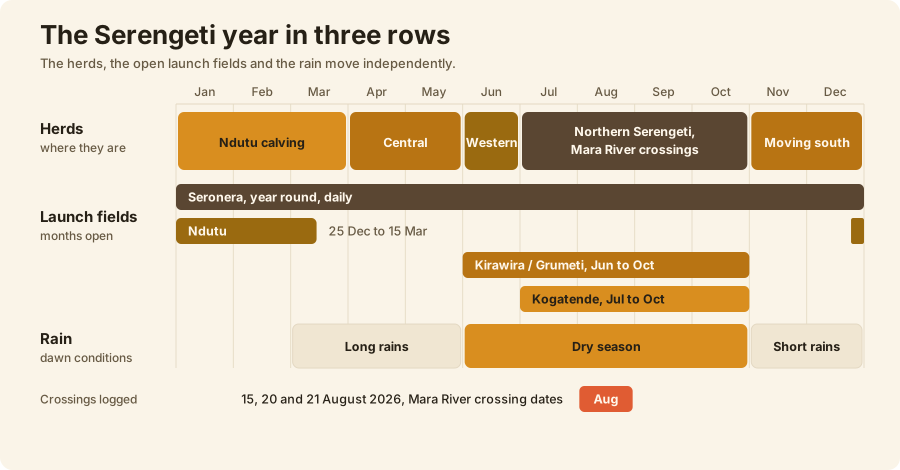
The dry season wins on visibility before it wins on wildlife. Grazed grass, thin bush and hard morning light make animals readable from altitude, and up to three launch areas operate at once. It is also the only stretch where a launch field sits directly under the migration's river-crossing country.
Start with the ground. By late June the plains have been eaten down, the seasonal pans have dried out, and game concentrates on permanent water. From a basket at a few hundred feet that concentration is the whole point: instead of scanning green scrub for movement you are reading dark shapes against pale grass, and you can follow a line of animals for a kilometre without losing it.
Then the sites. The Western Corridor field at Kirawira and Grumeti opens in June and runs to October, which lines up with the herds moving west and hitting the Grumeti river system. The Kogatende field in the far north opens in July and runs to October, directly over the Mara River crossing points. Those windows come straight from the operator's own published schedule, and the published launch-site seasons have not changed for the 2026-2027 season.
The cost side is worth being honest about. Dry-season camps in the northern Serengeti are the most expensive beds of the year, and park entry sits on top of everything: roughly $70 per day for a non-East-African adult per the latest published TANAPA tariff, which you pay with your safari rather than with the flight. The park authority's tariff schedule is the primary document, and rates move, so treat it as a planning figure. If the dry season blows your budget, the flight itself is the wrong place to economise, because it is priced the same in every month.
| What you care about | June to October | November to May |
|---|---|---|
| Ground cover | Grass grazed short and bleached, animals easy to pick out | Tall green grass, smaller game hidden |
| Air at dawn | Dry, dusty, long sight lines once the haze lifts | Washed clear after rain, but low cloud is possible |
| Herd position | West in June, north from July, over crossing country | South and central, calving concentration January to March |
| Launch areas operating | Two or three | One for most of it, two from 25 December |
| Weather scrub | Least likely stretch of the year | More likely when storm systems sit over the park |
| Dawn temperature | Cold enough to need real layers | Mild |
| Competition for a slot | Peak | Easiest of the year |
| Camp rates | Highest, especially in the north | Lower outside the festive weeks |
The calving-season case: Ndutu, 25 December to 15 March
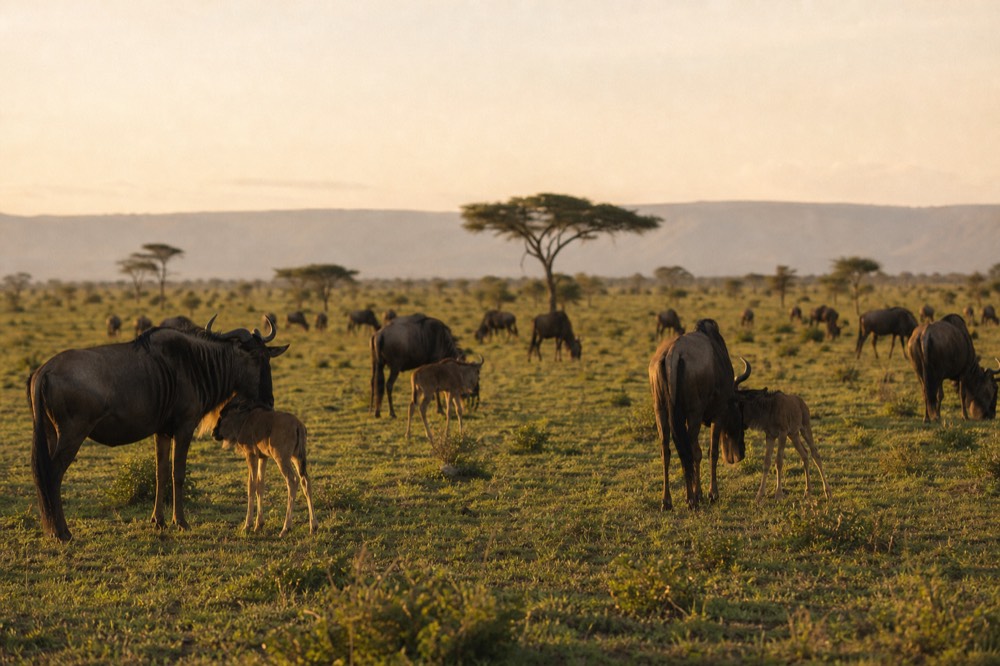
The Ndutu launch field operates for about eleven weeks a year, from 25 December to 15 March. It flies over the southern short-grass plains during calving, when hundreds of thousands of wildebeest concentrate on a small area of green and predators work the edges. It is the strongest non-dry-season window on the calendar.
Calving is a density event rather than a movement event. The herds are not strung out across a hundred kilometres of dust, they are packed onto short nutritious grass in the south, which from the air reads as a mottled dark carpet with lanes worn through it. Grass is short in this window too, for a different reason: it is being grazed flat and it has not had time to grow tall.
The catch is the window itself. Eleven weeks is nothing, and the boundary dates are hard. Fly on 14 March and the southern field is operating; fly on 16 March and your only option is central Seronera, which is a good flight over a different landscape. If your dates land near either edge, build the balloon into the first half of your trip rather than the last, so a weather scrub still has somewhere to go.
Pickup geography matters more here than anywhere else on the calendar. The southern plains straddle the park boundary and the Ngorongoro Conservation Area, and camps in that zone are scattered. Only one of the four flights advertises pickups on both the Serengeti and the Conservation Area sides, within roughly two hours or 40 km of a launch site. Our launch site windows and camp-matching guide works through the radius mechanics in detail.
What the 2026 season actually did
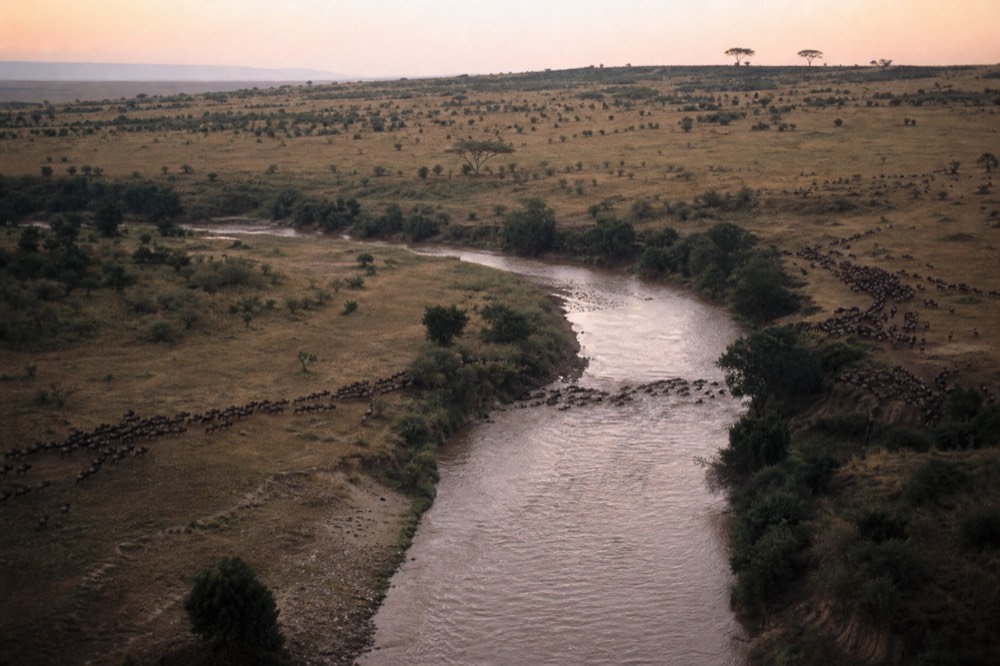
The 2026 migration ran to type. Trackers logged Mara River crossings on 15, 20 and 21 August, with the 20 August event described as thousands of animals pouring down steep banks. Crossings had been building since mid-July at points near Kogatende. No unusual early or late shift was documented anywhere in the season.
This matters because the migration's reputation for unpredictability gets oversold. Yes, the herds move 4 to 8 weeks either side of the average depending on rainfall, and yes, nobody can promise you a crossing on a named date. But the long-term record puts August as the most active crossing month, and the 2026 season sat squarely inside the normal envelope rather than outside it.
| Date logged | Reported location | What was recorded |
|---|---|---|
| 16 July 2026 | Mara Triangle | Herds crossing into the Triangle |
| 17 July 2026 | Crossing Point 6, near Kogatende | Crossing activity at the point |
| 26 July 2026 | Crossing Point 0 | Crossing logged |
| 5 August 2026 | Crossing Point 6 | Herd moving south to north |
| 15 August 2026 | Northern Serengeti | River crossing as herds continued north |
| 20 August 2026 | Mara River | Thousands crossed, described as a wildebeest waterfall down steep banks |
| 21 August 2026 | Mara River | First animal took the leap, then a full-scale crossing followed |
Anyone planning around this can watch it happen. The live migration tracker is fed by guides and camps posting sightings with dates and locations, which is as close to real-time herd position as an outsider gets. Use it in the months before you travel to see whether the season is running early or late, then talk to your camp about which launch field that points to.
Does any month work if you fly from Seronera?
Yes. The central Seronera field operates daily, year-round, which means the flight itself never depends on the migration being in reach. What you get instead is resident game, granite kopjes, riverine forest and the Seronera valley in first light. On fixed dates, that is the honest baseline and it is a good one.
There is a habit in migration coverage of treating any non-crossing month as a failure. It is not how the flight works. A balloon drifts wherever the dawn wind takes it, usually a few kilometres over an hour, and what fills that hour in the central Serengeti is a permanent resident population: elephant along the watercourses, giraffe in the acacia woodland, lion on the kopjes, hippo pods in the pools. None of that leaves in April.
The other thing the central field has is consistency of operation. One launch area running every morning of the year builds a rhythm the seasonal fields cannot: same access roads, same landing zones, same pickup logistics. If your safari is a classic central-circuit itinerary out of Seronera, the flight slots into it without you rearranging a single night.
Reviewers on the two big classic flights consistently rate them at the top of their trip regardless of season, and both carry review counts in the thousands rather than the dozens. The flight-by-flight comparison of what you actually get goes through the review record properly.
How far ahead should you book?
Book the flight when you book the camp, not after. Dawn capacity is finite and every listing here cancels free up to 24 hours before the start, so an early booking costs you nothing to reverse. The tightest windows are July to October in the north and the eleven-week Ndutu season from 25 December.
The mechanics are simple. Each launch field runs one dawn wave, and the number of baskets in the air on any given morning is fixed by the equipment on site. In the north, a single field serves the entire crossing season, which is why July to October slots go first. In the calving window, the Ndutu field is open for less than a quarter of the year and the festive weeks sit right at the front of it.
Against that, the cancellation terms do real work in your favour. Every one of the four flights cancels free up to 24 hours out, and if the pilot scrubs the morning for weather the operator rebooks you or refunds in full. There is no scenario where booking early and changing your mind costs money, which removes the only reason to wait. Once your dates are firm, check dates and the live price for the morning you want and hold it.
| When you fly | Site you will most likely launch from | Why that morning is contested | What the 24-hour cancellation gives you |
|---|---|---|---|
| 25 Dec to 15 Mar | Ndutu or Seronera | An eleven-week season with calving herds under it, festive weeks at the front | Hold the date now, release it a day out at no cost |
| Mar to May | Seronera | Quietest months of the year, but weather scrubs bite hardest | Room to hold two mornings and drop one |
| June | Seronera or Western Corridor | Dry season opens and the western field comes back online | Book on arrival dates before the herds move north |
| Jul to Oct | Kogatende, Western Corridor, Seronera | One northern field serves the whole crossing season | Early hold is free insurance against a sold-out wave |
| Nov to 24 Dec | Seronera | Only field operating, but demand is at its lowest | Little pressure, book on arrival if you prefer |
What the rain months really do to a dawn flight
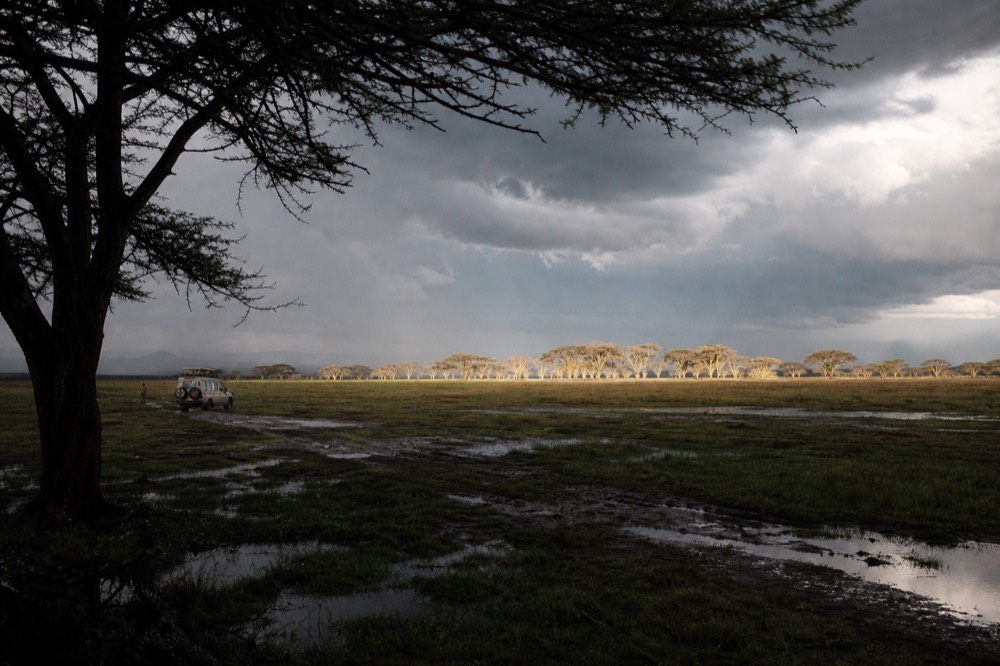
Rain in the Serengeti is an afternoon and evening habit, not a dawn one, which is exactly why balloons fly at first light. The real risk in the wet months is wind and low cloud on the launch field, not the rain itself. If the pilot scrubs, the operator rebooks you or refunds in full.
The physics of a dawn launch does most of the work. Before sunrise the ground has cooled all night, thermals have not started, and the air sits still in the lowest few hundred metres. That is the calmest air of the day in any season. It is why every one of these flights launches at dawn and none of them offers an afternoon slot.
What the long rains from March to May change is the number of mornings where a front is still sitting over the launch field at five in the morning. That happens, and the decision is the pilot's. The Tanzania Civil Aviation Authority licenses these operations and the commercial pilots flying them, and the culture around scrubbing is conservative: no operator here wants a marginal morning. Both major operators publish the same policy in their own terms, and the operator's own conditions spell out the refund and rebooking side.
| Season | Rain pattern | Typical dawn on the launch field | If the pilot scrubs |
|---|---|---|---|
| Dry, June to October | Little to none | Cold, still, clear, dusty haze after sunrise | Rare; rebooked to the next morning |
| Short rains, November to December | Brief showers, often late in the day | Mild, occasionally cloudy, usually flyable | Rebooked, or refunded in full |
| Long rains, March to May | Extended, heavier systems | The most variable of the year, low cloud possible | Rebooked, or refunded in full |
| Green shoulder, January to February | Warm with short afternoon storms | Mostly clear and flyable at first light | Rebooked, or refunded in full |
The practical answer is to give yourself a spare morning. Two nights at the same camp means a scrubbed flight has a second chance without touching your itinerary. One night means a scrub turns into a refund, which is fair but is not the flight you came for. That single decision matters more in March than in August, and it is free to make. Seen from the ground rather than the basket, the same stretch of calendar is the one most itineraries route around, and which months a Tanzania safari should skip makes that case with the mud, the closed camps and the tall grass.
Which of the four flights suits which month?
All four launch at dawn, run 50 to 70 minutes airborne and finish with a cooked bush breakfast and a sparkling toast, around five hours door to door. What separates them by month is pickup reach: which camps each one collects from, and whether that camp is near the launch field your month points to.
The flagship classic flight has the widest published reach, collecting from camps and lodges within roughly two hours or 40 km of the launch sites, on both the Serengeti and the Ngorongoro Conservation Area sides. That Conservation Area reach is what makes it the practical choice for the December to March calving window, when a lot of the good beds sit outside the park boundary.
The second classic flight picks up inside Serengeti National Park, which covers most itineraries from June onward. The two boutique options are narrower and wider in different ways: one is built around Seronera-area pickup with a longer dressed-up breakfast, the other collects from a broader list of Serengeti accommodation for $44 above the standard rate. Park entry fees are separate from every one of these prices, paid through your safari at the gate.
| Flight | Rating | Reviews | From price | Pickup reach | Months it fits best |
|---|---|---|---|---|---|
| Serengeti Balloon Safari with Bush Breakfast | 4.9 | 3,504 | $599 | Camps within ~2 h / 40 km, Serengeti and Conservation Area sides | Any month, and the practical pick for 25 Dec to 15 Mar |
| Miracle Experience Balloon Safari & Bush Breakfast | 5.0 | 2,651 | $599 | Pickup inside Serengeti National Park | Any month you are sleeping inside the park |
| Balloon Ride with Luxury Bush Breakfast | 4.9 | 8 | $599 | Seronera-area pickup | Central-circuit nights, year-round |
| Balloon Flight with Champagne Breakfast | 5.0 | 3 | $643 | A wider selection of Serengeti accommodation | When your camp is off the standard pickup list |
Read those review counts honestly. The two classic flights have thousands of ratings behind them; the two boutique listings have single figures, which tells you they are newer listings rather than worse flights. If the review record is what settles it for you, the classic pair is where the evidence is. If your camp only appears on one pickup list, that decides it instead. You can weigh the whole lineup on the classic dawn flights section of the homepage, and if the extras matter, see what the champagne breakfast version includes.
Two last month-driven notes. Cold is not optional in June, July and August: the basket is exposed, the burner warms your head and nothing else, and dawn on the plains in the dry season is genuinely cold, which our dawn-flight clothing guide covers layer by layer. And if you are choosing your whole trip month rather than just your flight month, the park-wide answer on when to visit weighs the safari as a whole, while how the migration reads from altitude handles the crossing season specifically. The full cost picture including park fees is the other half of the planning maths.
Frequently asked questions
What month is best for a hot air balloon?
Over the Serengeti, August. Dry cool air, grass grazed short, three launch areas operating and the herds concentrated in northern river country. February is the strongest alternative, flying over calving herds on the southern plains from the Ndutu field, which operates 25 December to 15 March. Central Seronera flights run every morning of the year.
Can you see the Great Migration from a balloon over the Serengeti?
Often, if your month and launch field line up with the herds. July to October the northern Kogatende field flies over Mara River crossing country; June the Western Corridor field sits near the Grumeti; January to March the Ndutu field flies over calving herds. A balloon drifts with the wind and cannot be steered toward a herd, so nobody can promise it.
Do balloons fly in the Serengeti rainy season?
Yes. The central Seronera field operates every morning of the year, including the long rains from March to May. Rain in the Serengeti is mostly an afternoon habit, and dawn is the calmest air of the day in any season. If the pilot scrubs for wind or low cloud, the operator rebooks you or refunds in full.
How far in advance should I book a Serengeti balloon flight?
Book it when you book your camp. Dawn capacity is finite, one northern field serves the whole July to October crossing season, and the Ndutu window is only eleven weeks long. Every listing cancels free up to 24 hours before the start, so booking early carries no financial downside if your plans change.
What happens if the weather cancels my flight?
The pilot makes the call at the launch field, usually before sunrise. When a flight is scrubbed for weather the operator rebooks you onto another morning if your itinerary allows it, or refunds the fare in full. Booking two nights at the same camp gives a scrubbed morning somewhere to go instead of turning into a refund.
Is August too busy to fly?
Busy, not blocked. August is peak season, three launch areas are operating and the northern field is the one everybody wants during crossing season. Dawn waves are finite, so slots do fill. The fix is to book the flight at the same time as the camp rather than on arrival, using the free 24-hour cancellation as your safety net.