When to avoid Tanzania?
The long rains from March to May are the real avoid window for a Tanzania safari. What closes, what still flies, and the case for going in green season anyway.
 By Juma Kimaro, Serengeti balloon safari specialist since 2015
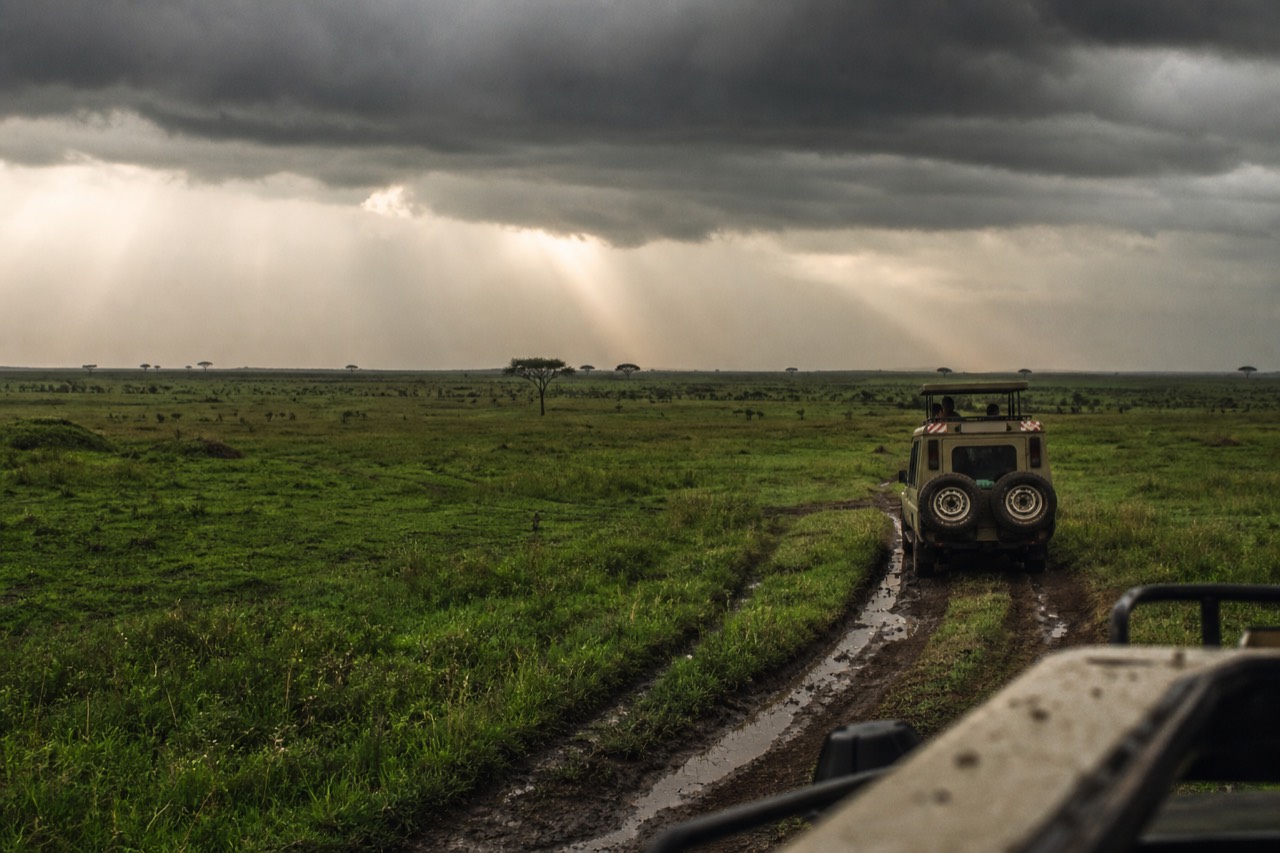
Black cotton soil is what nobody warns you about. Dry, it sets like concrete and the tracks run fast. Wet, it turns to a grey grease that swallows a Land Cruiser to the axle and stays that way for days after the rain stops. That soil, more than rainfall totals, empties one stretch of the calendar.
When is the worst time to visit Tanzania?
The long rains, roughly March through May, are the window most safari plans should route around. Rain arrives in long overnight and afternoon systems rather than short bursts, tracks turn to mud, mornings go flat and grey, and many seasonal camps close or move.
April is the deepest part of it. The grass is high, which pushes sightings down even when the animals are there, and drives slow as drivers pick their lines. Photographers lose the low golden light behind a lid of cloud. Lodges know this, which is why green-season rates fall so far. Everything on this page is a weather answer rather than a security one, and anyone whose real question is about advisories will find the current US advisory picture for Tanzania laid out separately.
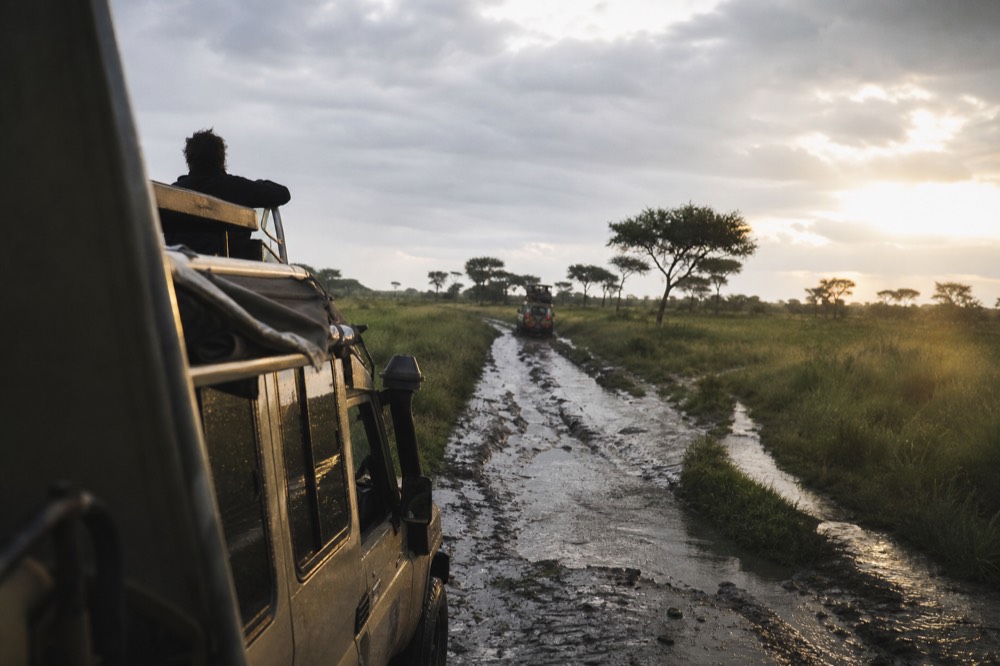
The long rains also thin the map. Balloon operations show it clearly, since the seasonal launch sites follow the herds and the ground. Ndutu closes 15 March, the Western Corridor site opens in June, Kogatende waits for July. Through April and May, one launch site carries the whole park.
Do balloons still fly in the rainy season?
Yes, from Seronera in the central Serengeti, every day of the year. What changes in the rain months is not whether flights are scheduled but how often one is scrubbed: pilots hold final authority to cancel for wind or rain, and a cancelled flight is rebooked or refunded in full.
That refund policy makes a wet-season booking survivable rather than reckless. Every listing here also cancels free up to 24 hours out, so if the forecast turns while you are on the road you lose nothing by pulling out.
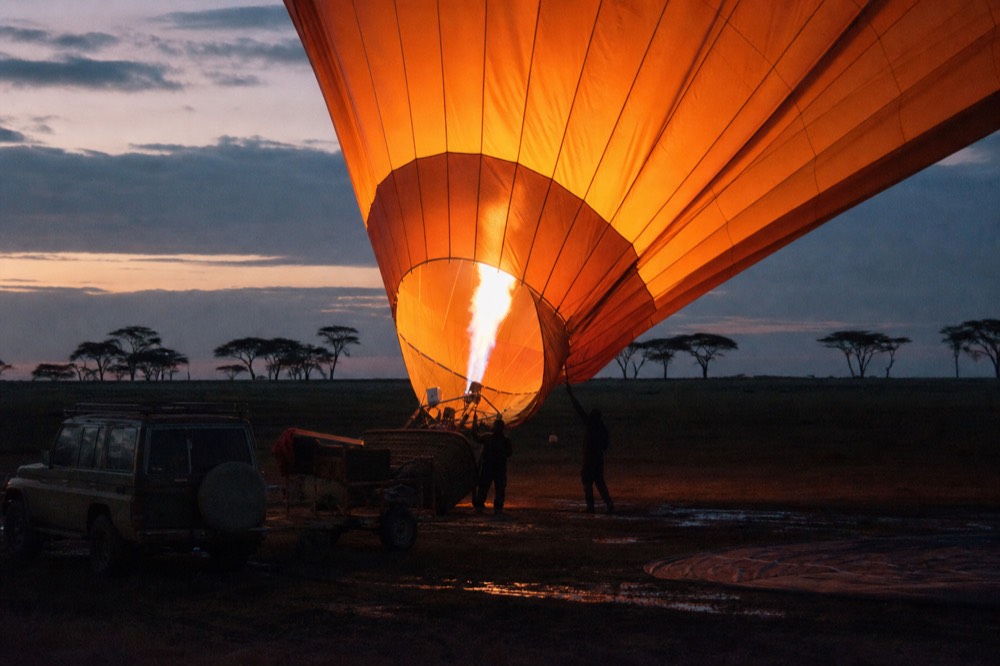
The practical move in a rain month is to book your first morning in the central Serengeti rather than your last, giving the operator a second chance to fly you.
Which months are worth it, month by month?
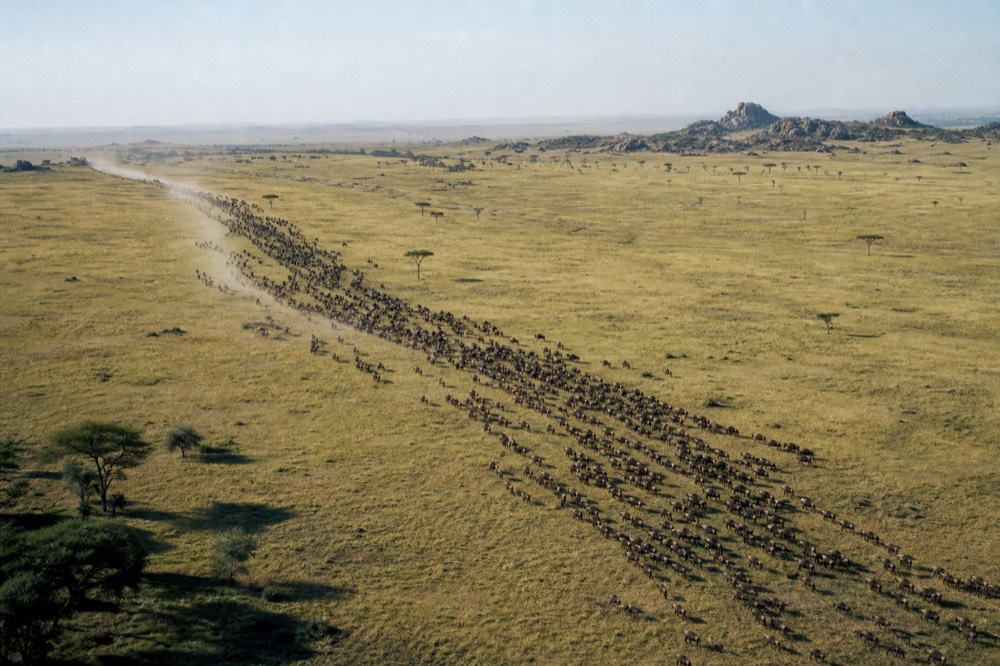
Peak conditions run June through October, with July, August and September strongest for weather and the northern river crossings. January and February are the other good window, for calving on the southern plains. March through May is the stretch to plan around, and November sits in between.
| Month | Rain pattern | Where the herds usually are | Balloon launch sites open | Verdict |
|---|---|---|---|---|
| January | Dry gap between rains | Ndutu, southern short-grass plains | Seronera, Ndutu | Strong |
| February | Dry gap, hot | Ndutu, peak calving | Seronera, Ndutu | Strong |
| March | Long rains arrive | Ndutu drifting to central plains | Seronera, Ndutu to 15 Mar | Mixed |
| April | Long rains, heaviest | Central Serengeti | Seronera only | Avoid for most plans |
| May | Long rains, easing late | Central, moving west | Seronera only | Avoid, late May aside |
| June | Dry, cool | Western Corridor, the Grumeti | Seronera, Western Corridor | Strong |
| July | Dry | North, crossings building | Seronera, W. Corridor, Kogatende | Peak |
| August | Dry, cold mornings | North, Mara River crossings | Seronera, W. Corridor, Kogatende | Peak |
| September | Dry | Northern Serengeti | Seronera, W. Corridor, Kogatende | Peak |
| October | Dry, hot, first storms late | North, starting to move south | Seronera, W. Corridor, Kogatende | Strong |
| November | Short rains | South through the centre | Seronera only | Mixed, good value |
| December | Short rains easing | South, reaching Ndutu | Seronera, Ndutu from 25 Dec | Strong late |
Those windows come from the operators' published seasons and have not changed for 2026 or 2027. The operator season and launch-site detail confirms the pattern, and the full launch-site breakdown by season explains why the sites sit where they do.
Central Serengeti is the constant, which is why a Seronera flight works in any month. The boutique listing there includes the safety briefing, Seronera-area pickup and a longer sit-down bush breakfast, at $599 with Serengeti park entry fees separate. It is newer, carrying 4.9 from only 8 reviews, so the proof is thinner than the flagship's. You can check dates and the live price against your park nights.
If you are building the calendar around the flight, the balloon calendar month by month goes deeper on light and scrub rates.
Is the green season ever the right call?
Sometimes, for specific travelers. Camp rates drop hard from March to May, the plains turn a green the dry season never matches, skies are dramatic instead of hazy, and vehicle traffic at a sighting falls to a fraction of August. With flexible days, the trade works.
Photographers make this trade deliberately. Storm light over green grass beats flat dry-season haze, and a flight that goes launches into skies with structure. Newborn calves are on the southern plains into March, and resident predators migrate nowhere. Packing shifts with the season too, since wet mornings and a cold basket call for layers rather than the shorts most people picture, and how to dress for town and camp sorts out where each one works.
What does not drop is the flight price. The $599 rate has held since 2025 across the operators' own sites, park entry fees are separate in every month, and nobody discounts a wet-season balloon. Green-season savings land on beds and vehicles, not the basket.
The flagship is the one to hold if your camp sits further out, since it collects within roughly two hours or 40 km of the launch site, on both the Serengeti and Ngorongoro Conservation Area sides. That radius matters more in the rains, when a longer transfer is a muddier one. It carries 4.9 across 3,504 reviews, and you can see which mornings are open.
What about the November short rains?
November's rains are a different animal: shorter, usually late afternoon, rarely enough to shut a road. Herds move south through the central Serengeti, near the year-round launch site, and the crowds have gone home. It is the most underrated month on the calendar.
The trade-off is unpredictability rather than washout: some years the short rains arrive early and heavy, some years they barely show. The TANAPA tariff schedule is where to check the park-entry side of the budget.
To see what the herds are doing, the live migration tracker logs dated sightings through the season. The migration seen from the air and the best month for the park as a whole approach the calendar from opposite ends. The two boutique breakfast flights sit together in their own section of the lineup.
Questions about timing a Tanzania trip
The most common versions of the avoid question, answered on the calendar rather than in generalities. The rain windows below are the long-term pattern, the launch-site dates are the operators' published seasons, and both shift a little year to year with the rainfall behind them.
What months should you avoid in Tanzania?
March, April and May carry the long rains, and April is heaviest. Tracks turn to deep mud, grass grows tall enough to hide wildlife, mornings stay grey and seasonal camps close. Only the central Seronera site operates through that stretch.
Do hot air balloons fly in the Serengeti during the rainy season?
Yes, daily from Seronera in the central Serengeti, all year. The scrub rate rises because pilots cancel for wind or rain, but a cancelled flight is rebooked or refunded in full, and every listing here cancels free 24 hours out. Book an early morning in your park stay, not your last.
Is November a good time to visit Tanzania?
Often, yes. The short rains fall mainly late in the afternoon and rarely close roads, the herds move south through the central Serengeti near the year-round launch site, camp rates sit below peak and vehicles thin out. The catch is variability: some years they arrive early and heavy.
When to avoid Masai Mara?
The same long-rains window, March to May, applies across the border in Kenya, and the Mara's crossings run July through October. If the crossings are the reason for the trip, the two seasons overlap almost exactly, so the choice is about park, not calendar.