Serengeti Balloon Launch Sites: Seronera, Ndutu, Kogatende and the Western Corridor
Four launch fields, four different windows, and one number that decides which of them you can actually reach: roughly 40 km.
 By Juma Kimaro, Serengeti balloon safari specialist since 2015
Short answer
Four fields operate. Seronera in the centre flies every morning of the year. Ndutu on the southern plains runs 25 December to 15 March. The Western Corridor field at Kirawira and Grumeti runs June to October. Kogatende in the north runs July to October. Which one you fly from is set by your camp, because pickups reach roughly two hours or 40 km from the field.
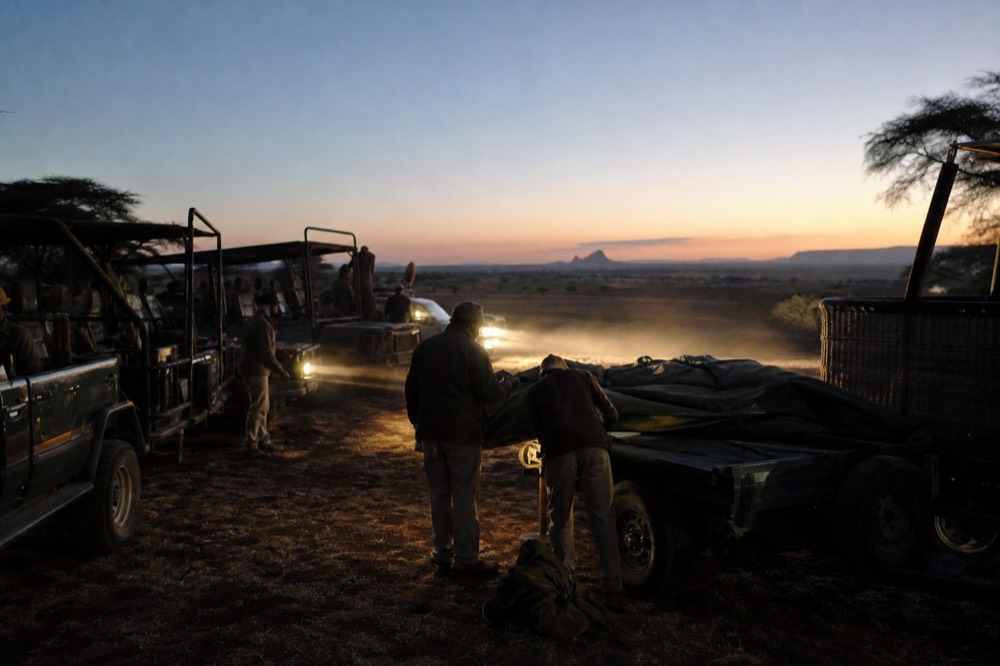
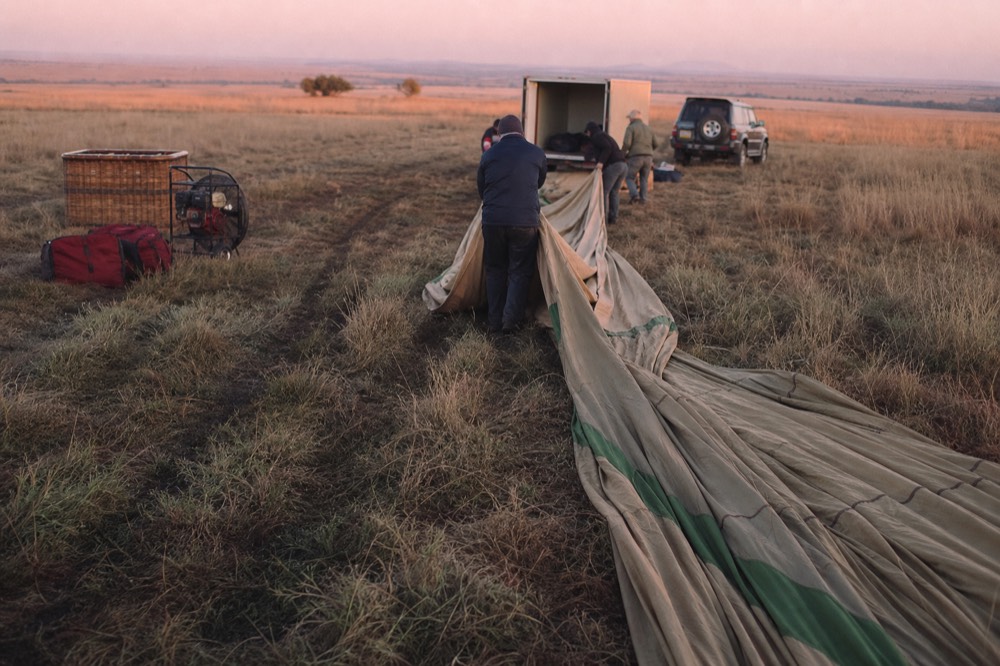
The wake-up knock comes somewhere between half past four and six, and the difference between those two times is entirely geography. Camps within twenty minutes of the launch field let you sleep. Camps at the outer edge of the pickup radius send a vehicle into the dark with a flask of coffee on the seat and an hour of unlit track ahead of it. Either way you arrive at a flat piece of ground where an envelope is already being laid out on a tarpaulin and the fans are running.
That flat piece of ground is not one place. There are four of them scattered across the Serengeti ecosystem, each with its own season, its own terrain underneath it and its own list of properties it will collect from. Picking a launch field is not really a choice you make. It is a consequence of where you already decided to sleep, which is why this is worth reading before you lock your camps rather than after.
Which Serengeti launch site will you actually fly from?
The one nearest your camp. Pickups reach roughly two hours or 40 km from the launch field, so your accommodation decides the field and the field decides what you fly over. Seronera serves the central circuit year-round, Ndutu the southern plains in the calving window, the Western Corridor June to October and Kogatende the northern crossing season.
This sounds obvious until you look at the map. The Serengeti is roughly 15,000 square kilometres, and the distance from the Ndutu plains in the south to Kogatende on the Mara River is a full day's drive on park roads. A property near one field is not a candidate for any other. There is no scenario where you sleep in the north and fly the southern plains.
What complicates it is that the fields do not all operate at the same time. Three of the four are seasonal. So the question is really two questions stacked: is there a field near my camp, and is it open in my month? Get a yes to both and the booking is straightforward. Get a no to either and you are choosing between moving a night, changing camps, or taking the flight with the widest published pickup list.
The central field is the safety net in all of this. Seronera runs daily, every month, which means an itinerary that includes two nights in the central Serengeti has a guaranteed balloon option regardless of season. That is a genuinely useful planning fact, and it is why so many trips put the flight in the middle of the route rather than at either end.
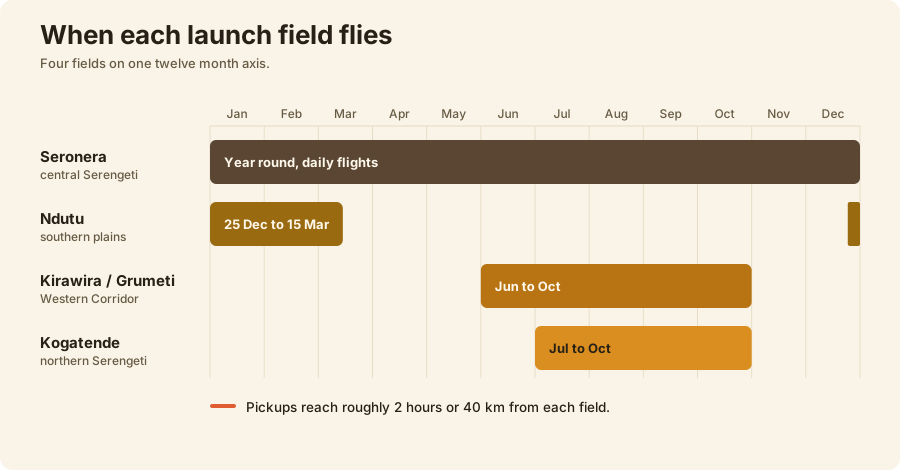
The four launch fields and when each one flies
Seronera in the central Serengeti operates every morning of the year. Ndutu on the southern plains runs 25 December to 15 March. The Western Corridor field at Kirawira and Grumeti runs June to October. Kogatende in the northern Serengeti runs July to October, with some listings extending it into November.
Those windows are not arbitrary. Each seasonal field exists because the migration passes through that sector for part of the year and the camps that support it are only pitched for that stretch. When the herds move on, the mobile camps fold up and the balloon operation follows them. Seronera is the exception because the central Serengeti holds resident game and permanent lodges all year, so there is always a reason to launch there.
| Launch field | Region it serves | Months it operates | What closes it |
|---|---|---|---|
| Seronera | Central Serengeti, Seronera valley | Every month, daily | Nothing; permanent operation |
| Ndutu | Southern short-grass plains, Serengeti and Conservation Area sides | 25 December to 15 March | Herds move north and the seasonal camps strike |
| Kirawira / Grumeti | Western Corridor | June to October | Herds pass through and the corridor empties |
| Kogatende | Northern Serengeti, Mara River country | July to October, some listings to November | Crossing season ends and the north quietens |
The operator's published launch-site schedule is the primary reference for those dates, and nothing has shifted for the 2026-2027 season. Treat the boundary dates as firm rather than approximate. The Ndutu field genuinely stops on 15 March; there is no soft closing week.
What each field actually shows you from the air
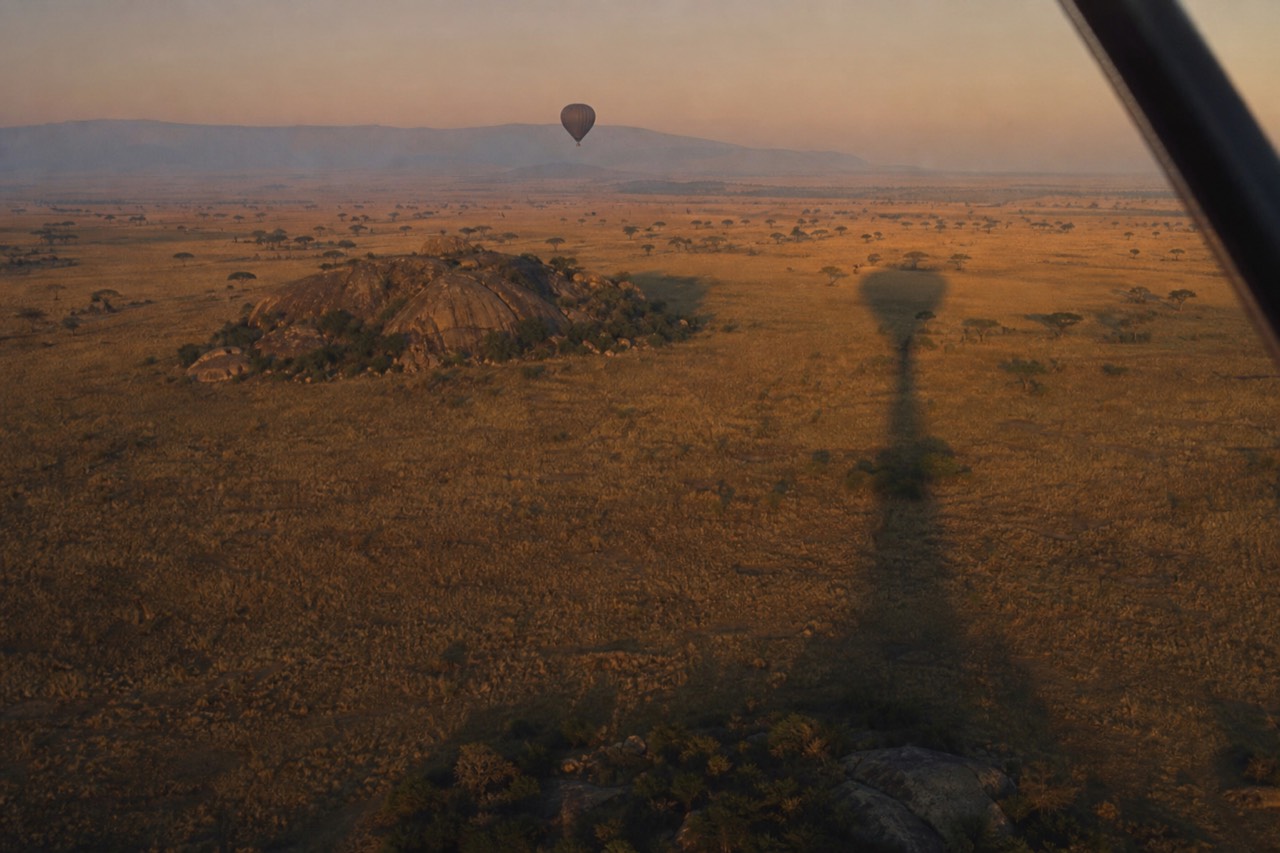
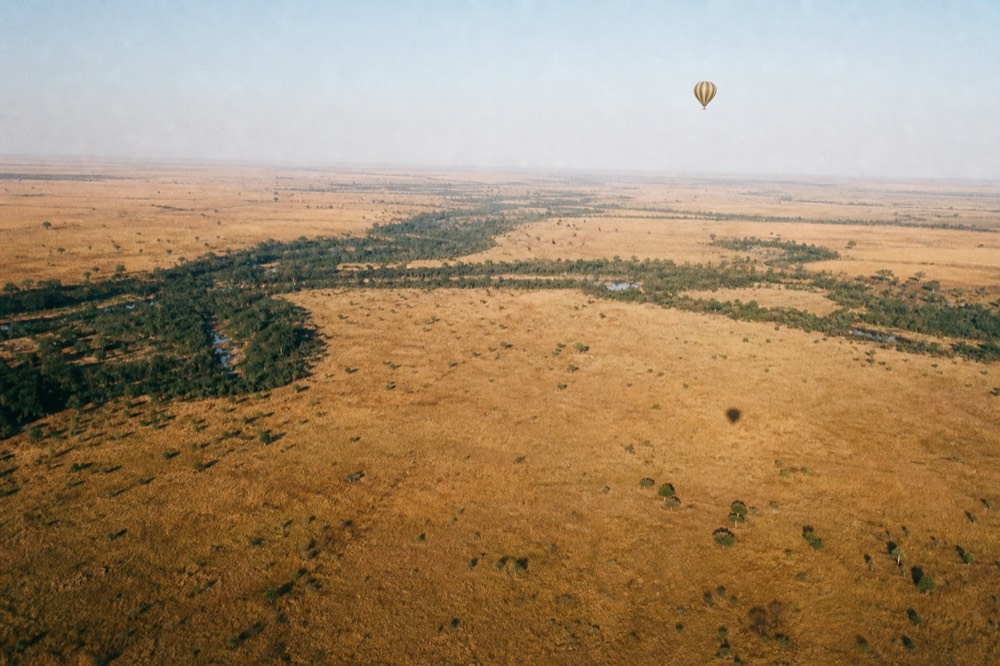
Terrain changes the flight more than the season does. Seronera gives kopjes, riverine forest and resident game. Ndutu gives open short-grass plains and calving density. The Western Corridor gives river systems and woodland. Kogatende gives the Mara River, its cut banks and the crossing points.
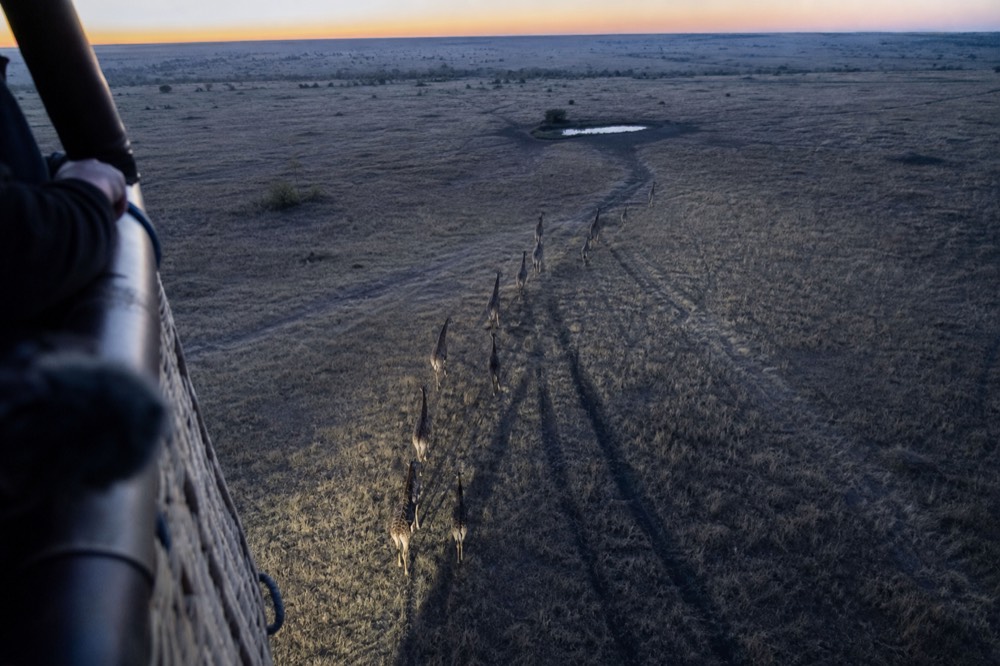
The central field drifts over a landscape with structure in it. Granite kopjes break the plain into compartments, the Seronera river line runs dark green through pale grass, and the game underneath is resident rather than migratory: elephant in the woodland, giraffe browsing acacia tops, lion draped on the rocks where the sun hits first. From altitude the kopjes are the thing people photograph, because their shadows are enormous at that hour.
Ndutu is the opposite. It is flat, open and almost featureless by comparison, which is exactly what makes calving season read from the air. Instead of picking individual animals out of terrain, you are looking at a dark mottled sheet of them across pale green, with worn lanes running through it and the shallow alkaline lakes catching light on the edges. There is nowhere for anything to hide.
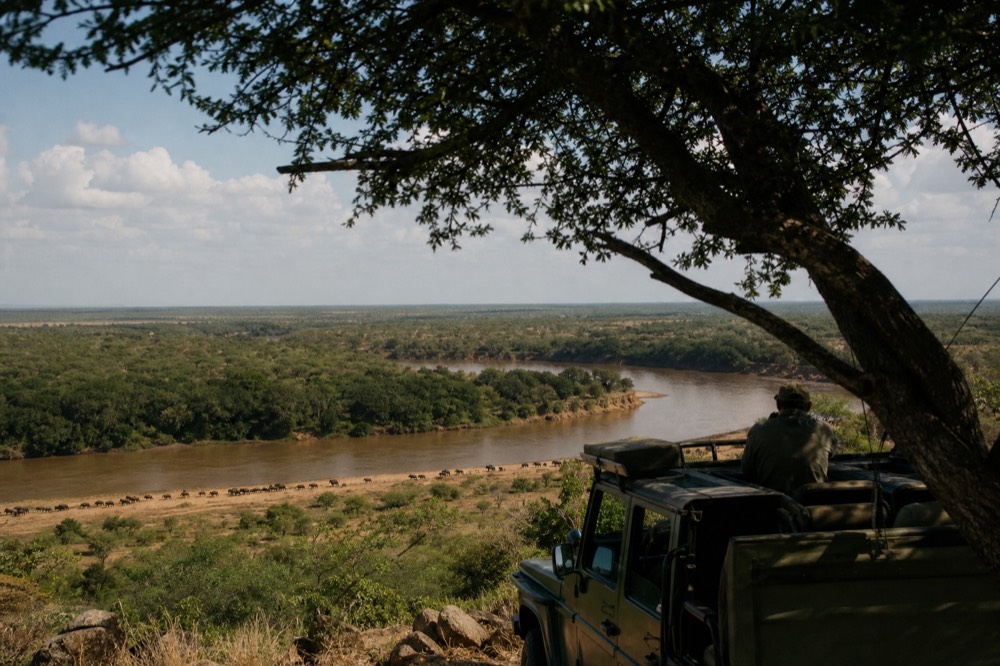
The Western Corridor puts water back in the picture. The Grumeti river system winds through denser woodland, and the corridor's shape funnels animals along it in June. The north is different again: the Mara River is a hard dark line with steep cut banks, and the crossing points are worn scars on those banks that are visible from height long before any animals are near them.
| Field | Terrain under the drift | Wildlife signature | Photographic character |
|---|---|---|---|
| Seronera | Kopjes, acacia woodland, the Seronera river line | Resident elephant, giraffe, lion on rock | Long kopje shadows, structured landscape, strong depth |
| Ndutu | Flat short-grass plains, shallow alkaline lakes | Calving herds at density, predators on the edges | Wide open, pattern-driven, herds as texture |
| Kirawira / Grumeti | River system, denser woodland, corridor floodplain | Herds funnelling west, hippo and crocodile in the pools | Water lines, green against gold, tighter framing |
| Kogatende | Mara River, cut banks, open northern grassland | Massed wildebeest, worn crossing points | Hard river line, columns, dust in low light |
How the pickup radius works, and why 40 km decides everything
The flagship flight collects from camps and lodges within roughly two hours or 40 km of a launch field, on both the Serengeti and the Ngorongoro Conservation Area sides. That radius is a driving-time limit, not a straight-line one, so a camp 30 km away on bad track can fall outside it while one 40 km away on a graded road does not.
Work backwards from the launch. The envelope has to be laid out, cold-inflated and heated before first light, and the flight has to be off the ground while the air is still. That fixes the arrival time at the field, which fixes the departure time from your camp, which is why the pickup call slides between about half past four and six depending on how far you are.
Park roads are the constraint, not distance. Nobody drives fast in the dark on the Serengeti's tracks, partly because of the surface and partly because of what walks across it. A camp that looks close on a map can be an hour away in practice. This is why every operator quotes reach in hours as well as kilometres, and why the honest answer to "is my camp covered" always comes from the property or the operator rather than from a map.
| Distance from the launch field | Typical pickup call | Time in the vehicle | What your morning feels like |
|---|---|---|---|
| Under 15 km, graded track | Around 5:30 to 6:00 | 20 to 30 minutes | Close to a normal safari wake-up |
| 15 to 30 km | Around 5:00 to 5:30 | 40 to 60 minutes | Early, but you arrive awake |
| 30 to 40 km, or slow track | Around 4:30 to 5:00 | Up to two hours | A long dark drive, coffee in the vehicle |
| Beyond the radius | Not collected | Not applicable | Needs a wider-pickup flight or a moved night |
The whole thing runs about four to five hours door to door, which includes the drive out, the briefing, 50 to 70 minutes airborne, the recovery drive and a full cooked breakfast on the ground before you are dropped back. Our hour-by-hour walkthrough of the morning breaks that timeline down properly.
Match your camp region to a launch field
Central Serengeti camps feed the Seronera field year-round. Southern plains and Conservation Area properties feed Ndutu between 25 December and 15 March. Western Corridor camps feed Kirawira and Grumeti June to October. Northern Serengeti camps feed Kogatende July to October. Everywhere else needs checking case by case.
Read this table as a starting point rather than a guarantee. Individual properties sit at different distances from their nearest field, and the only binding answer comes from the operator's own pickup list. What the table does tell you reliably is whether a field exists in your region at all, and whether it is open in your month, which is where most itineraries go wrong. Crater-rim and Karatu beds are the sharpest case, since no launch field sits within reach of them, and what a crater day gives you is the comparison to weigh before those nights get locked in.
| Where you are sleeping | Field you would launch from | Months that works | The catch |
|---|---|---|---|
| Central Serengeti, Seronera valley | Seronera | All twelve months | The safest region for a balloon morning, whatever your dates |
| Southern short-grass plains, Ndutu, park side | Ndutu | 25 Dec to 15 Mar | Hard boundary dates, no soft closing week |
| Ndutu, Ngorongoro Conservation Area side | Ndutu | 25 Dec to 15 Mar | Only one flight advertises pickups on this side |
| Western Corridor, Grumeti | Kirawira / Grumeti | Jun to Oct | Field closes as the herds leave the corridor |
| Northern Serengeti, Kogatende | Kogatende | Jul to Oct, sometimes Nov | Peak-season pressure on a single field |
| Eastern and north-eastern Serengeti | No local field | Depends entirely on distance | Usually needs a relocated night in the centre |
| Ngorongoro Crater rim or Karatu | No local field | Not practical | Far outside any pickup radius |
Two well-known central-Serengeti properties sit squarely inside the year-round Seronera radius: Four Seasons Safari Lodge Serengeti in the Seronera area, and Serengeti Serena Safari Lodge on the ridge to its west. Sleeping at either keeps every month of the calendar open for a flight.
Four Seasons Safari Lodge Serengeti Check rates ›
Serengeti Serena Safari Lodge Check rates ›
The two rows that catch people out are the last two. A trip built around the crater and the eastern plains looks like a Serengeti trip on paper and contains no balloon-reachable night at all. If a dawn flight matters to you, that is a reason to add a central Serengeti night rather than a reason to give up on it. Which month you slot that night into is covered in the month-by-month flying calendar.
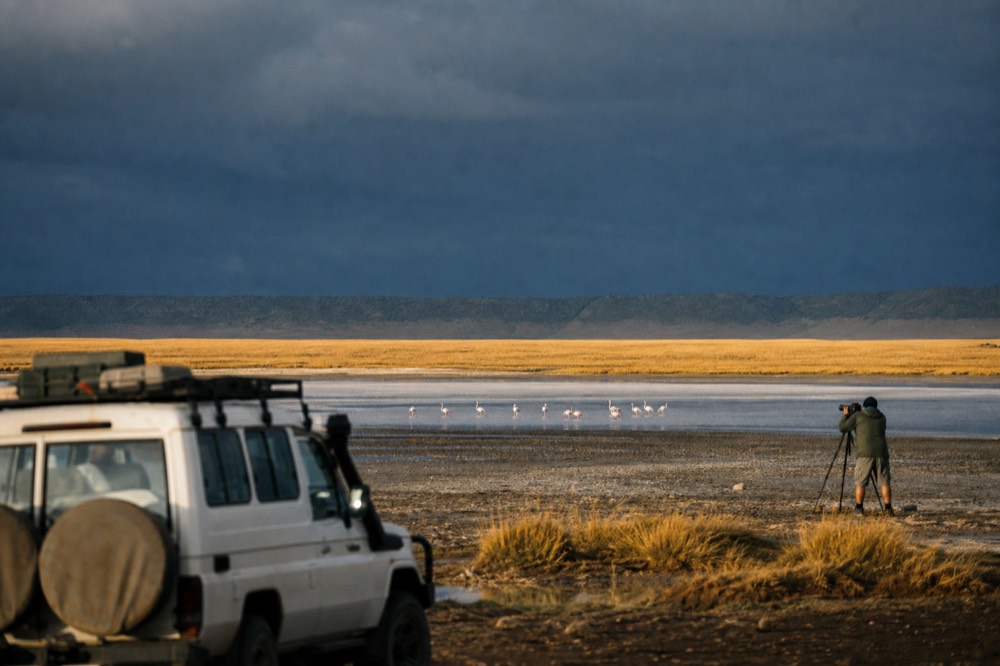
Which flight collects from where?
Pickup reach is the real difference between the four bookable flights, because the flying is close to identical. All four launch at dawn only, run 50 to 70 minutes airborne in a shared basket, and finish with a cooked bush breakfast and a sparkling toast. What varies is the list of properties each will send a vehicle to.
The flagship classic flight publishes the widest reach: camps and lodges within roughly two hours or 40 km of the launch sites, on both the Serengeti and the Conservation Area sides. That Conservation Area coverage is the one genuinely distinctive piece of logistics in the lineup, and it is what makes the December to March window workable for properties sitting outside the park boundary.
The second classic option collects inside Serengeti National Park, which covers the great majority of in-park itineraries. Of the two boutique listings, one is built around Seronera-area pickup with a longer dressed-up breakfast on the ground, and the other collects from a wider selection of Serengeti accommodation for $44 above the standard rate. Park entry is separate from all four prices, billed through your safari at the gate rather than by the balloon operator.
| Flight | Published pickup reach | Rating | Reviews | From price |
|---|---|---|---|---|
| Serengeti Balloon Safari with Bush Breakfast | Camps within ~2 h / 40 km, Serengeti and Conservation Area sides | 4.9 | 3,504 | $599 |
| Miracle Experience Balloon Safari & Bush Breakfast | Pickup inside Serengeti National Park | 5.0 | 2,651 | $599 |
| Balloon Ride with Luxury Bush Breakfast | Seronera-area pickup | 4.9 | 8 | $599 |
| Balloon Flight with Champagne Breakfast | A wider selection of Serengeti accommodation | 5.0 | 3 | $643 |
Be realistic about the review columns. Two of these listings carry thousands of ratings and two carry single digits, which reflects listing age rather than flight quality: the operators publish the same age, weight and health rules and fly under the same regulator. If proof volume is what you weigh most heavily, the classic pair is where it sits, and the review record behind each flight goes through it properly. If pickup coverage is what decides your morning, the boutique pair may be the only thing that works. You can put all four flights side by side before you commit, or check dates on the Seronera-area flight if your nights are central.
What to do when your camp sits outside the radius
You have four options: move one night to a camp inside the radius, book the flight with the widest published pickup list, reshape the itinerary so a central Serengeti night lands mid-trip, or skip the flight. Moving a single night is usually the cheapest fix and the least disruptive.
Start by confirming the problem is real. Properties know exactly whether a balloon vehicle comes to their gate, because it happens every morning of the season, and a one-line email to your camp settles it faster than any amount of map measuring. Ask about the specific field and the specific dates, not about balloons in general.
If the answer is no, the ranked fix list is short. A single relocated night in the central Serengeti buys you the year-round field and usually costs less than rebuilding the trip. If the itinerary cannot move, the flight collecting from a wider selection of Serengeti accommodation is the next lever, priced at $643 rather than $599 with a champagne breakfast attached, and park entry still separate from both. You can check which properties that one collects from before you rearrange anything. Only after those two is it worth accepting that the dawn flight does not fit this trip.
| Option | What it costs you | When it makes sense |
|---|---|---|
| Move one night to a camp inside the radius | One night's rate difference, some rerouting | Most itineraries, especially central-circuit trips |
| Book the flight with the widest pickup list | $643 rather than $599, park fees separate either way | Camp is close but off the standard pickup list |
| Reshape the route to put a central night mid-trip | Planning time, possibly a different camp | Trips built around the crater and eastern plains |
| Skip the flight this trip | The flight | Fixed group itineraries with no flexible nights |
Before you decide, get the four answers below out of your property. They take one email and they remove nearly all of the guesswork, which matters more here than on any other part of a safari booking because the balloon is the one component with a hard geographic constraint.
| Ask your camp | Why it matters | Green light | Red light |
|---|---|---|---|
| Which launch field do your balloon guests use? | Confirms a field exists in range at all | Names a specific field | "We can arrange it" with no field named |
| Is that field operating on our dates? | Three of the four fields are seasonal | Dates fall inside the published window | Dates straddle a boundary like 15 March |
| What time does the vehicle collect? | Reveals your true distance from the field | 5:30 or later | Before 5:00, meaning you are at the edge |
| Which operators collect from you? | Pickup lists differ between the four flights | More than one name | Only one, or none |
Does the launch field change the flight itself?
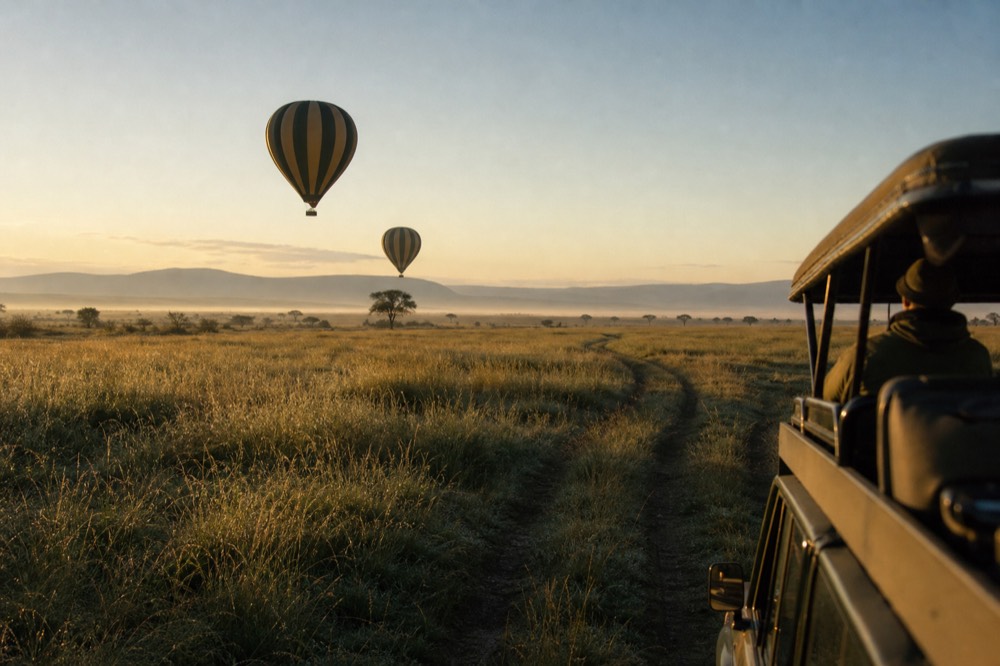
Not much. Every field runs the same product: a dawn launch, 50 to 70 minutes airborne, a shared basket, a landing wherever the wind puts you, then a cooked breakfast and a certificate. The pilot cannot steer toward a target at any field, because a balloon goes where the dawn wind goes.
That last point is the one people find hardest to accept, and it is worth being blunt about. A balloon has one control, altitude, and it uses it to find a wind layer moving in a slightly different direction. There is no throttle and no rudder. The pilot picks a launch point, reads the layers and works with what the morning offers, which is why nobody sells a guaranteed sighting from any field.
What the field does control is the odds. Launching at Kogatende between July and October puts you above the sector where the herds actually are, which is a completely different proposition from hoping they wander past Seronera in September. That relationship between field, month and herd position is the whole planning problem, and how the migration reads from altitude works through it in detail. If you are still weighing whether the fare earns its place in the budget, the full cost breakdown with park fees is the other half of the sum.
One last operational note that applies at every field: the age, weight and health rules travel with the operator rather than the site. Minimum ages differ between operators, passengers over 120 kg pay a surcharge against an 80 kg planning average, and pregnancy is not permitted on either major operation. The operator's published conditions and the second operator's own FAQ both spell out their own version, so read the one carrying your booking. Park entry sits outside all of it, at roughly $70 per non-East-African adult per day under the latest published national park tariff.
Frequently asked questions
Where do balloons take off in the Serengeti?
From four launch fields. Seronera in the central Serengeti operates every morning of the year. Ndutu on the southern short-grass plains runs 25 December to 15 March. Kirawira and Grumeti in the Western Corridor run June to October. Kogatende in the north runs July to October, with some listings extending into November.
How far will a balloon operator drive to collect me?
Roughly two hours or 40 km from the launch field, on both the Serengeti and Ngorongoro Conservation Area sides for the flight with the widest published reach. It is a driving-time limit rather than a straight-line one, so track quality matters. Pickups run between about 4:30 and 6:00 depending on your distance.
Can I fly over the Mara River crossings?
Only from the Kogatende field in the northern Serengeti, and only between July and October when it operates. Even then nothing is guaranteed: a balloon drifts with the dawn wind and cannot be steered toward a herd or a crossing point. In 2026 the northern crossings were logged on 15, 20 and 21 August.
Which launch site is best for the calving season?
Ndutu, which operates 25 December to 15 March over the southern short-grass plains where the wildebeest calve. The boundary dates are firm. If your camp sits on the Ngorongoro Conservation Area side of that area, check pickup coverage carefully, because only one flight advertises collections from both sides.
My camp is not on the pickup list. What now?
Move one night to a camp inside the radius, which is usually the cheapest fix, or book the flight that collects from a wider selection of Serengeti accommodation at $643 rather than $599. Park entry is separate from both prices. Confirm with the property directly, since they see the balloon vehicle every morning of the season.
Do all launch sites cost the same?
Yes. The standard rate is $599 per person regardless of which field you launch from, matching the operators' own published rates with no platform markup, and the champagne variant runs $643. Serengeti park entry is billed separately through your safari, at roughly $70 per non-East-African adult per day under the latest published tariff.