Which is better, Serengeti or Ngorongoro?
Not rivals but different products: 14,763 sq km of moving plains against one collapsed caldera. Fees, time on the ground, and where balloons actually fly.
 By Juma Kimaro, Serengeti balloon safari specialist since 2015
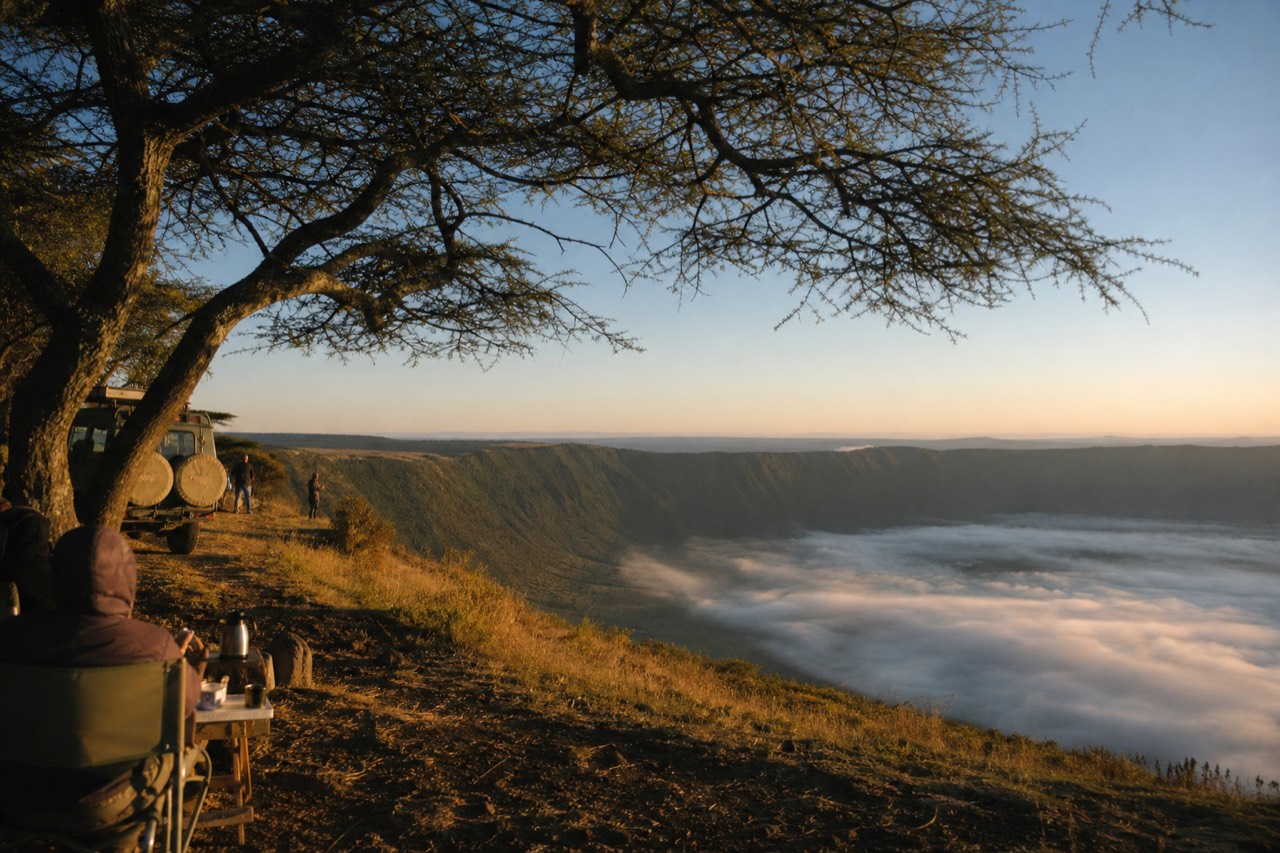
Stand on the crater rim before seven and you look down through a lid of mist at grass far below, with dark specks that turn out to be buffalo. Drive north and the ground goes flat to every horizon, no walls at all. People ask which is better as though one has to lose. They are not the same product, and the honest answer starts there. The same trap catches the other big pairing, Kenya's Mara set against the Serengeti, where the real split is scale, fees and timing rather than a winner.
Serengeti or Ngorongoro: which one should you pick?
Pick the Ngorongoro Crater if you want dense, near-guaranteed game viewing in a single confined morning. Pick the Serengeti if you want the migration, space, and more than one kind of country. Most northern circuit itineraries do both, because they sit on the same road and answer different questions.
The crater is a bowl. Whatever lives in it mostly stays in it, so a morning on the floor delivers a high hit rate with little searching. The Serengeti works the opposite way: 14,763 square kilometres of plains, woodland and river, the wildlife spread across it and shifting month by month. One rewards a short visit, the other rewards a few nights.
What is so special about the Ngorongoro Crater?
It is the floor of a collapsed volcano, and the walls act as a soft fence. Wildlife density stays high year-round in a small area, so a single six-hour descent can show you more species than two days of driving elsewhere. That concentration is the whole appeal, and it is also the reason the crater floor feels busy.
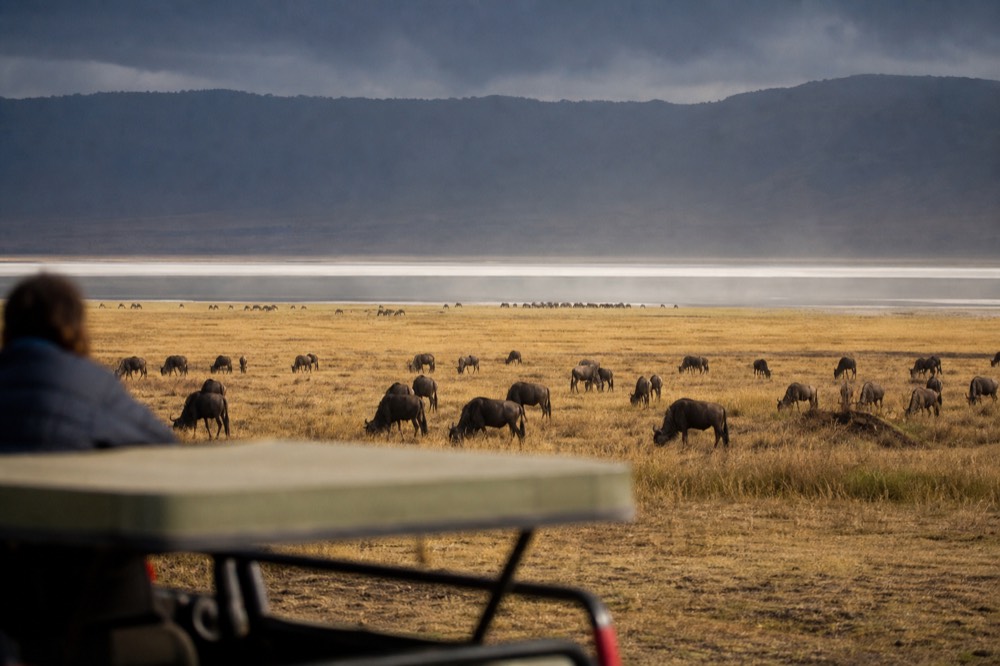
Access is metered rather than open. A descent carries a mandatory vehicle fee of around $295 on top of the daily conservation charge, and the clock on the floor runs about six hours. Rim lodges are the standard way to play it: sleep on the edge, drop in at first light, be back up by lunch. That structure is why the crater usually earns exactly one night in a week-long itinerary. Priced inside that week, what a seven-day Tanzania safari costs shows where the descent fee lands against beds, gates and everything else on the northern circuit. If the crater has made it onto your route, the classic full-day descent is bookable on its own; check dates and the current price here, a separate booking from any balloon morning.
How do the two compare on fees, time and wildlife?
Serengeti tickets run about $70 per non-resident adult for 24 hours, near $83 with 18 percent VAT, and let you move freely. Ngorongoro charges roughly $70.80 per adult per day plus a vehicle descent fee, capped at six hours on the floor. Neither is cheap, and the crater costs far more per hour.
| Measure | Serengeti National Park | Ngorongoro Conservation Area |
|---|---|---|
| Ground you get | 14,763 sq km of plains, woodland and rivers | One caldera floor inside a wider multiple-use area |
| Non-resident adult fee | ~$70 base, ~$83 with VAT, per 24 hours | ~$70.80 per day, plus ~$295 per vehicle to descend |
| Time window | 24 hours, move where you like | About six hours on the crater floor |
| Wildlife pattern | Migration moves through; density shifts by season | Dense and largely resident, the same bowl monthly |
| Balloon flights | Dawn launches from Seronera and seasonal sites | None over the crater |
| How itineraries use it | Three to four nights, often split between areas | One rim night, one crater morning |
Check the Tanzanian park tariff before accepting a quote. The Serengeti has also been UNESCO-listed since 1981 under natural criteria seven and ten, for the plains and the migration crossing them, which is the part no crater floor can replicate.
Which one wins for what you actually want?
Split it by outcome rather than reputation. Density in one morning goes to the crater. Herds on the move, big skies and anything aerial goes to the Serengeti. If your trip is short and road-based, the crater sits closer to Arusha and costs less transit.
| If you want | The better bet | Why |
|---|---|---|
| Maximum species in one morning | Ngorongoro | Resident populations in an enclosed bowl, almost no searching |
| River crossings and moving herds | Serengeti | The migration route runs north through it from July to October |
| A dawn flight over open country | Serengeti | Ballooning operates over the park, not over the crater |
| Fewer vehicles at a sighting | Serengeti | 15,000 sq km spreads traffic; the crater concentrates it |
| A short road trip from Arusha | Ngorongoro | It sits on the way, no internal flight needed |
Time allocation follows from that. A seven-night circuit giving four nights to the Serengeti and one to the crater rim beats an even split, because the crater is finished in a morning and the Serengeti is not. Book the balloon on a full Serengeti day rather than a transfer day: pickup starts between 4:30 and 6:00am and you are back at camp by mid-morning. The newer luxury-breakfast flight leaves the Seronera area at $599 per person, park entry excluded and paid with your safari, and holds 4.9 from a small base of eight reviews, so check availability against the long-running flights before deciding. The rest of the boutique flights sit alongside it.
Can you take a balloon flight over the Ngorongoro Crater?
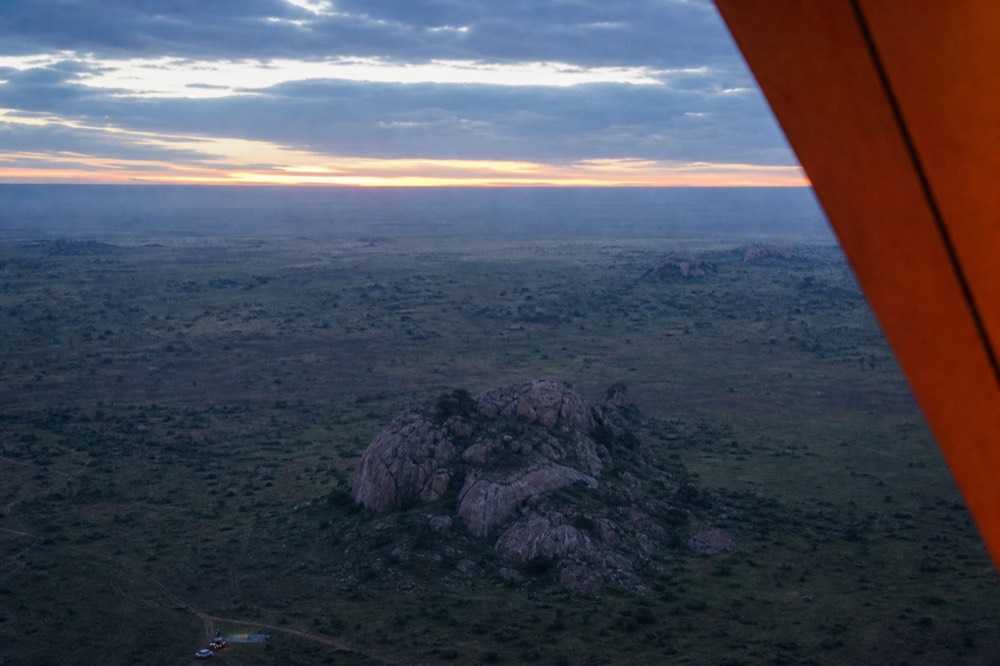
No. There are no balloon operations over the crater floor. Every licensed flight in this part of Tanzania launches inside the Serengeti, from Seronera year-round and from Ndutu, the Western Corridor or Kogatende as the seasons move. That single fact settles the question for a lot of travelers.
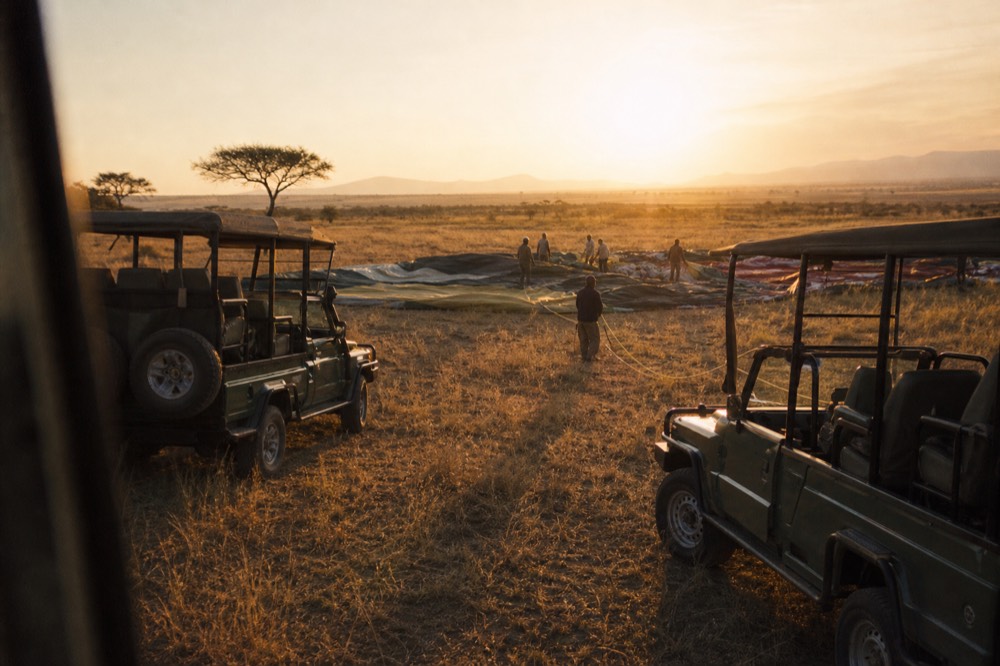
There is a workaround worth knowing. The longest-running operator collects passengers from camps within roughly two hours or 40 kilometres of the morning's launch site, on the Serengeti side and the Ngorongoro Conservation Area side alike, so a bed near the boundary can still put you in a basket at dawn. The seasonal pattern sits in where balloons launch by season, and the operator's logistics page lists the sites. That flight is the most-reviewed in the park at 4.9 across 3,504 reviews, from $599 with park entry billed separately, and its page shows the live departures.
Still weighing the two? Why the plains draw the crowds they do sets out what the Serengeti has, the best month to visit the park narrows the calendar, and is a dawn flight worth the money takes the balloon decision on its own terms.
Questions people ask when choosing between the two
Is the Ngorongoro Crater worth the extra fee?
For most first-time visitors, yes, once. A descent costs roughly $70.80 per adult plus about $295 per vehicle, and delivers a species count that would take days of driving elsewhere. Repeat visitors often skip it and put the money into extra Serengeti nights or a balloon morning, since the crater changes little between visits.
Can you see the Great Migration in the Ngorongoro Crater?
The crater floor is not on the migration route and its herds are resident. The wildebeest calve on the southern plains around Ndutu between late December and mid-March, which is why balloons launch from there in that window, then move north through the Serengeti toward the Mara River crossings from July to October.
How many days do you need for Serengeti and Ngorongoro?
Five nights is a workable minimum: one on the crater rim with a morning descent, three or four in the Serengeti, plus travel days at each end. The crater is finished in a single morning. The Serengeti is not, and an extra night there does more than a second crater day ever will.
Which is cheaper, Serengeti or Ngorongoro?
Per day the headline fees are close, roughly $70 to $83 per non-resident adult in the Serengeti against about $70.80 in the conservation area. The crater costs more in practice because of the mandatory $295 vehicle descent fee and the six-hour limit, which pushes its cost per hour on the ground much higher.
Is there a hot air balloon over Ngorongoro Crater?
No operator flies over the crater. Balloon flights in this region are Serengeti-only, launching at dawn from Seronera year-round and from seasonal sites at Ndutu, the Western Corridor and Kogatende. Fares start at $599 per person, park entry excluded, and pickup can reach camps on the conservation area side within about two hours of the launch point.