What to Expect on a Serengeti Balloon Flight, Hour by Hour
The whole morning in order, from the alarm in the dark to the coffee pot under an acacia.
 By Juma Kimaro, Serengeti balloon safari specialist since 2015
Short answer
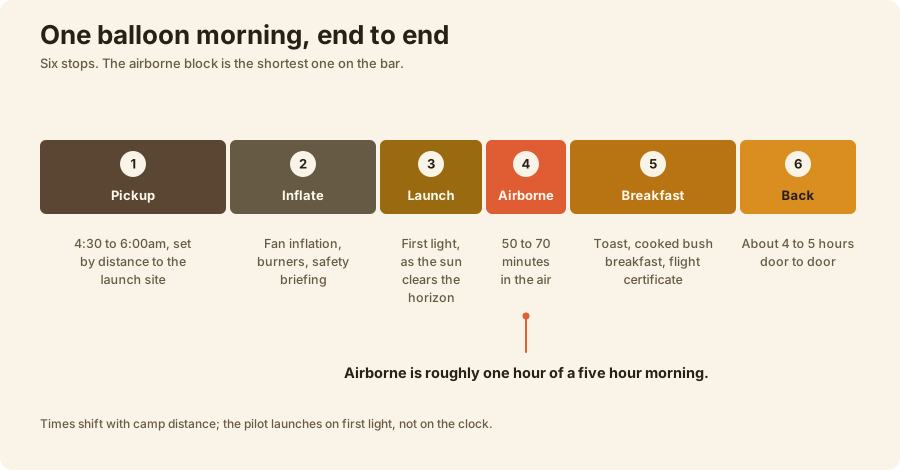
Pickup runs between 4:30 and 6:00am depending on how far your camp sits from the launch site. You watch the envelope inflate, take a briefing, then lift off at first light for 50 to 70 minutes over the plains. After a sliding landing come a sparkling-wine toast, a cooked bush breakfast and a flight certificate. Door to door it takes about four to five hours.
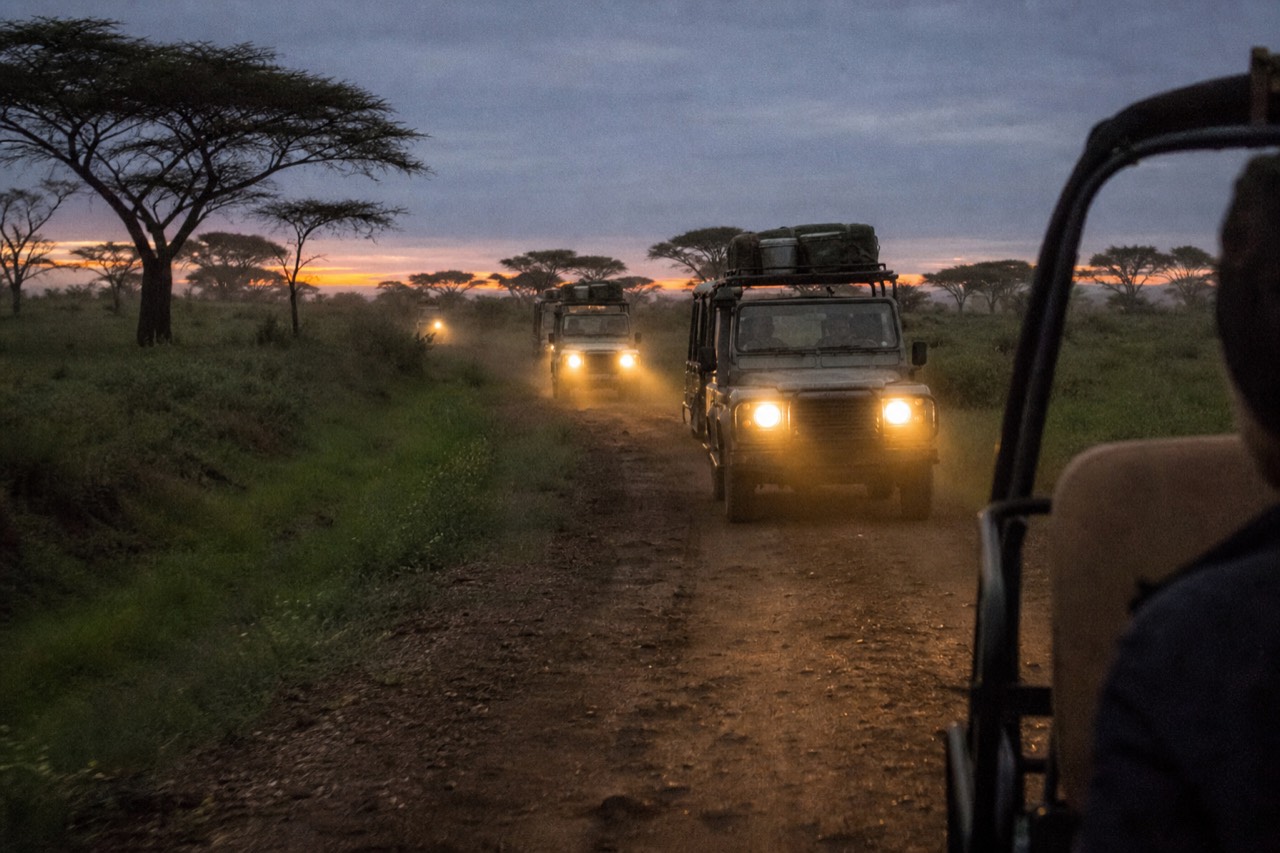
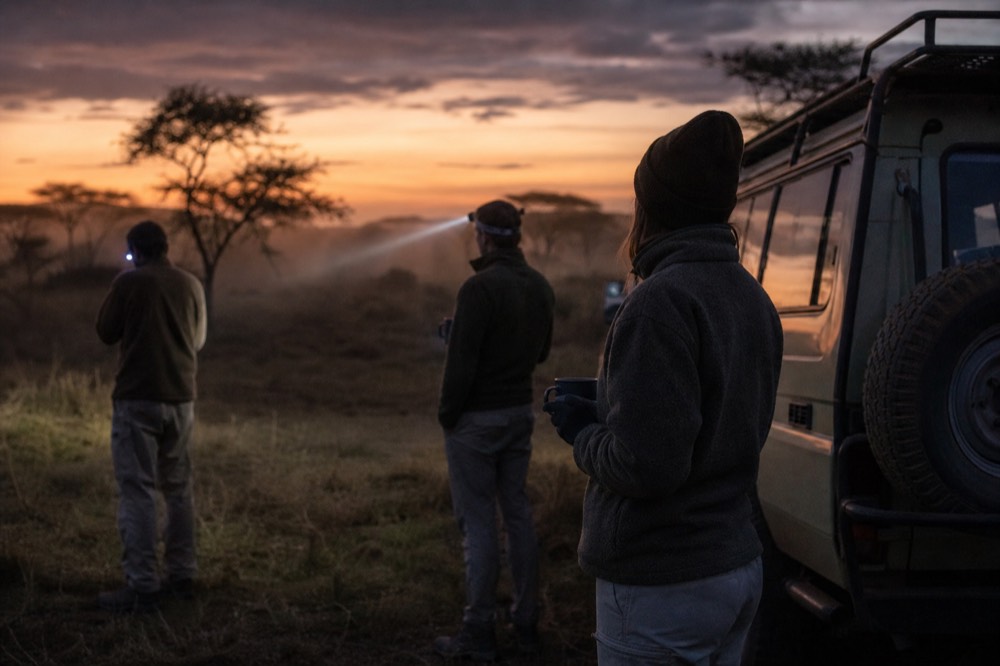
The wake-up call comes as a knock on canvas and a torch beam, usually somewhere between quarter past four and half past five, and the camp has already left a flask of coffee outside the tent. Outside it is properly cold, colder than anyone packs for. Somewhere off in the dark a Land Cruiser is idling with its lights off, and the driver is standing beside it in a fleece, waiting without hurrying anyone. That is the whole tone of a Serengeti balloon morning: early, unhurried, and entirely built around a sunrise that will not wait.
What does a Serengeti balloon morning actually look like, start to finish?
A driver collects you in the dark, between 4:30 and 6:00am depending on camp distance. At the launch site you watch fans and then burners bring the envelope upright, take a safety briefing, and climb into a compartmented basket. Launch is at first light, the flight runs 50 to 70 minutes, and after a sliding landing come a sparkling-wine toast, a cooked bush breakfast and a certificate. About four to five hours door to door.
The order almost never varies, because it cannot. Every commercial balloon in the park flies in the same short window after sunrise, when the air over the plains is at its stillest, and everything upstream of that moment is scheduled backwards from it. The drive length sets the wake-up time. The inflation takes as long as it takes. The sun does the rest.
What surprises most first-timers is how much of the morning happens on the ground. The flight itself is roughly an hour of a five-hour block, and the rest is transfer, inflation, breakfast and the drive back out. That is not padding. The inflation is genuinely one of the best parts, and the breakfast is not a sandwich in a paper bag. Anyone deciding whether the whole package is worth the outlay should read the honest verdict on whether the flight earns its price alongside this page.
What time does pickup happen, and why so early?
Pickup lands between 4:30 and 6:00am, set by how far your camp or lodge sits from the morning's launch site. The flagship operation collects from accommodation within roughly two hours or 40 km of its launch sites, on both the Serengeti and Ngorongoro Conservation Area sides. Your camp confirms the exact time the evening before, and the convoy cannot wait for a late guest.
The reason for the spread is straightforward geography. Serengeti National Park is enormous and the tracks are corrugated, so 40 km is not a twenty-minute drive. A camp fifteen minutes from the Seronera launch field gets the humane end of the window. A lodge out toward the park boundary gets the four-thirty knock, and spends an hour and a half in the dark watching hyena eyes come up in the headlights, which is its own kind of game drive and not a bad way to start.
The widest transfer net belongs to the flagship Serengeti Balloon Safaris morning, which collects from camps and lodges on both the Serengeti and the Ngorongoro Conservation Area sides and carries the deepest review record in the park at 4.9 across 3,504 reviews. Its rate starts at $599 per person, with Serengeti park entry fees paid separately alongside your safari, and it is worth checking whether your camp falls inside the pickup radius before you build a morning around it. The operator's own logistics page lists which launch fields feed which part of the park.
Two practical points follow from this. First, choose your camp with the balloon in mind if the flight matters to you: the closer you sleep to a launch site, the more sleep you get. Second, confirm the pickup time at dinner the night before rather than assuming what the booking said, because launch sites move with the season and the drive can change with them. The rundown of Seronera, Ndutu, Kogatende and the Western Corridor covers which field is running in which months.
| Distance from the launch site | Where your pickup lands in the window | What the drive is like |
|---|---|---|
| Camps in the Seronera core, under 30 minutes | Nearer 5:30 to 6:00am | Short track transfer, still fully dark on arrival |
| 30 to 60 minutes out | Around 5:00am | Headlights on game tracks, occasional nocturnal sightings |
| 60 to 120 minutes, out to the ~40 km limit | From 4:30am | A long cold drive, worth a blanket and a thermos |
| Outside the operator's transfer radius | Not collected | Move camps for the night or book a flight with a wider pickup network |
What happens at the launch site before you fly?
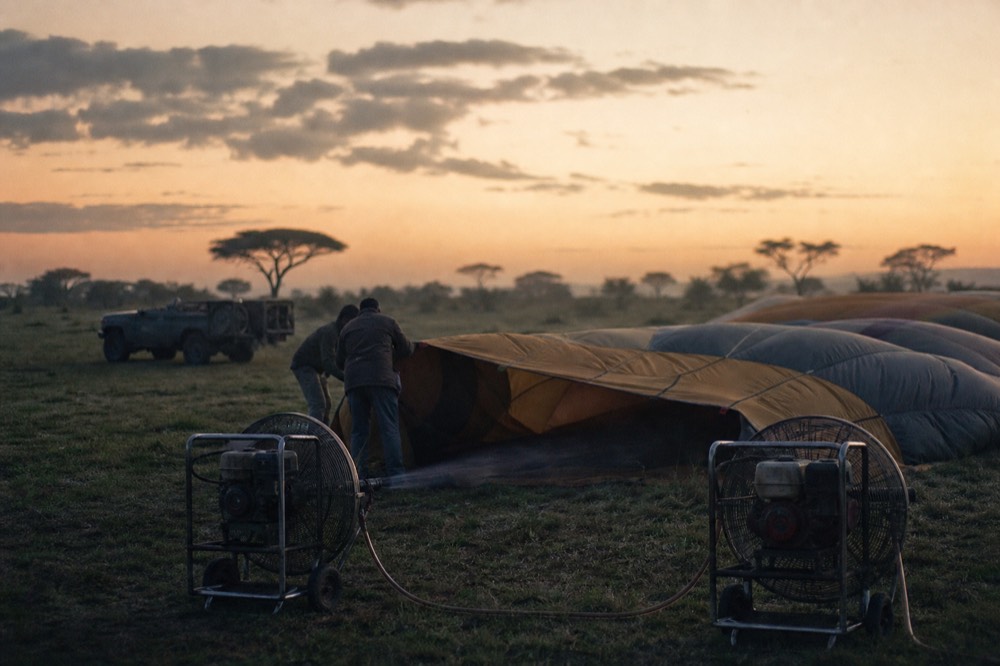
You arrive to a field of headlights, a trailer, a crew of eight or ten, and a hundred feet of nylon lying flat on the grass. Petrol fans push cold air into the envelope until it takes shape as a long tunnel on its side. Then the pilot fires the burners into the mouth of it, the fabric lifts, and the whole thing swings upright over the basket in under a minute.
This is the part nobody photographs well and everybody remembers. The cold-inflation phase is slow and oddly industrial: two big fans, a lot of shouting, crew members holding the crown line and walking the fabric out. The envelope on the ground looks impossibly large, and it is only when it stands up that the scale registers, because you are suddenly looking at something the height of a seven-storey building that was a folded bundle twenty minutes ago.
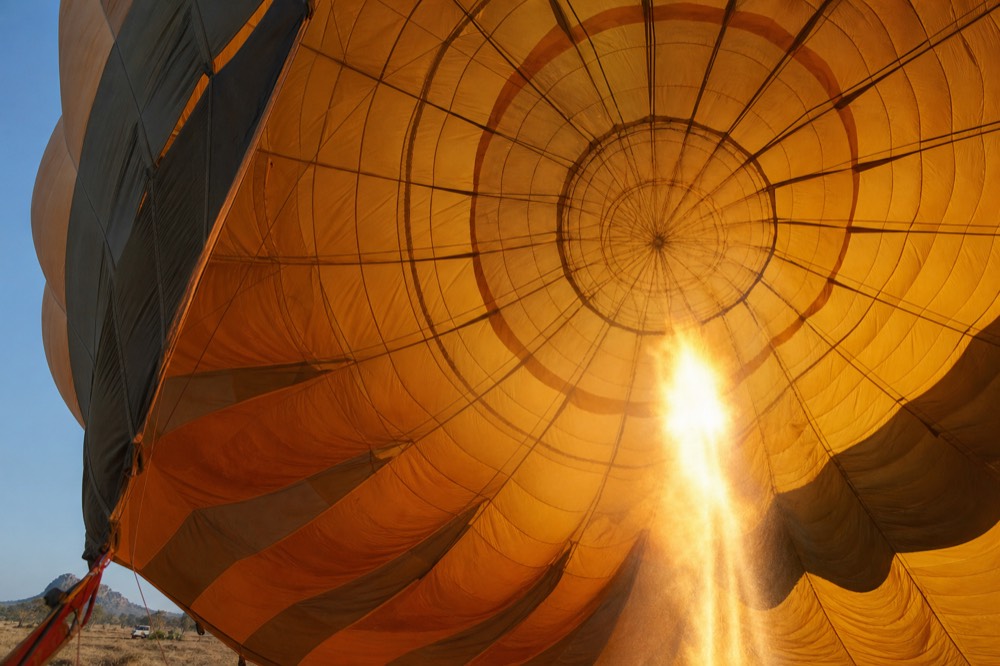
The burner moment is the one to be ready for. A balloon burner puts out a sound you feel in your sternum and a column of flame two or three metres long, and in the dark it lights the entire field orange for a couple of seconds at a time. The temperature difference beside the mouth of the envelope is startling: you go from shivering to genuinely warm and back again with each burn.
Miracle Experience puts tea and coffee into this window before the burners light, which is a small thing that makes a real difference at 5:15am, and it is one reason that flight holds a perfect 5.0 across 2,651 reviews. Its pickup network runs from camps and lodges inside Serengeti National Park, and the operator's own FAQ sets out the passenger rules that come up during the briefing.
What does the briefing cover, and how does the basket work?
A short standing briefing before boarding covers the landing position, where to put your hands, what not to hold, and how to get in and out. The basket is divided into compartments, typically four or five people to each, with the pilot in a central section beside the fuel cylinders. There is no seat, no seatbelt and no harness: you stand for the whole flight.
The compartment layout is the single most useful thing to understand in advance. Each section is a padded box roughly a metre square with rope handles cut into the inside walls and footholds cut into the outside, and it exists so that in a firm landing nobody slides anywhere. You climb in over a wall that comes to about chest height, which is easy for most people and genuinely awkward for anyone with a stiff hip.
Groups get split. If you are four people you will probably share a compartment, and if you are two you will share with strangers, because the pilot loads the basket for balance rather than for social convenience. Nobody minds by the time you land. The detail on how the safety rules work and why nobody straps you in covers the reasoning behind all of it.
| Briefing item | What you are told | Why it matters |
|---|---|---|
| Boarding | Use the cut-out footholds, swing a leg over, do not pull on the burner frame | The frame carries the load of the envelope |
| Landing position | Face the direction of travel, feet apart, knees bent, hold the rope handles | The basket may skid and tip |
| Hands | Inside the rim at all times, especially on approach | Fingers on the outside are exposed in a drag |
| Loose items | Cameras on straps, phones zipped away for landing | Anything dropped is gone or dangerous |
| Getting out | Stay in until the pilot calls it, even after you stop | The envelope can re-inflate in a gust |
What is the launch like at first light?
Launch is undramatic and slightly disorienting. The crew let go, the basket leaves the ground with no push and no acceleration you can feel, and within seconds the field is thirty metres below. Because a balloon moves with the wind rather than through it, the air around you goes completely still the moment you leave the ground. There is no rush of wind at all.
People brace for a lurch that never comes. The most common reaction in the first fifteen seconds is a slightly nervous laugh, followed by silence as everyone works out that the ground is going away and nothing is happening to them. It is the least frightening beginning to a thrilling thing you are likely to experience.
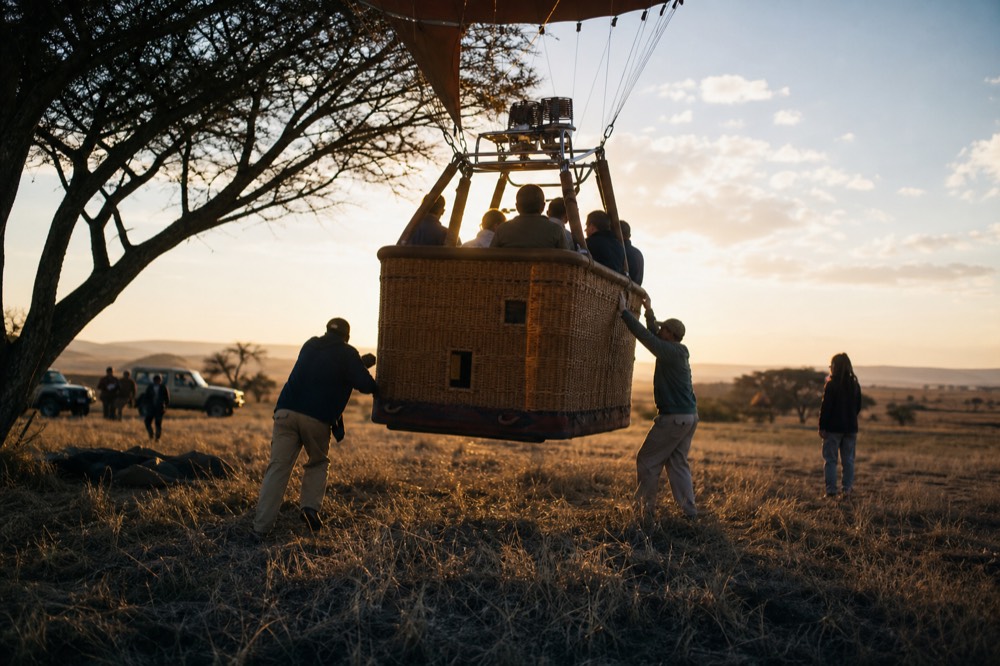
The timing is deliberate. Balloons here launch as the sun clears the horizon, so the first thing you see from altitude is the light hitting the plains sideways. Everything has a shadow twenty times its own length: a lone acacia throws a black stripe across two hundred metres of grass, and a herd of anything at all reads as a moving pattern of dots and lines. Give it ten minutes and that effect starts to fade, which is why nobody flies at nine in the morning even if the air allowed it.
What does the pilot do with altitude?
Altitude is the only control a balloon pilot has, and it is used to pick a wind. Layers of air at different heights move in different directions and at different speeds, so a pilot climbs or descends to steer, in the loosest sense of the word. Low means treetop height over river lines and thickets. High means the whole curve of the plains.
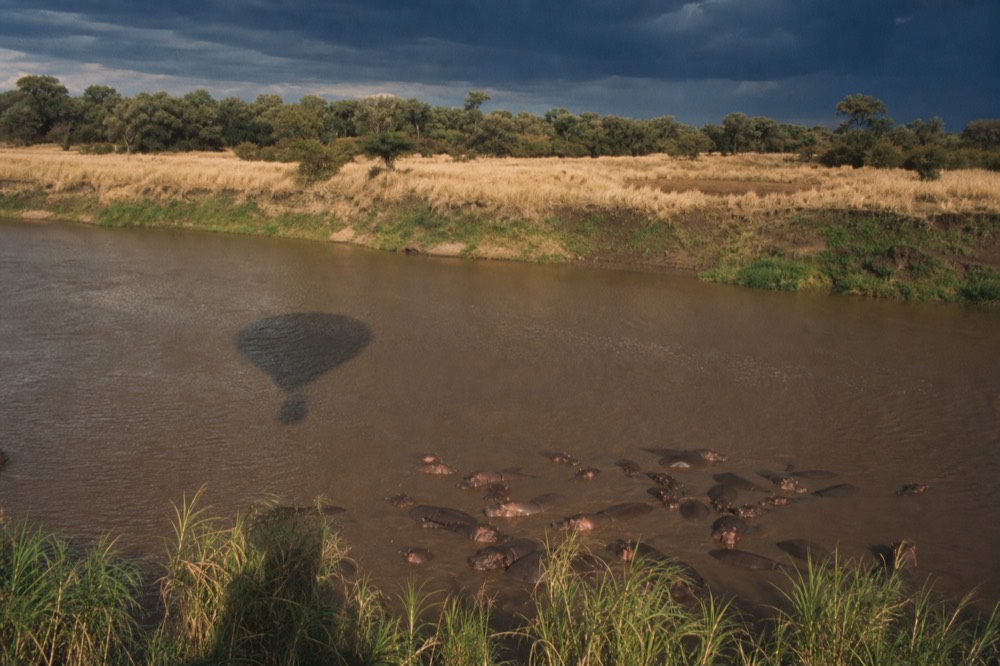
The low passes are what people remember. Drop the balloon down toward a river course and you are looking straight into pools where hippos are packed shoulder to shoulder, at elephants moving through riverine bush that would be invisible from a vehicle track, and at the tops of trees close enough to see individual weaver nests. Nobody is buzzing anything: the animals below mostly ignore a balloon completely, because it makes no engine noise, and the burner is used sparingly down low for exactly that reason.
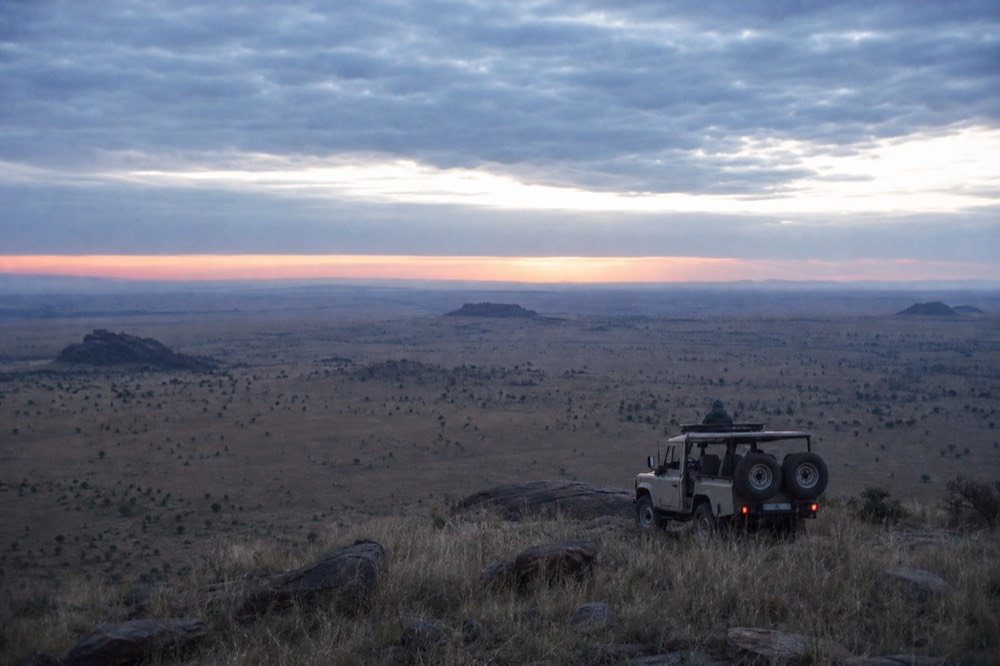
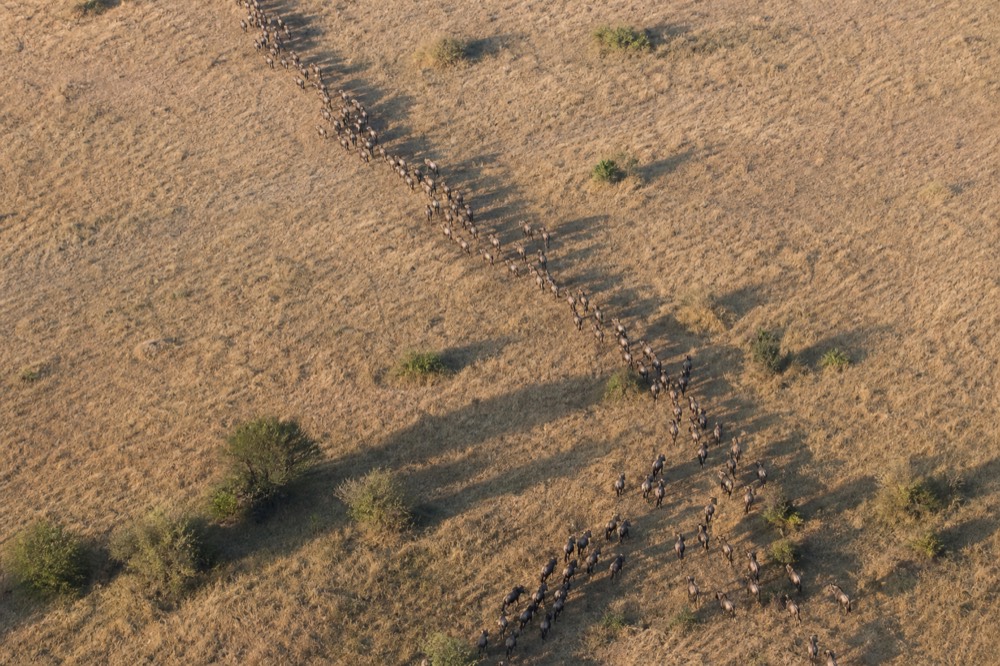
Then the pilot burns hard for a minute and everything reframes. From height the Serengeti stops being a landscape and becomes a map: grass running to the horizon in every direction, granite kopjes sitting in it like islands, a distant line of dust that turns out to be a column of animals moving. This is the view that explains why the park carries a UNESCO World Heritage listing and why no photograph of it has ever quite worked. In migration months the columns below are the whole point, and the guide to seeing the migration from the basket covers where the herds sit month by month.
| Height band | What the pilot is doing | What you see |
|---|---|---|
| Just off the grass | Skimming, using the slowest surface air | Individual animals, tracks, dew on the grass |
| Treetop to low hundreds of feet | Following river lines and thickets | Hippo pools, elephant in riverine bush, tree canopies |
| Several hundred feet | Cruising, picking a direction from the wind layers | Herd patterns, kopjes, the shadow of your own balloon |
| Top of the climb | Panorama, and finding a landing wind | Plains curving to the horizon, other balloons as specks |
Which of those views you get is not something you pick at booking. The wind on the morning decides, and the pilot reads it. The Miracle Experience flight launches from inside Serengeti National Park, which keeps the pre-flight drive short and puts the basket over central plains and river country rather than at the end of a two-hour transfer, and 2,651 reviewers have given it a straight 5.0.
How long are you actually in the air, and what happens in the quiet?
Every commercial Serengeti flight is sold as 50 to 70 minutes airborne, and the variation comes from wind and from where the pilot can put the basket down. Between burns there is no engine, no rotor and no rushing air, so the balloon is close to silent. You hear hippos, birds and the crew's radio, and then the burner, which is very loud indeed.
That contrast is the texture of the hour. Roughly thirty seconds of noise and heat, then two or three minutes of something close to complete quiet while the balloon holds its height and drifts. In the quiet stretches you can hear a lion from a long way off and, more often, the specific complaining grunt of a wildebeest herd carrying up from below.
An hour standing up in a basket is longer than people expect and shorter than they want. Nobody in the review record complains about the duration. What they complain about, occasionally, is cold hands in the first twenty minutes and a camera that fogged because it came straight out of a warm bag into cold air.
| Phase | Roughly | What you notice |
|---|---|---|
| First few minutes | Climbing out | The field shrinking, the total absence of wind noise |
| The long middle | Most of the hour | Burn, silence, burn, silence; low passes and climbs |
| The high look | Somewhere past halfway | The scale of the place, other balloons as coloured dots |
| Last ten minutes | Descending | The pilot scanning ahead for open ground, the brace call |
How does a balloon land out here?
With forward speed still on, onto open ground the pilot has been picking for the last few minutes. The basket touches, skids through the grass, and usually tips onto its side and drags a short distance before the envelope collapses. It is briefed, it is normal, and it is the part passengers talk about at breakfast.
Nobody should treat a firm landing as a fault. A balloon has no brakes and no reverse, so stopping means letting friction do the work. On a still morning the basket can settle almost upright with a bump. With any breeze at all, expect to end up lying against the wall of your compartment looking at the sky for a few seconds while the grass hisses past outside.
Within about a minute of stopping, the chase vehicles arrive. They have been following the balloon across the plains the whole time, radioing with the pilot, and the crew go straight to the envelope to walk the air out of it and pack it onto a trailer. Passengers climb out over the wall, often into knee-high grass, and the certificate and the toast are already being set up somewhere nearby.
The chase-vehicle operation is where fleet size shows. Serengeti Balloon Safaris runs the longest-established fleet in the park and has the review depth to match, 4.9 across 3,504 reviews, more than any other balloon listing here by a wide margin. It is the default answer for anyone who wants the version with the most people behind it, from $599 with Serengeti park entry paid separately as part of your safari.
What happens after you land?
A sparkling-wine toast in the field, then a full cooked bush breakfast at a table set under an acacia: eggs cooked to order, bacon, sausage, fruit, pastries, coffee. A flight certificate is handed out with your name on it. This block runs an hour to ninety minutes, and it is included in every one of the four bookable flights.
The toast is a ballooning convention rather than a Serengeti invention. Balloonists tell a story about early French flights and farmers who needed appeasing when a balloon came down in their field, which is why the drink stayed in the ritual, and whether or not the story survives scrutiny it is told at more or less every landing site in the world.
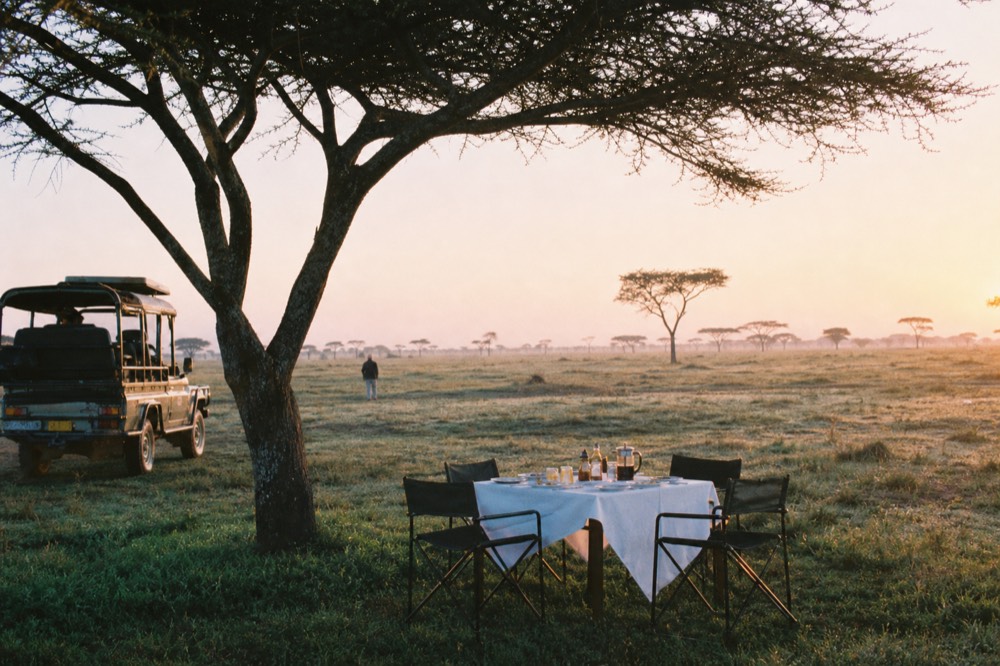
The breakfast is a genuine surprise for people expecting a token gesture. There is a cooking station out in the grass, a proper table with linen, and armed rangers standing at a discreet distance because you are eating in open country with no fence anywhere. Where the four flights differ is mostly in how dressed-up this stretch is. The Serengeti Balloon Safaris morning is the classic version and the most-reviewed at 4.9 across 3,504 reviews. The Nyssa listing sells a longer, more elaborate breakfast. The Beach & Safari version swaps sparkling wine for champagne at about $44 more, $643 against $599, with Serengeti park entry fees separate from both and paid alongside your safari.
| Flight | Toast | Breakfast | Certificate | Pickup |
|---|---|---|---|---|
| Serengeti Balloon Safari with Bush Breakfast | Sparkling wine | Full cooked bush breakfast | Yes | Camps within ~2 h of the launch sites, Serengeti and Ngorongoro sides |
| Miracle Experience Balloon Safari & Bush Breakfast | Bubbly celebration | Plated bush breakfast | Yes | Camps and lodges inside Serengeti National Park |
| Balloon Ride with Luxury Bush Breakfast | Included | Longer, dressed-up bush breakfast | Check the listing | Seronera-area camps and lodges |
| Balloon Flight with Champagne Breakfast | Champagne | Champagne breakfast | Check the listing | Wider selection of Serengeti accommodation |
What should you carry in the basket?
Take a camera on a strap, a warm layer you can shed, and gloves. Leave the tripod, the spare lens bag and anything loose in the vehicle. There is no storage in a balloon basket beyond your own hands and pockets, and everything you bring has to survive being tipped onto its side in long grass.
Cold hands are the most common practical complaint, and they matter more than they sound because they are what stops people operating a camera in the best fifteen minutes of the flight. Dawn on the plains in the dry season is genuinely cold, often single digits Celsius, and you are standing still in moving air at altitude. Thin gloves you can shoot through are the single best thing to pack. The full clothing case is made in the guide to dressing for a cold dawn launch.
On cameras: a phone is fine and a lot of the best pictures from up there are phone pictures, because the light does the work. If you are carrying a proper body, put one lens on it and accept that, because you will not be changing lenses in a basket. A wide zoom beats a long one here more often than people expect, since the subject is usually the shape of the land rather than a single animal. And take the lens cap off before you launch.
| Item | Verdict | Reason |
|---|---|---|
| Camera on a neck or wrist strap | Take | Both hands are needed for the landing |
| Thin gloves | Take | Cold hands cost you the best light of the flight |
| Warm layer over something lighter | Take | Freezing at launch, warm by breakfast |
| Hat | Take, but hold it | The burner is directly overhead and hats blow off |
| Tripod, monopod, camera bag | Leave in the vehicle | No room, and a hazard in a drag landing |
| Spare lenses | Leave | You will not change a lens standing in a basket |
| Binoculars | Optional | Less useful than on a game drive; you are close enough |
One thing you cannot pack around is a camp that nobody collects from. The Beach & Safari Holidays flight exists partly for that case: it draws from a wider selection of Serengeti accommodation than the standard listings, swaps sparkling wine for champagne at breakfast, and costs $643 against the $599 standard, with Serengeti park entry separate from both. Its first three reviewers all gave it five stars, a real score on a thin base, and you can see whether it reaches your lodge on the booking page.
Does the flight cost you the rest of your day?
No. You are back at camp or handed to your safari guide by late morning, roughly four to five hours after pickup, with the whole afternoon game drive still ahead. The trade is one very early start, not a lost day. The flight and the drive show you different things, and doing both on the same day is the normal pattern.
The practical arrangement varies with who you booked through. Some travellers are dropped back at camp and rejoin their own guide; others are handed straight over at the breakfast site and drive on from there. Confirm which applies before the morning, because the two produce quite different lunchtimes.
What you actually gain is a second way of seeing the same country. From a vehicle you get detail, proximity and time: a leopard in a sausage tree for forty minutes. From the basket you get structure: how the river systems braid, why the herds are where they are, how far the grass goes. Neither replaces the other, and the people who come back happiest are the ones who did not expect the balloon to be a game drive with a better view. Anyone still weighing it up can compare every bookable flight side by side before committing to a date, and it is worth checking which mornings still have basket space early, since dawn is the only slot there is.
| Aspect | From the basket | From the vehicle |
|---|---|---|
| Time with one animal | Seconds to a minute as you drift over | As long as you want to sit there |
| Sense of scale | The whole plain at once, herds as patterns | One patch of bush at a time |
| Big cats | Occasional, from above, brief | The main event, at eye level |
| Rivers and hippo pools | Directly overhead, unobstructed | Only where a track reaches the bank |
| Photography | Landscape, shape, light, shadow | Portraits, behaviour, long lenses |
| Noise | Silent between burns | Engine, radio, other vehicles |
Common questions about the balloon morning
How long is a hot air balloon ride in the Serengeti?
Between 50 and 70 minutes in the air on all four bookable flights. The whole morning runs about four to five hours door to door, counting the pre-dawn transfer, the inflation, the safety briefing, the flight itself and the bush breakfast after landing. Actual airborne time varies with wind and with where the pilot can put the basket down.
What time do you have to wake up for a Serengeti balloon safari?
Between about 4:00 and 5:30am, since pickup runs from 4:30 to 6:00am depending on how far your camp sits from the launch site. Camps in the Seronera core get the later end. Accommodation out toward the edge of the transfer radius, up to two hours or 40 km away, gets the earliest knock on the tent.
Do you eat breakfast before or after the balloon flight?
After. Tea or coffee is usually offered at the launch site before the burners light, then the full cooked bush breakfast is served in the field after landing, with a sparkling-wine toast and a flight certificate. Flying on an empty stomach is standard practice and nobody finds it a problem over an hour.
Can you still do a game drive after a balloon safari?
Yes, and it is the normal pattern. You are back at camp or handed to your safari guide by late morning, with the afternoon drive untouched. Some operators return you to your accommodation, others hand you over at the breakfast site so the drive starts from there. Confirm which applies before the morning.
Is there a toilet on a hot air balloon?
No. The basket has compartments and rope handles and nothing else, and you are airborne for 50 to 70 minutes. The practical answer is to go at the launch site before boarding and be selective about the pre-dawn coffee. The full logistics of the morning bathroom question covers how operators structure around it.
What is the best month for a hot air balloon over the Serengeti?
June through October gives the driest, clearest and most reliably flyable mornings, and it overlaps with the herds in the Western Corridor and the north. Central Serengeti flights from Seronera run year-round. The month-by-month flying calendar weighs weather, launch-site windows and migration position against each other.