Is there a toilet on a hot air balloon?
There is no toilet on a balloon. You are aloft 50 to 70 minutes, so the answer is the launch site, the pre-dawn coffee decision, and how the morning is built.
 By Juma Kimaro, Serengeti balloon safari specialist since 2015
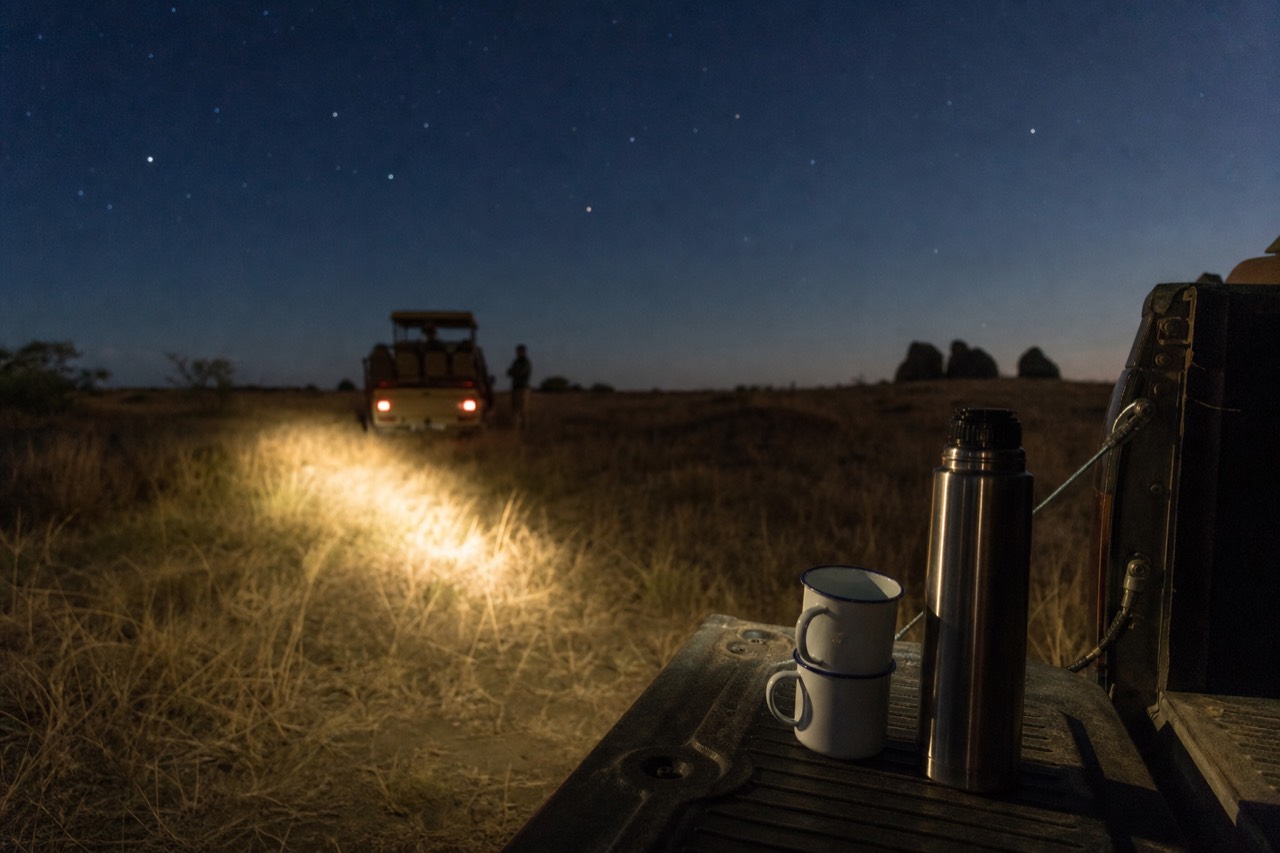
The real decision of a Serengeti balloon morning gets made around 4:45am, in the dark, holding the flask the camp left outside your tent. Coffee is the only warm thing in a cold hour, and you are about to spend three hours somewhere with no plumbing of any kind. Almost nobody thinks about this in advance, and almost everybody thinks about it on the drive.
So is there a toilet on board?
No. A balloon basket holds people, fuel cylinders and nothing else. There is no toilet, no privacy screen and no curtain, and every passenger stands in an open compartment shared with three or four others. Serengeti flights run 50 to 70 minutes in the air, which is the window you are planning around.
Every commercial balloon in the world works this way, and it is not an oversight anyone will fix. Weight is finite, space is tight, and a basket is built to survive being dragged sideways through grass. What that leaves is logistics, and the schedule keeps the no-facilities window short.
How long are you actually away from a bathroom?
Roughly two to three hours between leaving camp and reaching the breakfast site, of which 50 to 70 minutes is airborne. Pickup runs between 4:30 and 6:00am depending on how far your camp sits from the launch site, so the drive is the longest single stretch, not the flight.
That framing matters, because people assume the flight is the problem and it usually is not. An hour standing in cold air, distracted by the largest view of your life, passes quicker than an hour of anything else. What catches people out is the transfer, particularly from a lodge at the far edge of the pickup radius, up to 40 km from the field.
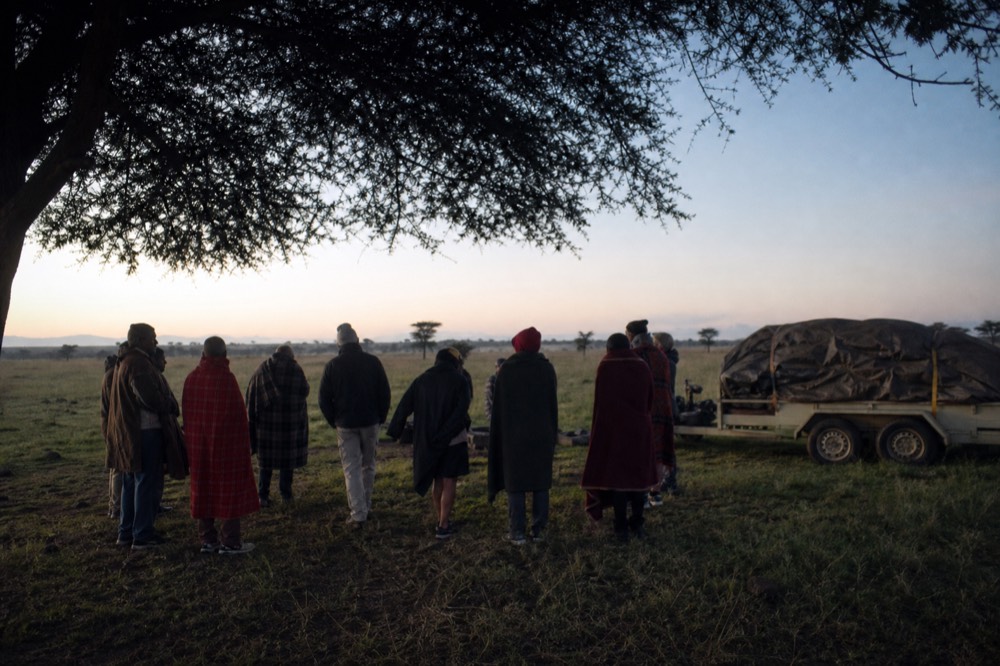
The drive is also where you have most control. Safari drivers stop, routinely and without comment, so say something early rather than waiting until the vehicle is five minutes out with a crew already inflating. The flagship operator's published FAQ sets out the pickup radius your camp falls into.
| Stage of the morning | Roughly how long | What is available |
|---|---|---|
| Wake-up at camp | 15 to 30 minutes | Your own tent or room, the last proper bathroom |
| Transfer to the launch site | 20 to 120 minutes | A vehicle stop in the bush if you ask the driver |
| Inflation and safety briefing | 30 to 45 minutes | Open bush behind the vehicles, the last stop before boarding |
| Airborne | 50 to 70 minutes | Nothing at all |
| Landing to breakfast site | A few minutes by chase vehicle | Bush again, with the vehicles right there |
| Bush breakfast | 60 to 90 minutes | An open-country setup, screened at some sites |
Should you drink the pre-dawn coffee?
A cup is fine. A flask is a decision. Coffee is a diuretic and you have a cold two-to-three-hour block ahead with one usable stop in it, so the sensible pattern is a small cup at camp, a proper one at the launch site if you want it, and the rest saved for breakfast, where there is a pot on the table.
Cold is the compounding factor nobody warns you about. Dawn on the plains in the dry season runs chilly, often single figures Celsius, and cold makes the problem more urgent than the same liquid would at midday. Layers help more than restraint does, and the case for dressing properly for a dawn launch is worth reading before you pack. Water is less strict: the air is dry and the flight is short.
The flagship Serengeti Balloon Safaris morning is the one most travellers end up on, since it collects from camps on both the Serengeti and Ngorongoro Conservation Area sides and holds 4.9 across 3,504 reviews. From $599 per person, with Serengeti park entry paid separately alongside your safari. You can check which mornings still have space before building a day around it.
Where do you go at the launch site?
Behind the vehicles, in the bush, before boarding. That is the honest answer and it is what everybody does. The launch field is open country with a crew, a trailer and a line of Land Cruisers on it, no permanent structures, and the fifteen minutes while the fans are running is the window everyone uses.
Nobody makes a thing of it. The crew are busy inflating a hundred feet of nylon, and there is invariably long grass or the far side of a vehicle. Do not wait for someone to announce a comfort stop, because no announcement is coming.
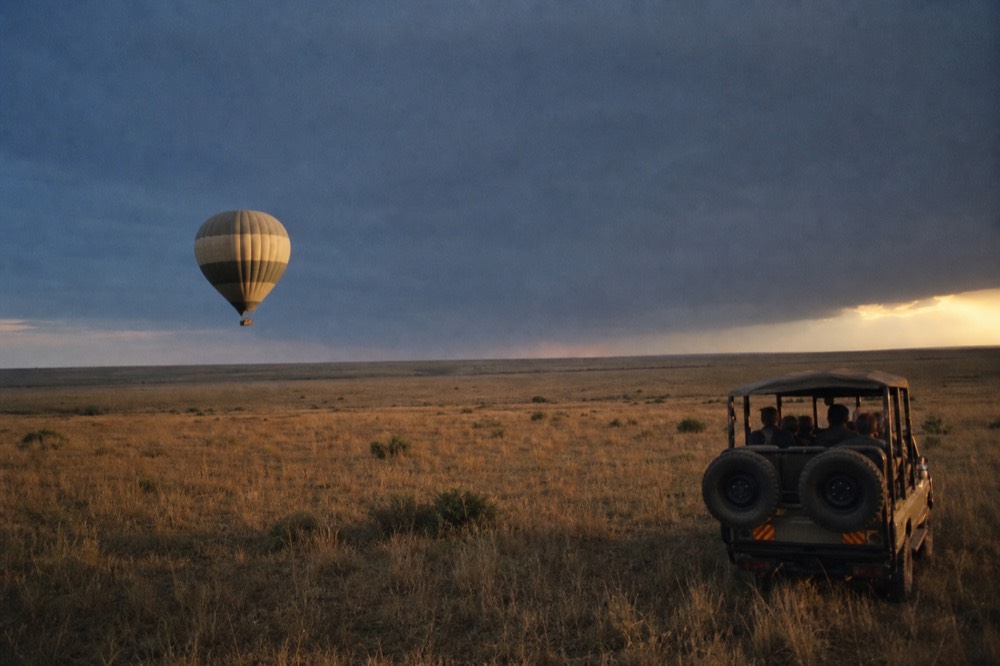
One genuine caution: this is a national park with no fence, at the hour when predators are still active, and armed rangers are usually with the ground crew for that reason. Stay within sight of the vehicles, and do not wander toward the tree line looking for better cover. The rundown of what the whole morning involves sets out what is happening while you are away from the group.
Where does the breakfast happen, and is there anything there?
In open grass near the landing point, at a proper table with linen, a cooking station and a coffee pot. Setups vary by operator and some run a canvas-screened washstand alongside the table. This block lasts an hour to ninety minutes, and it is the point at which the morning stops being an endurance question.
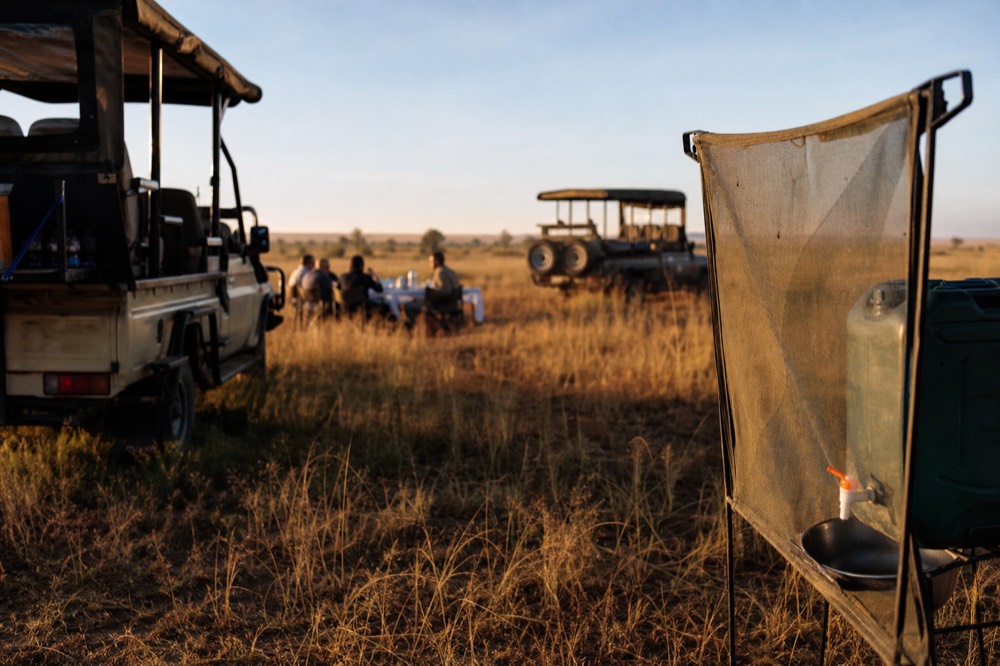
Travellers rate this part higher than they expected. Eggs cooked to order, bacon, fruit, pastries, a sparkling-wine toast and a flight certificate, laid out in open country with rangers standing off at a discreet distance. By then the sun is up and the cold has gone. The operator's own logistics page sets out how the launch field and the breakfast site relate to each other.
Miracle Experience runs a plated version of the same idea with a bubbly celebration afterwards, picking up from camps inside Serengeti National Park, and 2,651 reviewers have given it a straight 5.0. From $599 per person, Serengeti park entry paid separately, and you can see what the morning includes on the booking page.
Anyone still deciding can see every bookable flight and what each includes, and the answer on whether anyone weighs you first covers the other question people are too polite to ask.
Common questions
Is there a toilet on a hot air balloon?
No. A balloon basket carries passengers and fuel cylinders and nothing else, with no toilet, screen or privacy of any kind. Serengeti flights run 50 to 70 minutes airborne. The practical plan is to use the bush at the launch site while the crew are inflating, then wait for the breakfast site after landing.
How long are you in the air on a Serengeti balloon flight?
Between 50 and 70 minutes on all four bookable flights, with the exact figure set by wind and by where the pilot can put the basket down. The full morning runs about four to five hours door to door, counting the transfer, the inflation, the flight and breakfast.
Should you drink coffee before a hot air balloon ride?
A cup, not a flask. Coffee is a diuretic and you face a cold two-to-three-hour block with one usable stop in it, at the launch site before boarding. Water is less of an issue, since the flight is short. A full coffee pot waits at the bush breakfast.
Where do you eat breakfast after a balloon safari?
In open grass near where the balloon came down, at a table set up by the ground crew with a cooking station beside it. Expect eggs cooked to order, bacon, fruit, a sparkling-wine toast and a flight certificate. It runs an hour to ninety minutes and is included on all four flights.
What happens if you need the toilet during the flight?
There is no option in the basket, and a pilot picks a landing site for open ground and chase-vehicle access rather than on request. The honest answer is that this gets managed before boarding, which is why the fifteen minutes while the fans are running matters more than anything else in the morning.